
Free on-site gate assessment - hinges, posts, and your LiftMaster or Nice gate operator checked before anything is quoted
The assessment is free and the quote is the invoice.


 Before
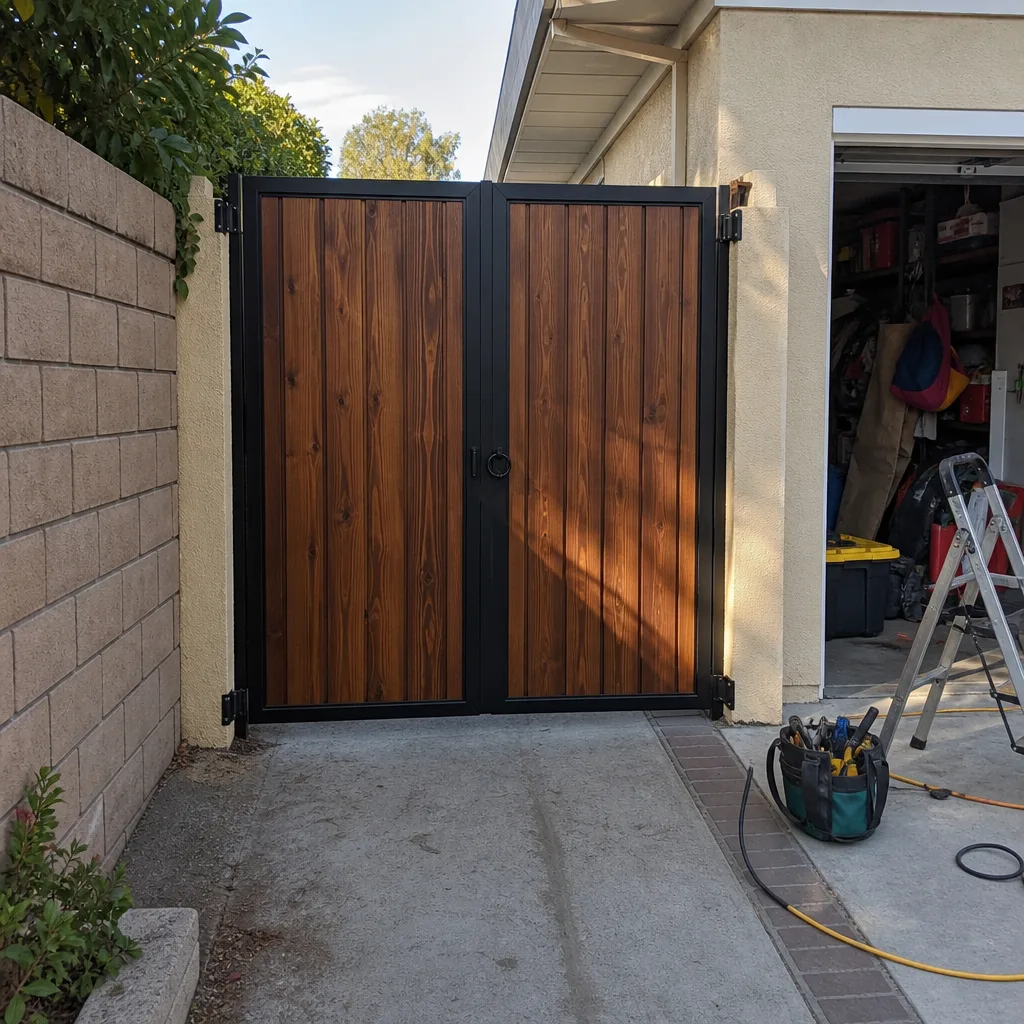 After
After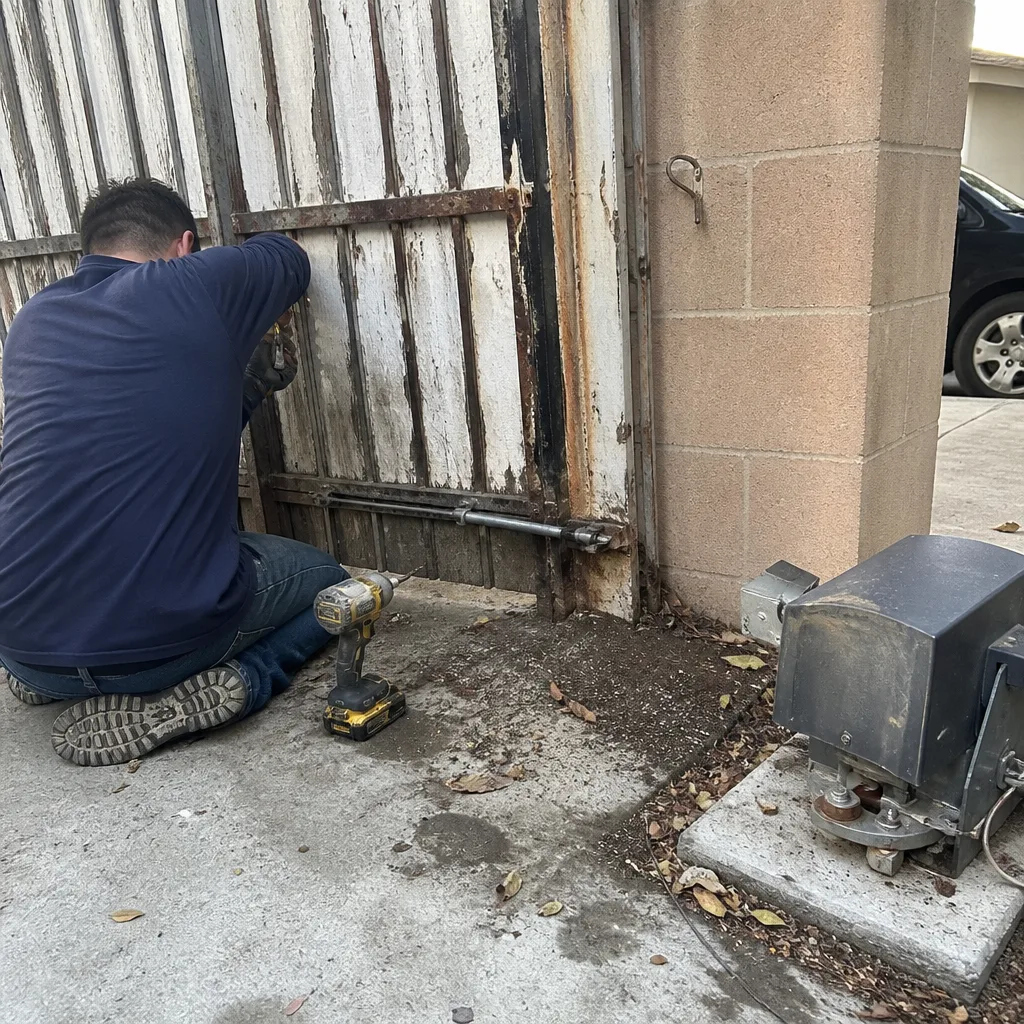 Before
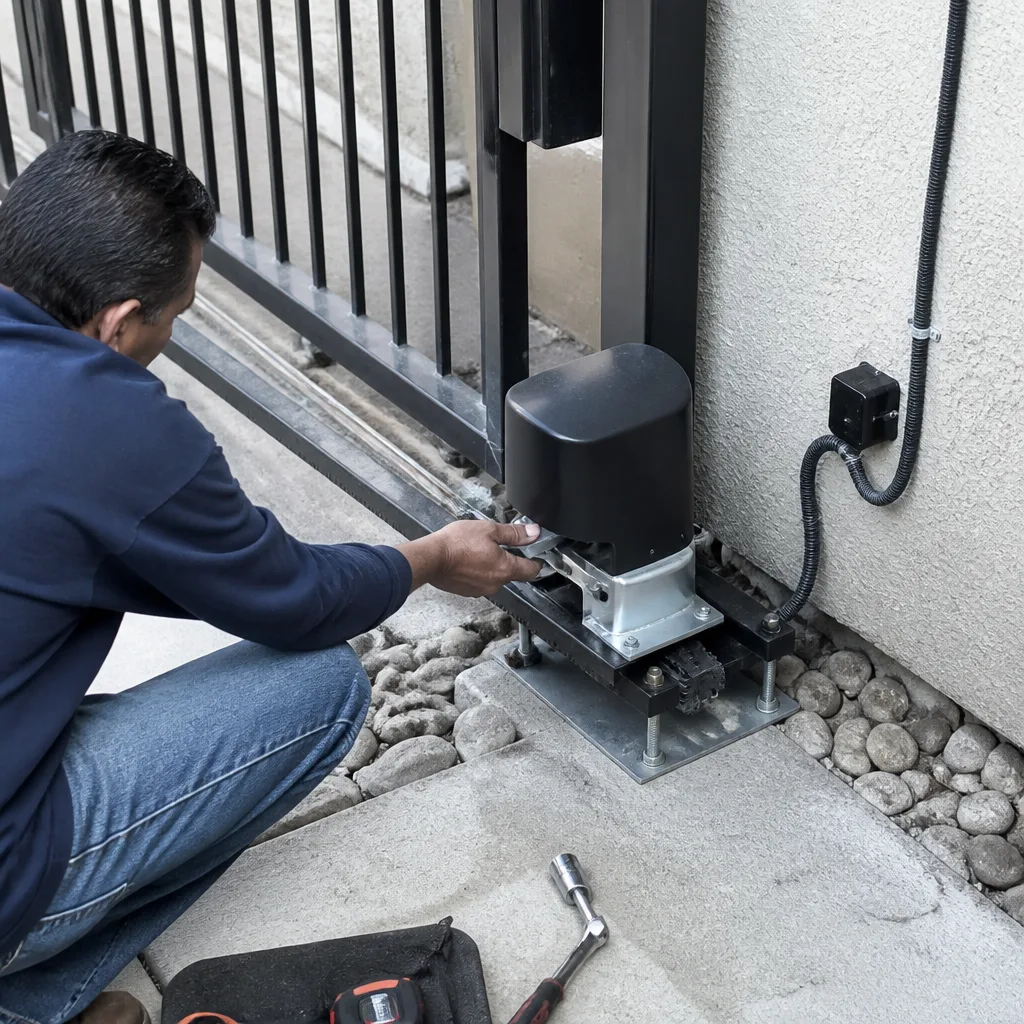 After
After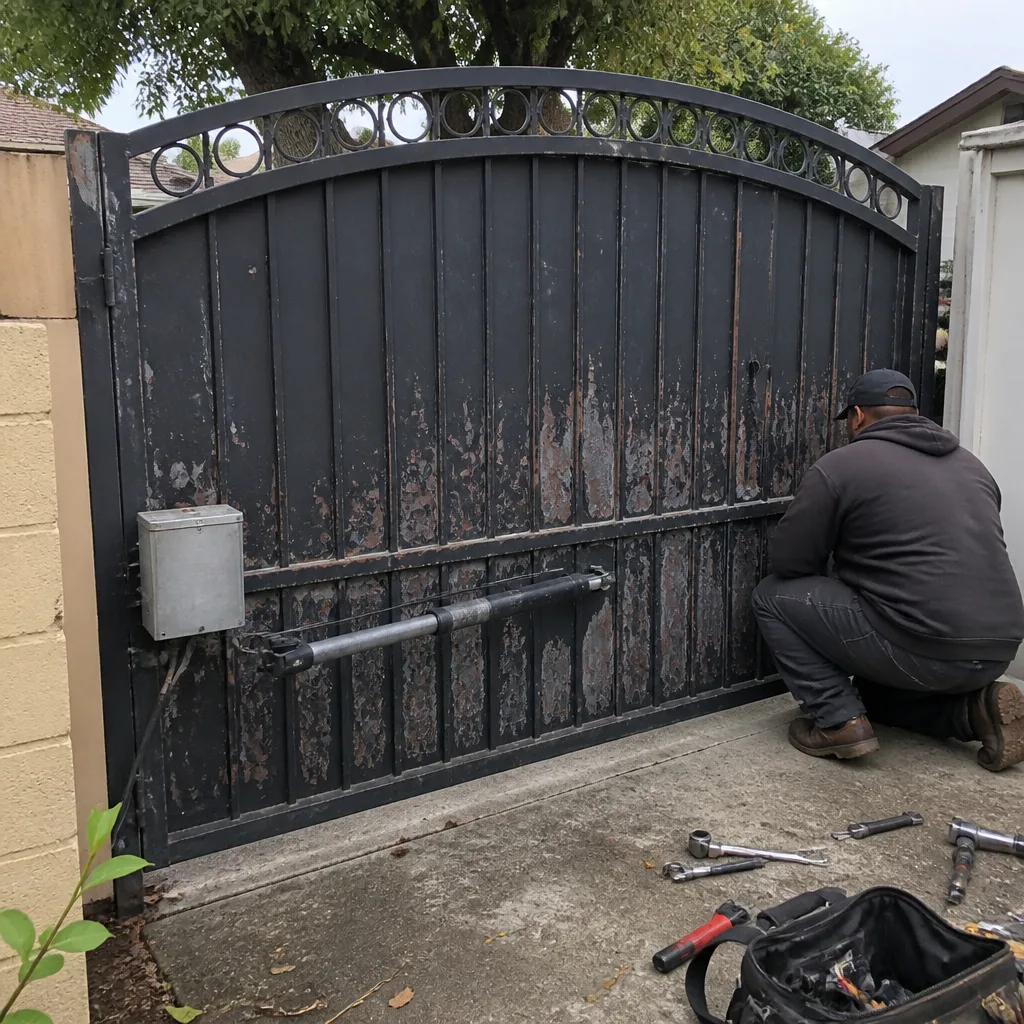 Before
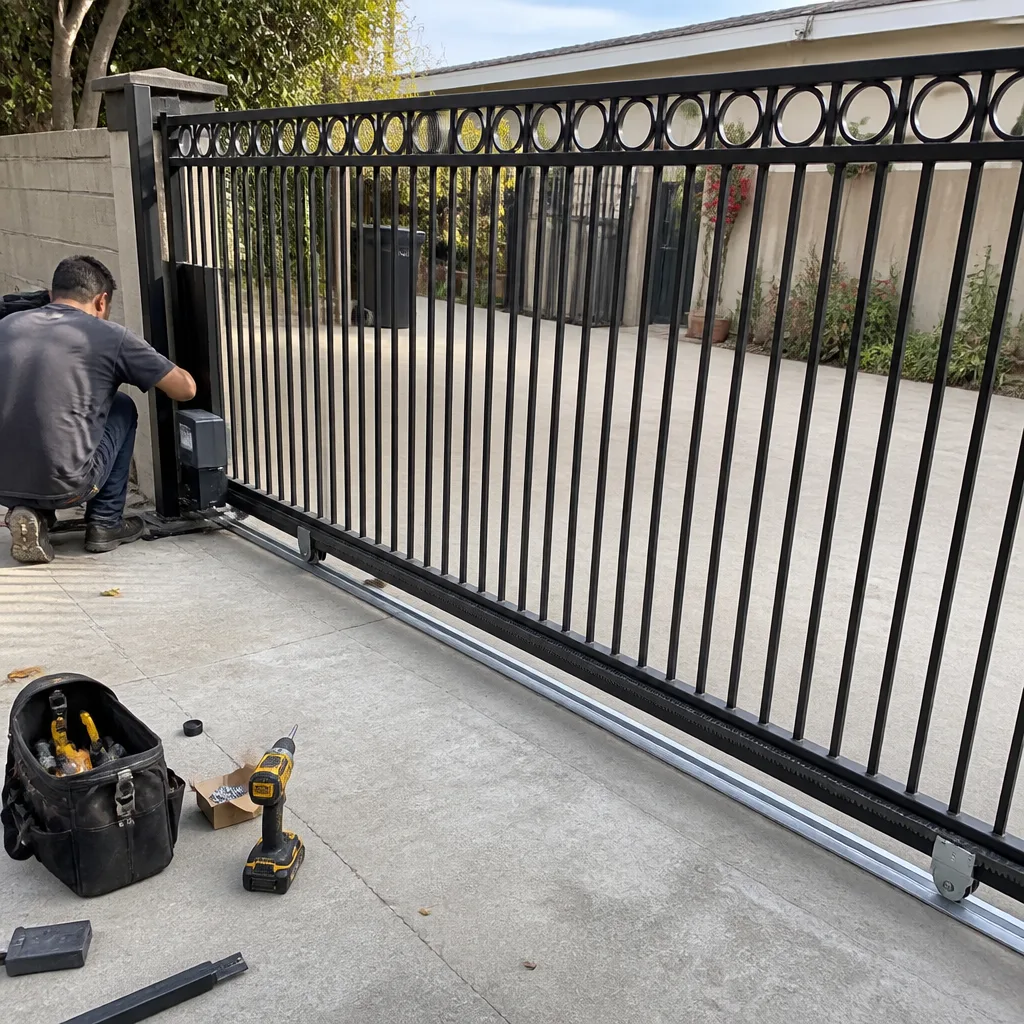 After
AfterLinear Gate Motor Replacement: The Fullerton Owner’s Guide
A Linear gate motor replacement in Fullerton typically runs $650 to $1,400 installed, depending on the model and whether the control board is swapped at the same time. We stock Linear-compatible motors on our trucks and can usually have your gate running again the same day you call. Most homeowners discover the failure the same way: the gate stops mid-travel, the motor hums without moving the gate, or the opener trips its breaker every time it tries to open.
Linear is one of nine gate-automation brands we service, and it’s a brand we know well. The company made residential swing and slide gate openers under the Linear and Allstar names for decades, and plenty of Fullerton homes still run on them. When the motor gives out, the question isn’t whether to replace it. It’s which Linear or Linear-compatible motor matches the gate you have, and whether it makes more sense to replace the whole operator at once.
Which Linear Models This Applies To
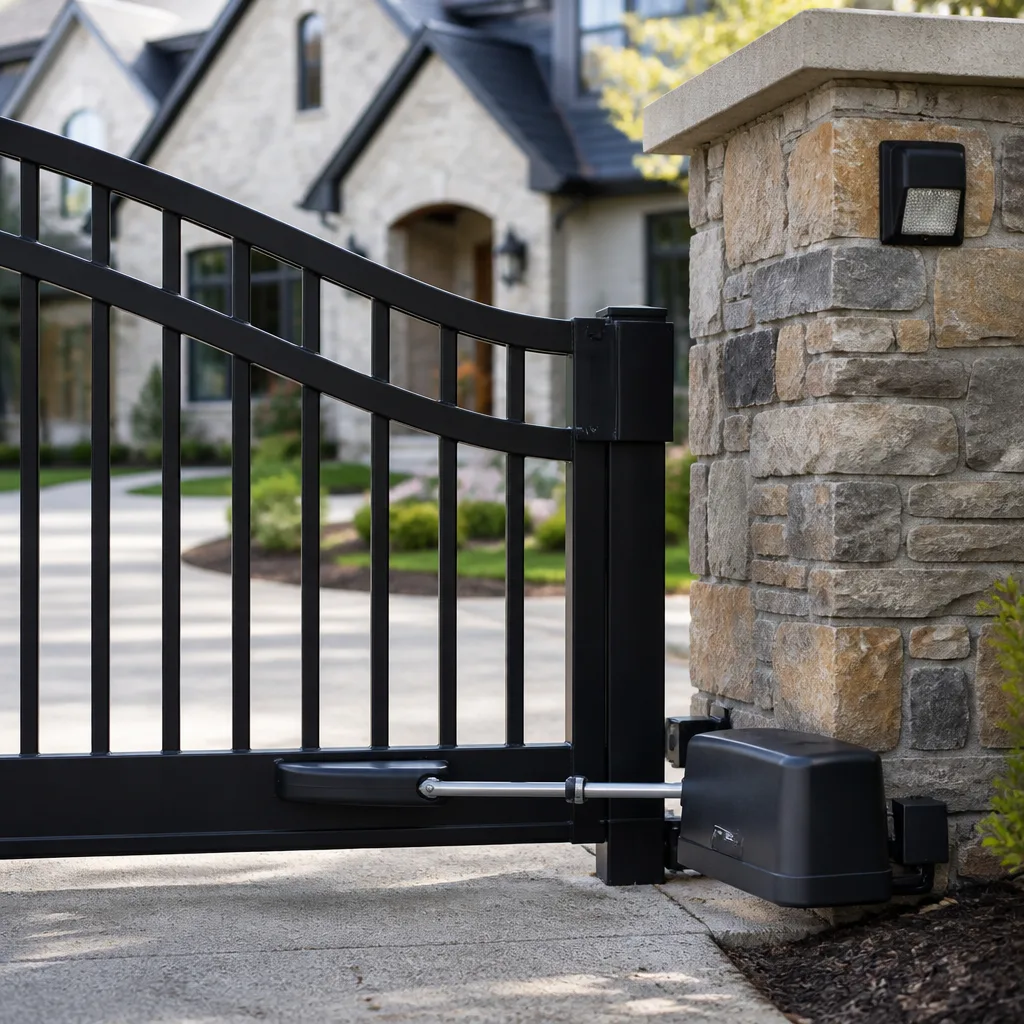
Linear built several distinct opener lines, and the motor for one won’t necessarily fit another. The most common models we replace in Fullerton are from the LDO series (LDO50, LDO75, LDO100), the swing-arm LS series, and the older Allstar-branded units that Linear absorbed. Each series uses a different motor voltage, mounting pattern, and gear ratio, and the part numbers don’t cross over. The quickest way to identify what you have is the data label on the operator chassis, usually a silver tag with the model and serial.
Our training covers the full span, from early Allstar swing operators to current Linear production. One thing we tell every Fullerton owner during the diagnostic: an OEM Linear motor is the safe play if you plan to keep the existing control board and limit switches, because aftermarket motors sometimes have slightly different RPM or amp draw characteristics that confuse older logic boards. We can install either, and we’ll give you our honest read on which is right for your gate before any work is approved.
Signs Your Linear Gate Motor Replacement Is Failing
- The motor hums but the gate doesn’t move. The windings are getting power but the capacitor can’t kick the rotor over. This is the classic early failure on Linear LDO swing motors and usually means the motor is done.
- The gate stops at random points and faults out. When a Linear motor’s thermal overload starts tripping at lower and lower temperatures, it’s telling you the windings are degrading. In a Fullerton summer, that threshold gets reached fast.
- The opener trips the breaker or GFCI on startup. A motor with shorted windings will pull surge current before the gate even moves. This isn’t a wiring problem; it’s the motor telling you to replace it.
- The gate moves slower than it used to, especially on cold mornings. California’s mild climate masks this for a while, but worn brushes and weakened magnets in a Linear gearmotor lose torque gradually. By the time you notice, it’s on borrowed time.
- You hear grinding or a rough growl from the operator housing. That’s the gearbox output bearing failing, which puts side-load on the motor shaft and ruins the armature if left alone. Addressing it early sometimes saves the gearbox; ignoring it always costs more.
Replacement Cost & What’s Included
For a Linear gate motor replacement in Fullerton, the realistic range is $650 to $1,400 installed, depending on what you have and what we find. A straightforward swing-motor swap on a mid-size LDO50 runs toward the lower end of that range. Replace the control board and limit switches at the same time, or deal with a heavier slide gate, and you’re looking at the higher end. The range accounts for motor class (AC versus DC), gate weight and length, and whether any mounting fabrication is needed.
Every quote includes the part, labor, removal of the old motor, wiring, limit re-set, and a torque/force test on the finished gate. We settle the price before a single bolt gets turned. You’ll know the number, and that’s the number on the bill. We also back the work with our 90-Day Done Right Promise, written, so if something isn’t right, we come back and make it right. Victor Salinas has been doing this work across Fullerton for over forty years, and the promise is his way of making sure the last job gets the same care as the first.
DIY or Call Us?
A gate motor replacement is not a casual weekend project. Linear operators run on 110V or 220V at the board and motor terminals, and the motor itself sits inside a housing with live connections even when the gate is at rest. If the breaker is off and the operator is unplugged, there’s no exposure, but the moment you’re testing a new motor with power applied, you’re working next to exposed terminals. That’s a job for someone who does it professionally, with the meter and the wiring diagram in front of them. We say that plainly: this one is worth a trained technician.
What an owner can safely check is whether the problem is the motor or something upstream. A gate that’s hard to move by hand might be a hinge problem rather than a weak motor, and that’s a useful thing to know before spending on a motor. If you can disconnect the operator and push the gate manually, and it moves freely, the motor is the likely culprit. If it binds or drags, you may be looking at a different repair. If the gate won’t move at all and you can’t diagnose it, that’s when you call us at (279) 201-0835.
FAQs
In Fullerton’s climate, a Linear gate motor typically lasts 12 to 18 years, with the capacitor failing somewhere in the 8-to-10-year range and often getting replaced before the motor itself. Gates that run more than 15 cycles a day, or heavier gates near the motor’s weight limit, wear out faster. Annual lubrication and hinge maintenance stretch that lifespan, but heat and duty cycle are the two big factors here.
Most Linear gate motors cannot be repaired in the field. The motor is a sealed gearmotor assembly, and the failure is usually in the windings or the gear reduction, neither of which is serviceable. Replacing a capacitor or a limit switch can extend the life of an otherwise healthy motor, and we’ll always check those first. When the motor itself is gone, replacement is the honest fix. If we can fix it right, we’ll tell you. If it needs replacing, we’ll tell you that too.
A standard Linear swing-motor replacement takes about an hour and a half to two hours on site, including removal, installation, wiring verification, limit set, and force test. If we’re replacing the control board at the same time, add about 45 minutes. Most Fullerton jobs are completed in a single visit, and we’ll quote the price before we start.
We keep Linear-compatible motors for the most common LDO and LS series models on our trucks, along with the capacitors, limit switches, and control boards that usually go with them. For less common or older Allstar units, we’ll place the order and schedule the install the day the part arrives. We also stock parts for LiftMaster, Mighty Mule, and Ghost Controls, so whatever gate you’re dealing with, we’re equipped to handle it.
If your Linear gate motor is failing in Fullerton, call Ironworks Gate Co. at (279) 201-0835. We’ll diagnose it over the phone, quote you an honest price, and be there when we say. The estimate is free, and the work is guaranteed in writing.
Written by Victor Salinas, Owner & Gate Repair Specialist, Ironworks Gate Co. at Ironworks Gate Co., serving Fullerton and nearby areas.