
Free on-site gate assessment - hinges, posts, and your LiftMaster or Nice gate operator checked before anything is quoted
The assessment is free and the quote is the invoice.
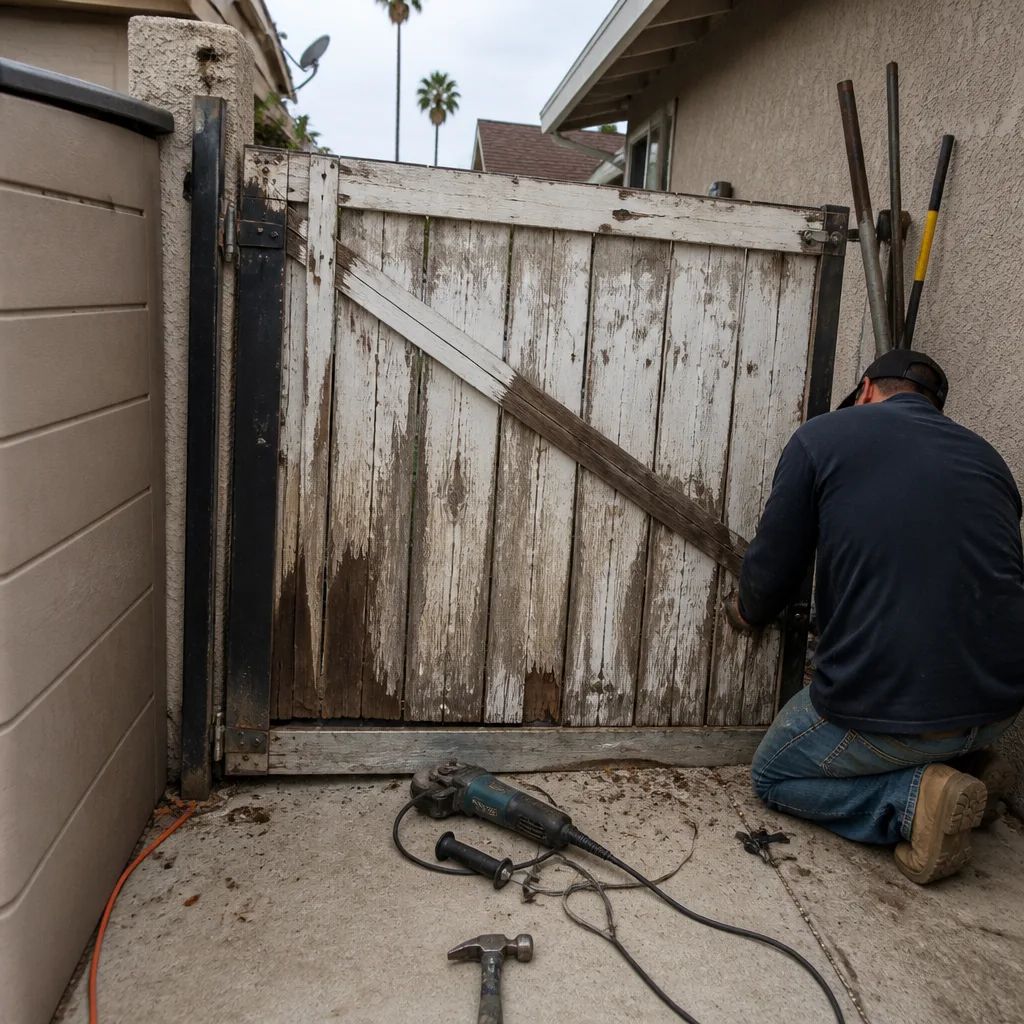 Before
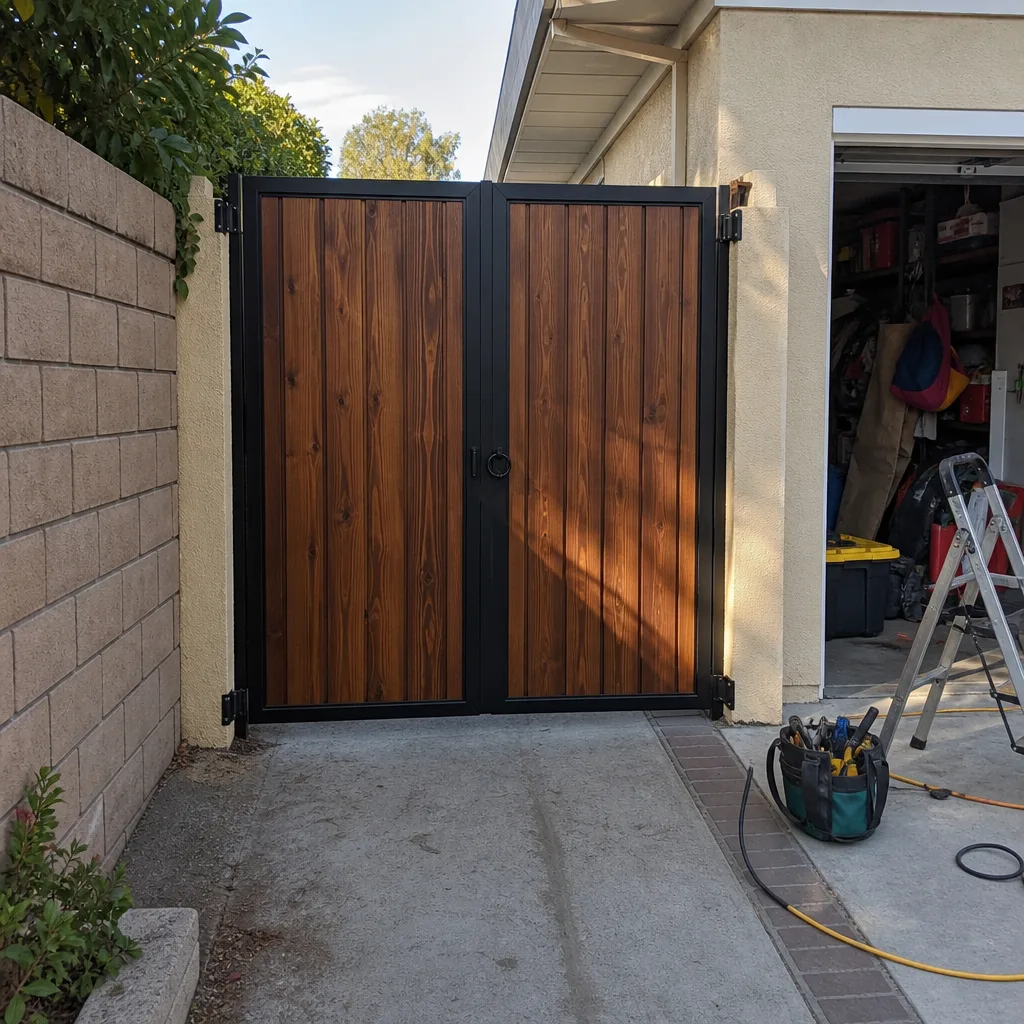 After
After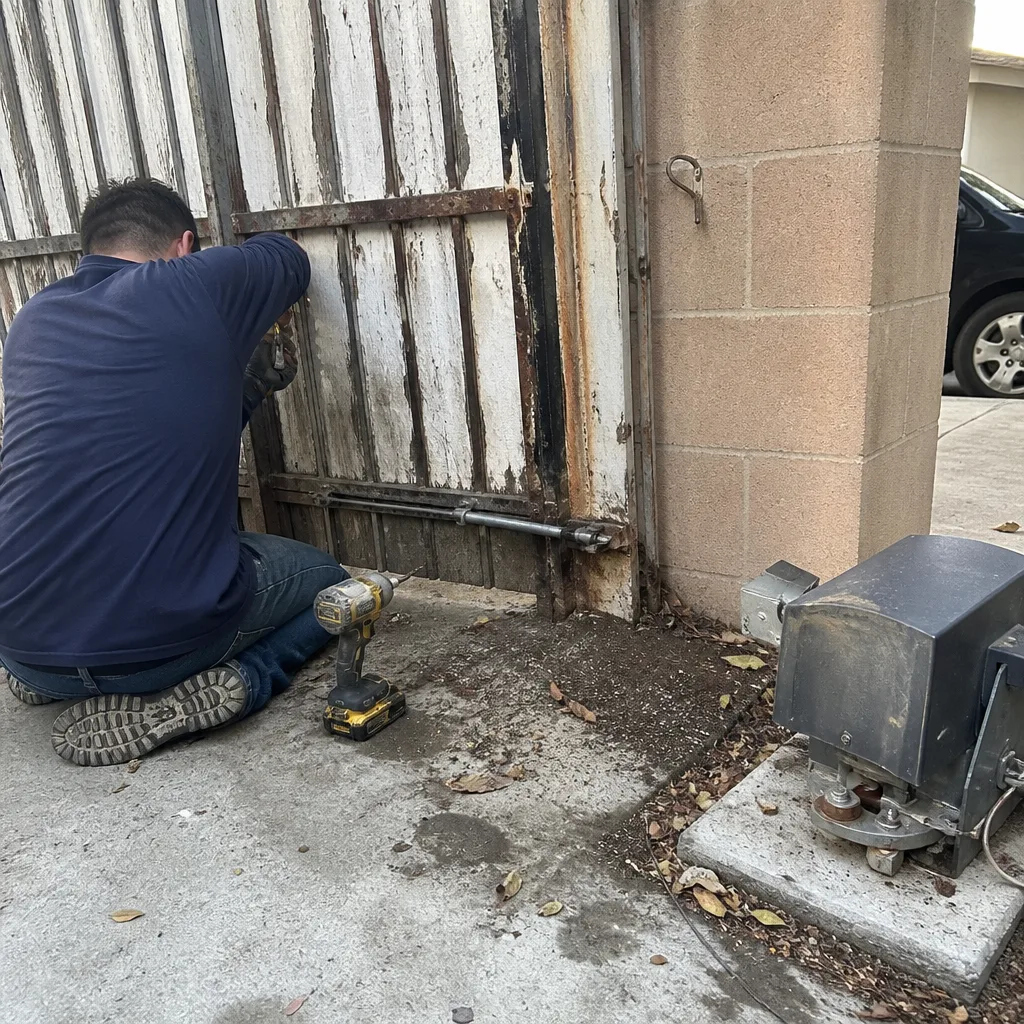 Before
 After
After Before
 After
AfterFAAC Access Control Installation: The Fullerton Owner’s Guide
FAAC access control installation in Fullerton typically runs between $850 and $2,400 installed, depending on whether we’re swapping a failed board, adding a keypad, or wiring a full phone-entry system. Most single-component replacements are done in one visit, and we carry the common FAAC control boards, keypads, and receivers on the truck. The usual way a Fullerton homeowner finds us is simple: they punch in the code, nothing moves, and the gate that worked every morning for eight years has suddenly gone quiet. Or the remote works, but the keypad doesn’t. Or the board clicks, the lights flash, and the gate still doesn’t budge. That’s the moment the access control system has stopped doing its one job, and the question becomes whether it’s the keypad, the receiver, the board, or the wiring between them.
We see this every week somewhere between Sunny Hills, Coyote Hills, and the neighborhoods off State College Boulevard. The good news is that FAAC access control is built to be serviced. The parts are identifiable, the failure patterns are familiar, and a technician who knows the brand can usually isolate the problem in under an hour. Victor Salinas has been working on FAAC systems across Orange County since long before keypads had backlit screens, and we stock enough FAAC-specific parts to resolve most access control failures on the first trip.
Which FAAC Models This Applies To
FAAC has been building gate operators and access control systems since 1965, and their product line is broad enough that “FAAC access control” covers several generations of hardware. In Fullerton we most often see the FAAC 455 D and 412 operator families paired with FAAC’s own wireless keypads, as well as the D600, D700, and D1000 lines on larger estate gates. The access control components themselves range from the older LC and R series receivers to the newer XT and RP series keypads and the FAAC Simply Connect modules used for smartphone control.
Here’s the compatibility gotcha many homeowners run into: FAAC changed receiver frequencies and encoding protocols between product generations, and not every FAAC keypad talks to every FAAC board. A 433 MHz keypad from a 2012 system will not pair with a newer 868 MHz board, no matter how carefully you follow the instructions. The part number on the label is the only reliable way to match a replacement. If the label has faded or peeled off, our techs can identify the component by the connector layout and board silkscreen. As an independent service provider, we’re not affiliated with FAAC directly, which means we can recommend the right OEM part or a quality aftermarket equivalent without pushing one over the other. For FAAC specifically, we generally advise OEM on boards and receivers, since aftermarket compatibility on the encryption side is spotty, and a board that half-works is worse than a board that’s visibly dead.
Signs Your FAAC Access Control Installation Is Failing
- Keypad accepts the code but the gate doesn’t move. This usually points to the keypad’s relay output or the wiring between the keypad and the board. Sometimes it’s a corroded terminal block, which is common in Fullerton’s damp winter mornings.
- Remote works, keypad doesn’t. The keypad’s internal battery or its radio module has failed. Keypads sit in direct sun and take the brunt of California UV exposure, and ten years is about the realistic lifespan for an exterior FAAC keypad in our climate.
- Gate opens or closes on its own, or intermittently refuses commands. This often traces to a receiver picking up stray signals or a failing power supply. Intermittent behavior is the hardest to diagnose by swapping parts blindly, which is why we test voltage and signal strength before pulling anything apart.
- Board clicks or the LED flashes, but nothing engages. The control board is receiving power but a relay, capacitor, or drive transistor has aged out. FAAC boards from the 2000s are reaching the end of their component lifespan now, and we’re replacing more of them each year.
- After a power outage, the system forgets its codes. The memory battery on the board has died. Some FAAC boards let you replace that battery; on others the memory is integrated and the whole board has to go.
Replacement Cost & What’s Included
For a FAAC access control component replacement in Fullerton, here’s what we typically see:
- Wireless keypad replacement: $180 to $420 installed, depending on whether we’re matching an existing FAAC series or upgrading to a newer unit with rolling code encryption.
- Receiver or radio module replacement: $220 to $480 installed, including pairing with your existing remotes.
- Control board replacement: $550 to $1,300 installed, depending on the FAAC model and whether it’s a single or dual gate configuration.
- Full access control package (keypad, receiver, board, wiring cleanup): $1,200 to $2,400 installed.
Every quote we give is settled before a bolt is turned. Parts are separate from labor, and you’ll see both numbers on the written estimate. If we find a bad wire or a corroded connector while we’re in there, we’ll tell you before touching it. The work itself is covered by our 90-Day Done Right Promise, in writing, no fine print. Standing offers still apply to access control jobs: $50 off any repair over $250, and a permanent 5% discount for seniors and veterans.
DIY or Call Us?
There’s a small list of things a homeowner can safely check before calling us. Confirm the keypad has power by looking for the LED backlight. Check that the gate breaker hasn’t tripped. Make sure nobody changed the code and forgot to tell you. Those checks cost nothing and they’ve solved a surprising number of “dead” access systems over the years.
What we don’t recommend is opening the control box and probing terminals yourself. FAAC boards carry live 24V and sometimes line voltage depending on the model, and a wrong probe across two terminals can turn a $300 repair into a $1,200 board replacement. The keypads and receivers are the safe parts to inspect; the board and its wiring are not. If the simple checks don’t resolve it, call (279) 201-0835 and we’ll send a tech who’s opened a hundred FAAC enclosures without ever once shorting a board. If we can fix it right, we’ll tell you. If it needs replacing, we’ll tell you that too.
FAQs
Expect eight to fifteen years from a FAAC access control installation, with keypads on the lower end due to sun exposure and control boards on the higher end. Fullerton’s inland heat and the occasional damp winter morning shorten exterior component life compared to coastal areas, but most systems fail one component at a time rather than all at once. Call (279) 201-0835 if you need a specific diagnosis.
Sometimes, but less often than you’d hope. We’ve repaired simple failures like cold solder joints and popped resistors, but most board-level failures on FAAC units are age-related capacitor or relay breakdowns that aren’t cost-effective to rebuild. We’ll test the board before recommending anything, and we’ll quote the repair only if we’re confident it’ll hold.
A single component swap, like a keypad or receiver, takes 45 minutes to two hours including pairing and testing. A full board replacement with wiring cleanup runs two to four hours. Either way, it’s a same-day job in almost every case, and we’ll tell you exactly what time we’ll be there before we show up.
We stock the most common FAAC keypads, receivers, and replacement boards for the 455 D, 412, and D-series operators we see constantly around Fullerton. Less common parts are two to three days out. We also carry compatible parts for LiftMaster, Mighty Mule, and Ghost Controls systems, but FAAC is the one we’re asked about most. Call (279) 201-0835 with your model number and we’ll tell you on the spot whether we have the part.
Written by Victor Salinas, Owner & Gate Repair Specialist, Ironworks Gate Co. at Ironworks Gate Co., serving Fullerton and nearby areas.