
Last updated August 25, 2026
Free on-site gate assessment - hinges, posts, and your LiftMaster or Nice gate operator checked before anything is quoted
The assessment is free and the quote is the invoice.
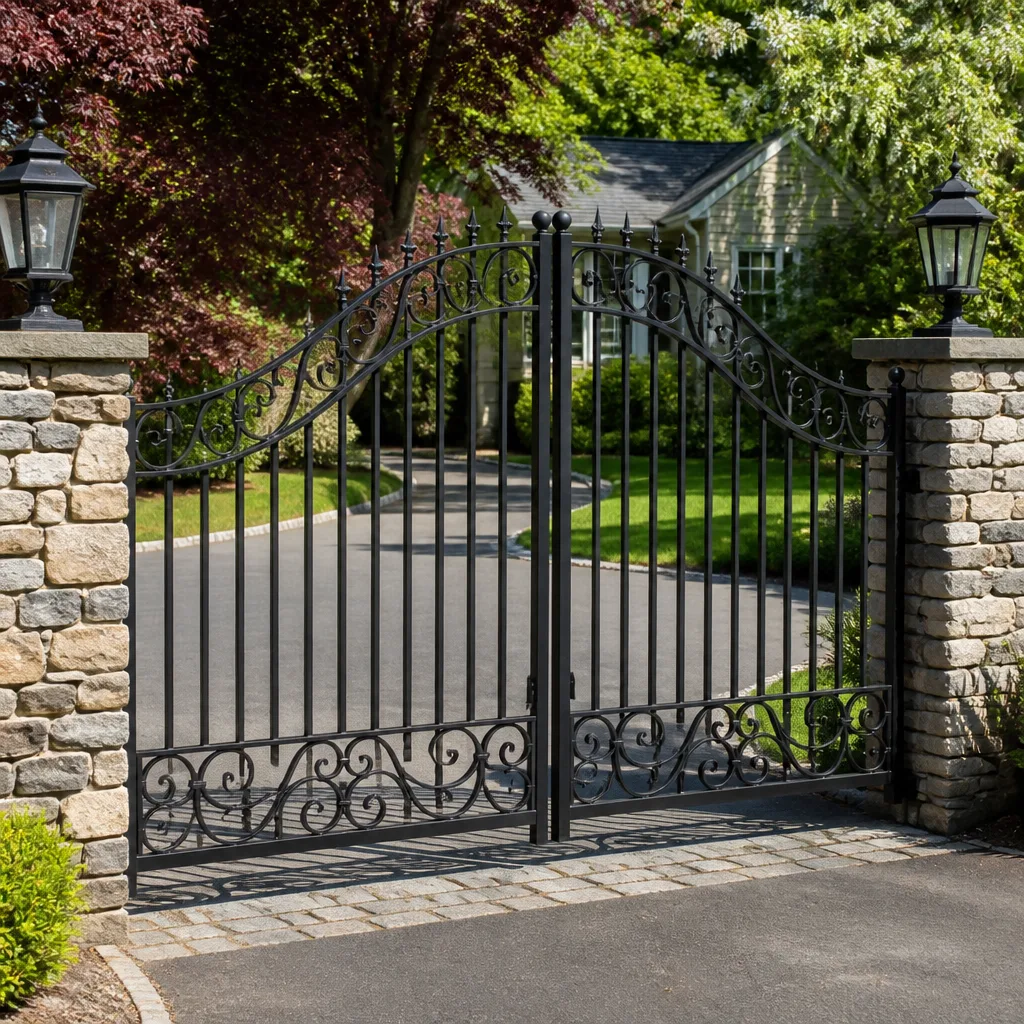


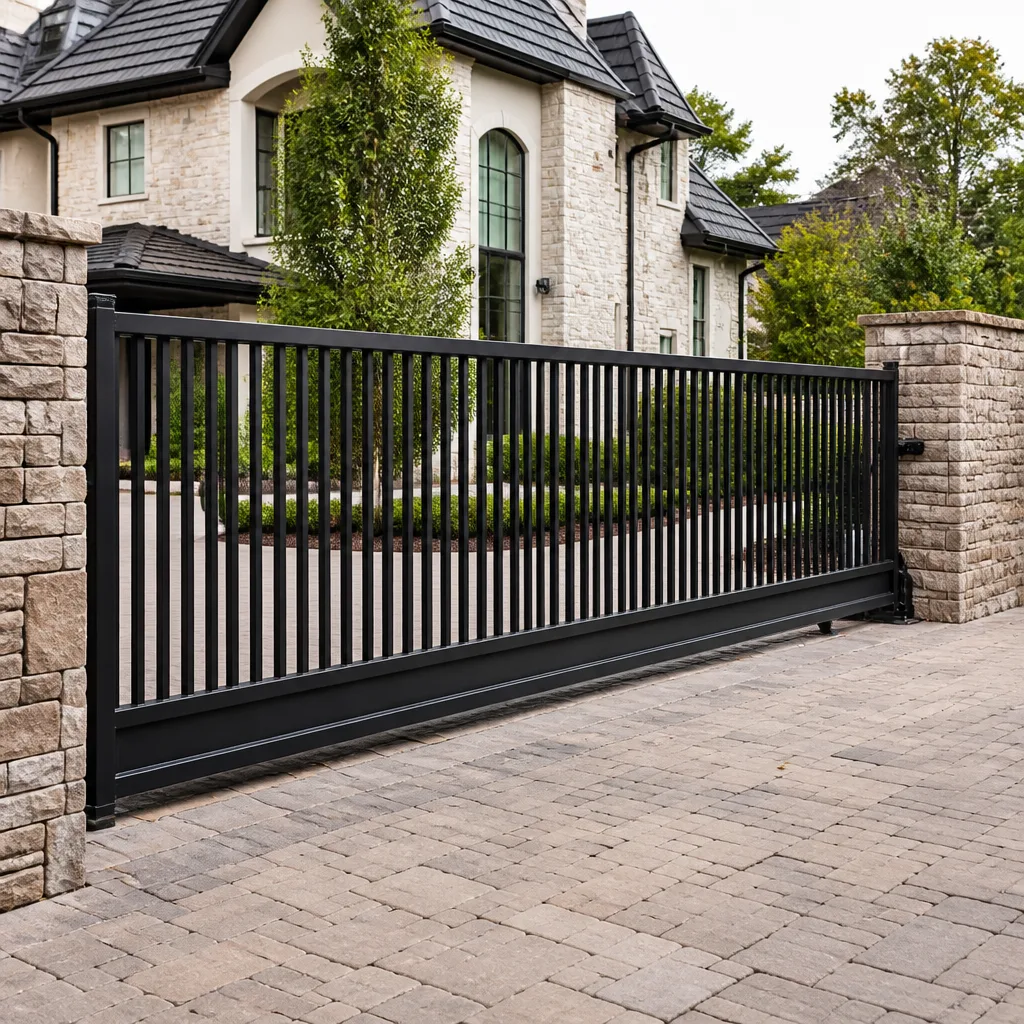
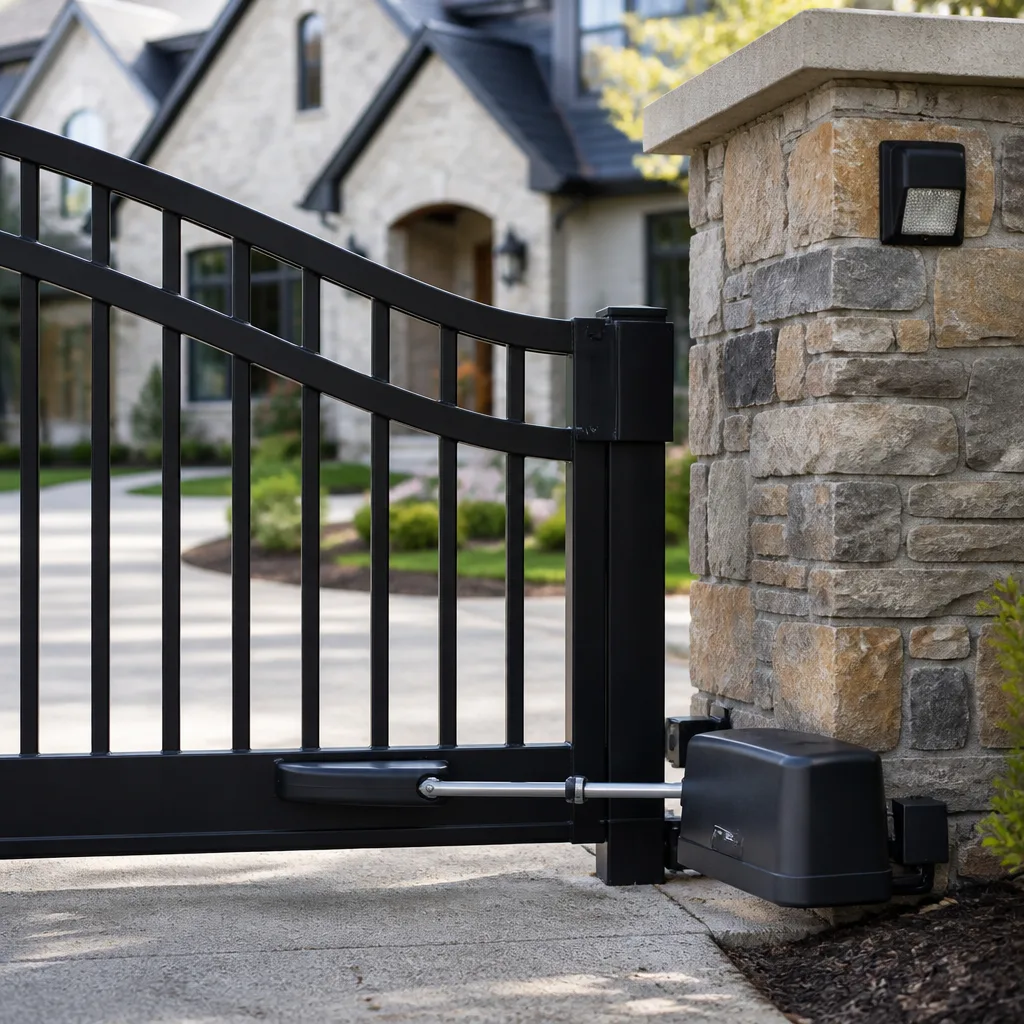
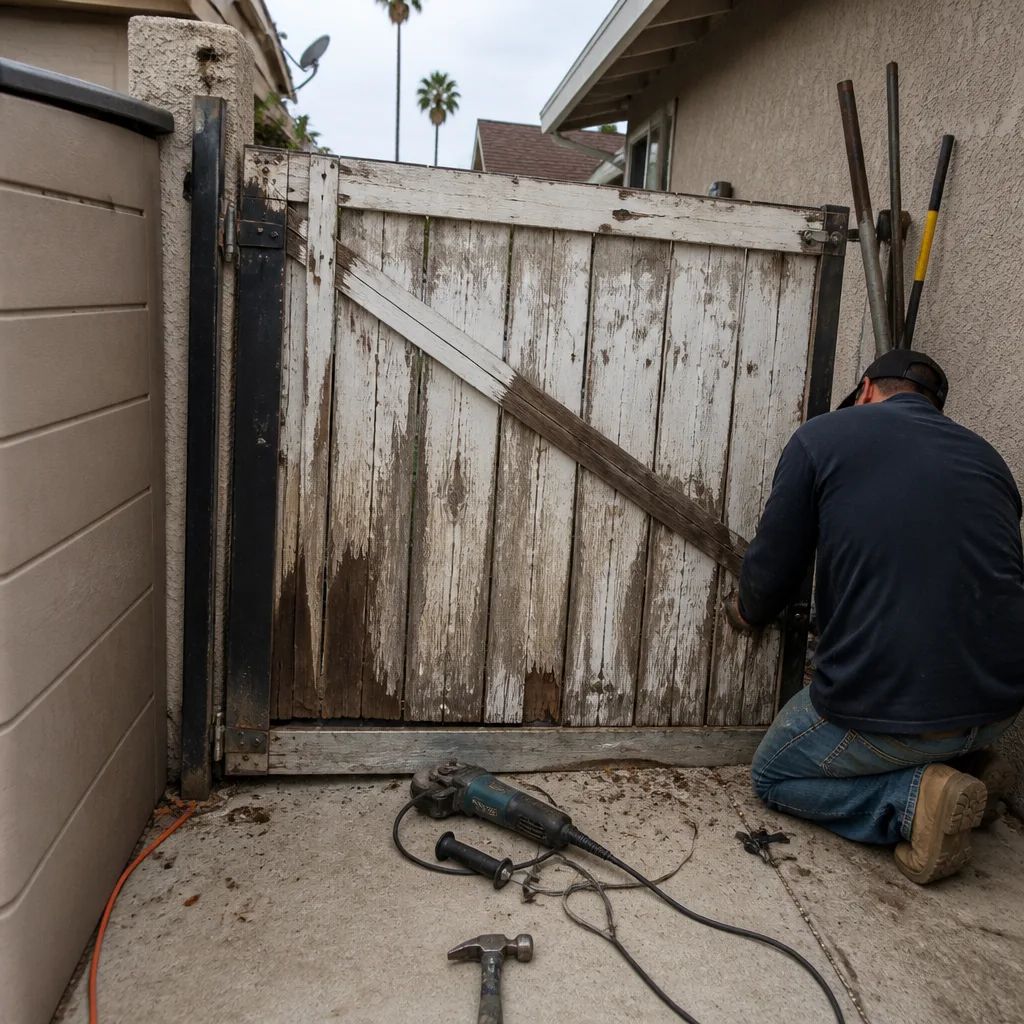 Before
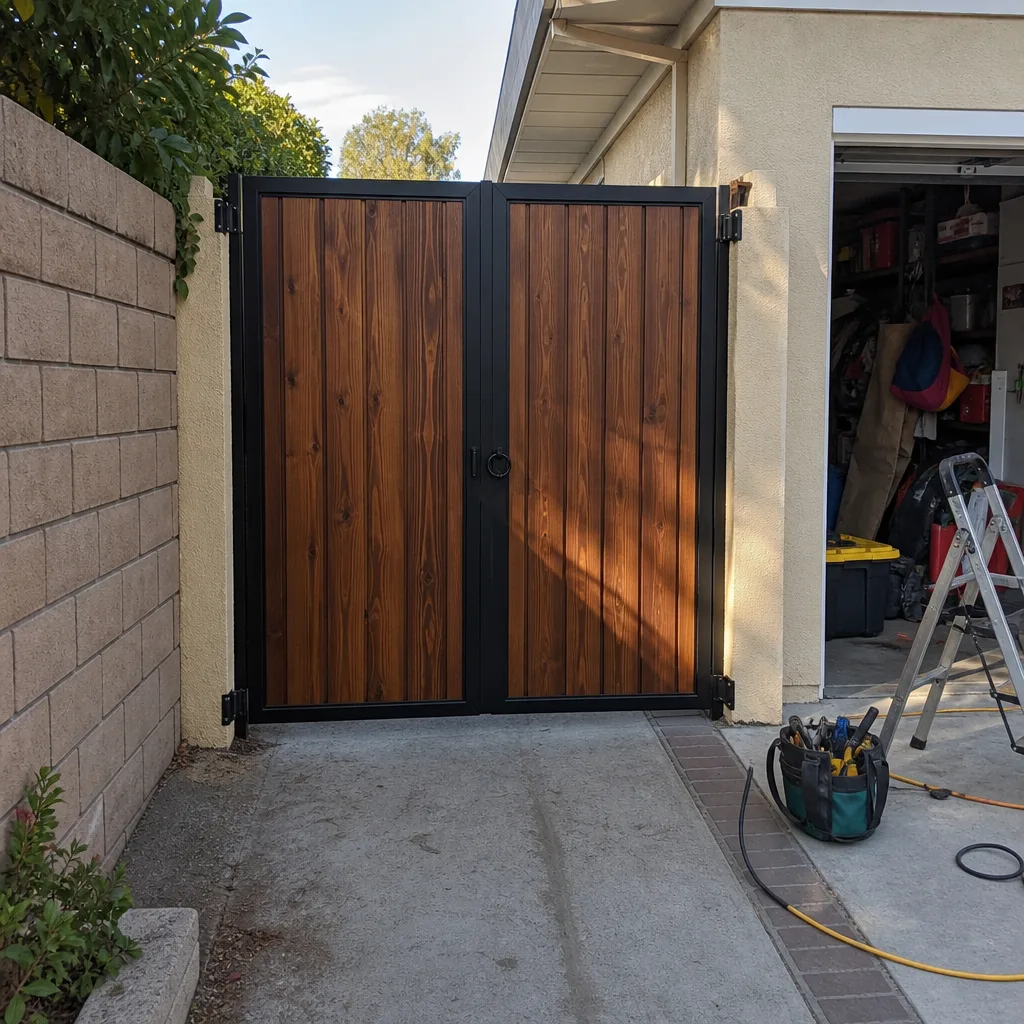 After
After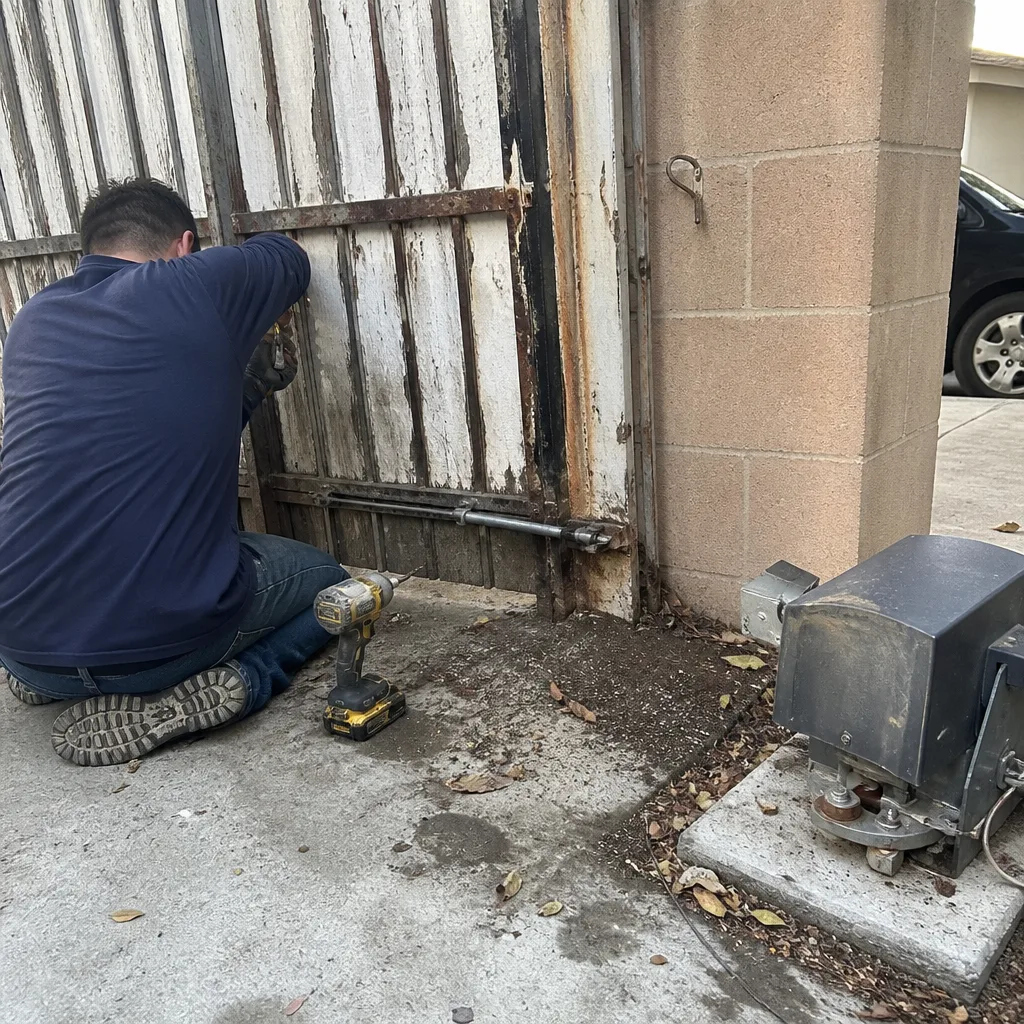 Before
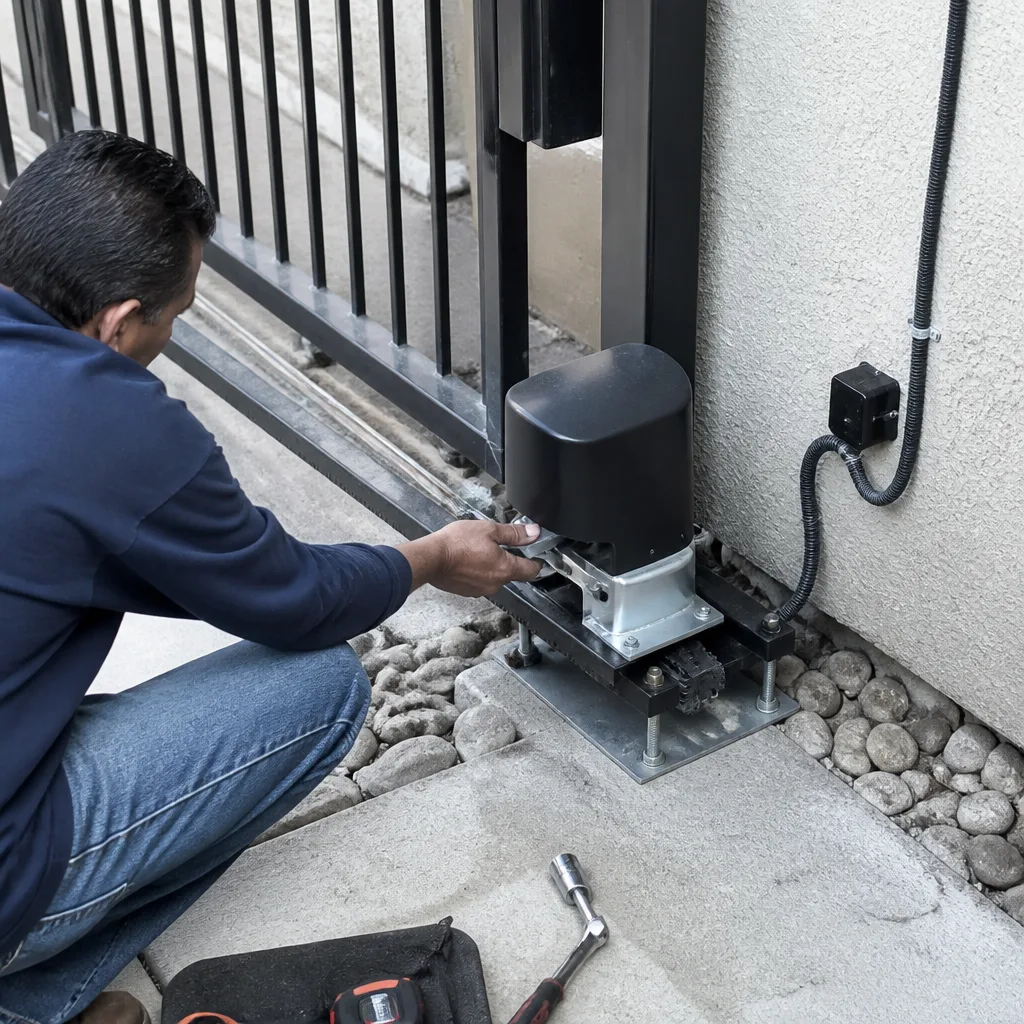 After
After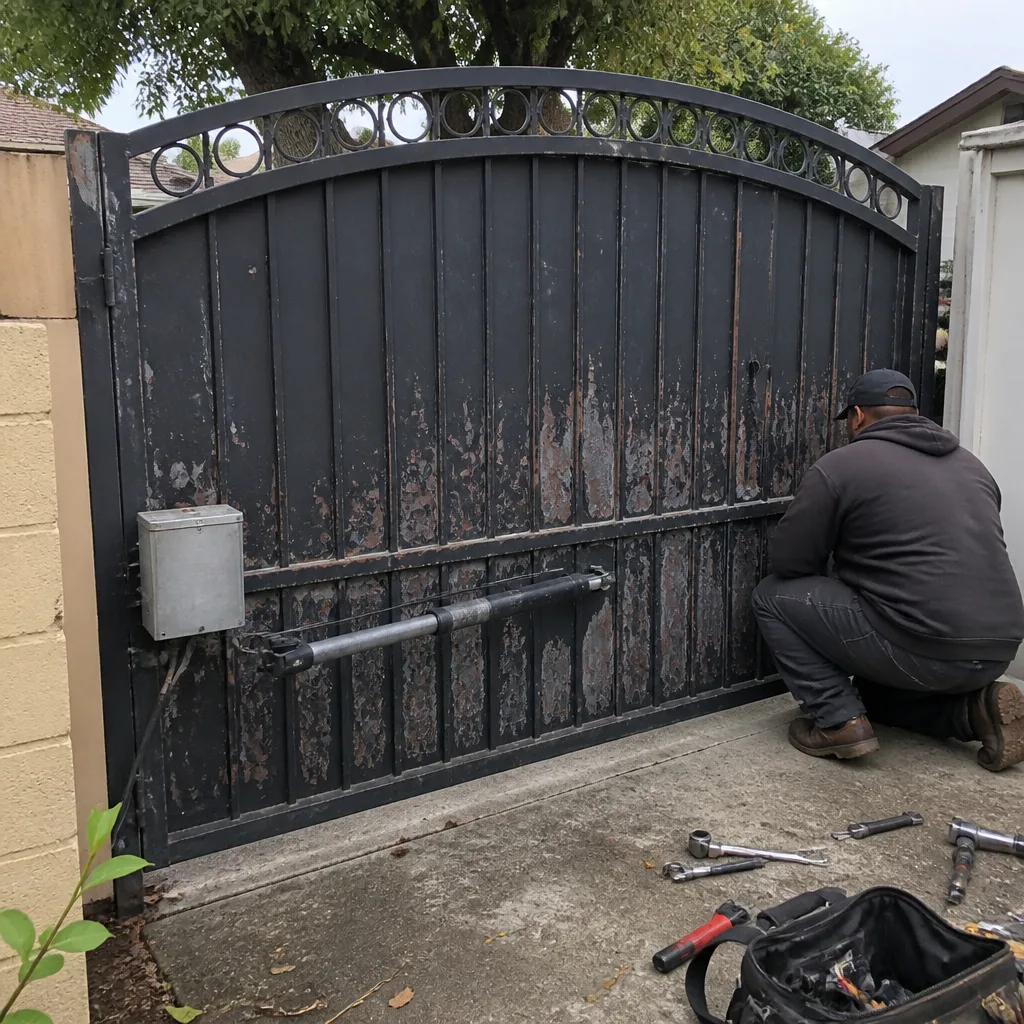 Before
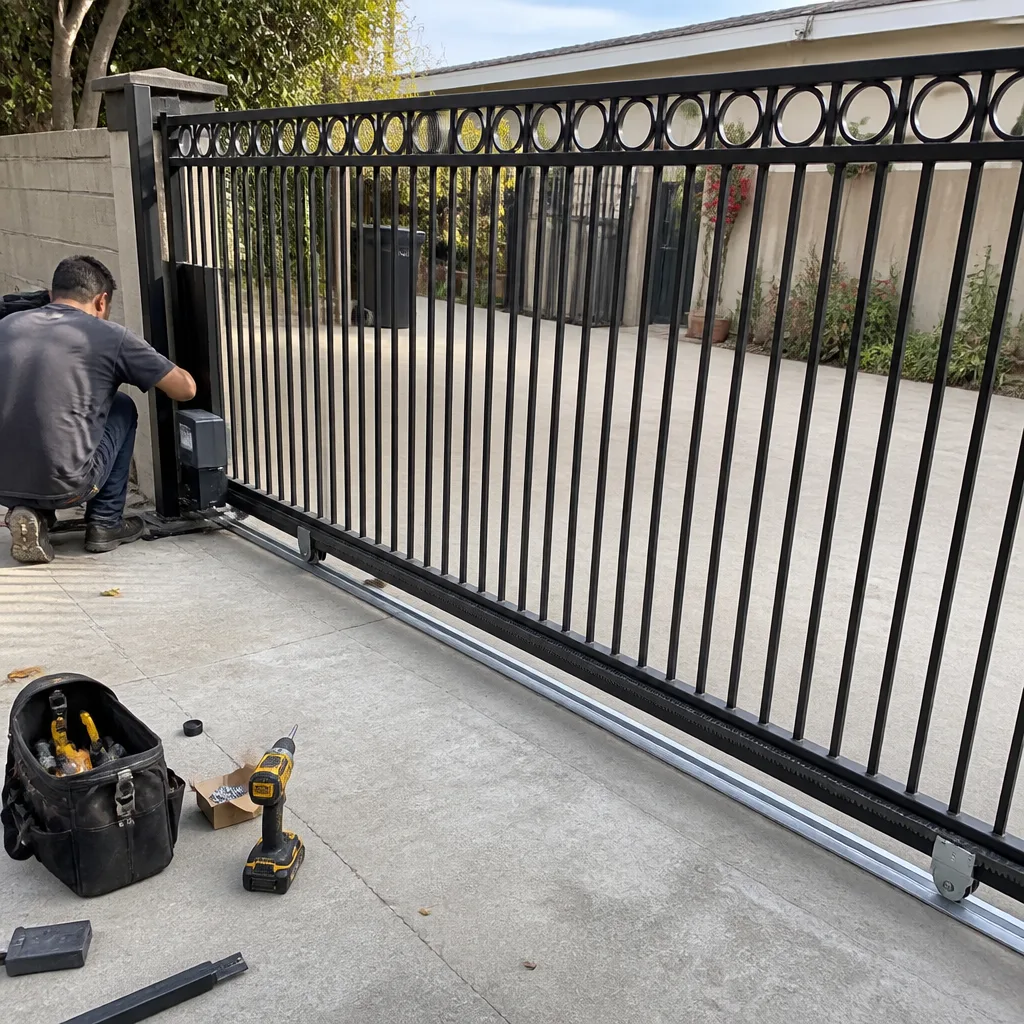 After
AfterSeasonal Gate Repair Care for Fullerton: Year-Round Homeowner’s Guide
Most Fullerton homeowners don’t think about their driveway gate until the day it refuses to open. By then, the repair is almost always more expensive than it needed to be. A gate that gets fifteen minutes of seasonal attention will typically outlast one that gets ignored by five to eight years. This guide lays out exactly what to check each season in Fullerton, what the local climate does to metal and motors, and when a fifteen-minute inspection will save you a four-figure repair bill.
Quick Answer
Seasonal gate care in Fullerton means four short inspections per year: clean the track and hinges each season, check the motor and safety sensors before summer heat and winter rains, tighten every bolt in spring, and lubricate moving parts in fall. Most of this takes under an hour per season and costs almost nothing. The payoff is a gate that opens and closes reliably for decades instead of failing suddenly on a Monday morning.
Table of Contents
- How Fullerton’s Climate Affects Your Gate
- Spring Gate Care: The Post-Rain Inspection
- Summer Gate Care: Heat, Dust, and Expanding Metal
- Fall Gate Care: Preparing for Winter Rains
- Winter Gate Care: Rain, Rust, and Electrical Damp
- Gate Hardware That Needs Quarterly Attention
- Gate Automation: Seasonal Checks for Motors and Sensors
- Common Mistakes to Avoid
- When to Call a Professional
- Frequently Asked Questions
- The Bottom Line
How Fullerton’s Climate Affects Your Gate
Fullerton sits in a Mediterranean climate zone, which sounds gentler than it is on a driveway gate. What it means in practice is five to six months of dry, sunny days followed by a short season of concentrated rain. That pattern creates a specific kind of wear. Metal expands in summer heat, contracts in winter cool, and the constant thermal cycling slowly loosens bolts, widens hinge tolerances, and stresses welds. Meanwhile, the dry months coat everything in fine dust that works its way into rollers, hinges, and motor housings.
Then comes the rain. The first real storm of the season hits metal that has been baked dry for half a year, and any exposed steel, any scratch in a powder coat, any spot where two pieces of metal rub together becomes a site for oxidation. Fullerton is not a coastal town, so salt spray is not a concern the way it is in Huntington Beach. But the temperature swings are similar, and the UV exposure on south-facing gates is significant. In our experience servicing Fullerton gates, we regularly see powder-coated gates on south-facing lots showing color fade and surface cracking within eight to ten years, while the same gate on a shaded north-facing lot will still look nearly new.
What does this mean for a homeowner? It means seasonal care in Fullerton is not a luxury. It is the difference between a gate that runs smoothly for twenty-five years and one that needs major work at year eight. The good news is that the checks are simple, the tools are basic, and most of the work takes less time than mowing the front yard.
Spring Gate Care: The Post-Rain Inspection
Spring is the most important inspection of the year in Fullerton. The winter rains have just finished, and whatever damage moisture did over the last few months is now visible. This is the time to catch rust early, before it spreads under a paint layer where you cannot see it.
Here is the spring checklist, in the order we work through it on a service call:
- Walk the full length of the gate and look at every weld joint. Surface rust will show first at weld points because the heat of welding changes the metal’s grain structure. A little orange dusting is normal; a flaking, bubbling spot is not.
- Check the bottom rail of the gate, inside and out. This is where rainwater splashes up and where sprinklers hit. On Fullerton homes with automatic sprinklers close to the driveway, the bottom rail takes more water than the rest of the gate combined.
- Open and close the gate manually (pull the release handle on the opener first). It should move smoothly without grinding. Any roughness in the motion is grit in a roller or a hinge starting to bind.
- Test the safety sensors. With the gate closing, wave your hand in front of the photo eye. The gate should stop and reverse immediately. If it does not, call a professional before using the opener again.
- Check the gate’s alignment. Stand back and look at the gap between the gate and the fence line. A sagging gate is usually a hinge problem, and hinges are cheap to fix in spring and expensive to replace in fall if the gate has been dragging for six months.
Spring is also the right season for a full lubrication pass. Use a dry graphite spray or a white lithium grease on hinges and rollers. Avoid WD-40 for gate hardware; it cleans well but leaves too thin a film to protect anything for more than a week. In Fullerton’s dry spring months, a heavier lithium grease will hold up better than a penetrating oil.
A note on Fullerton’s spring winds: the Santa Ana season typically runs from late March through May in this part of Orange County. High winds put real lateral load on a driveway gate. If you have a solid panel gate (not an open picket style), wind loads are enough to bend hinge brackets that were already weakened by rust. After a particularly windy week, give the gate a visual once-over and listen for any new creak or pop when it opens.
Summer Gate Care: Heat, Dust, and Expanding Metal
Summer in Fullerton is the season when electric gate motors work their hardest. Air temperatures over 95 degrees mean surface temperatures on a dark metal gate can exceed 140 degrees, and the motor housing itself gets hot just from ambient heat even before it runs a cycle. Most residential gate motors in the Fullerton market are rated for continuous operation in temperatures up to about 120 degrees ambient. They are rarely running continuously, so the motor itself is not usually the summer failure point. The failure point is almost always the capacitor, the control board, or a heat-soaked limit switch.
What this means for a homeowner is simple: summer is not the season to defer a motor that is already struggling. A motor that labors during spring will fail during a July heat wave. If your gate has been slower to start, jerky in motion, or tripping its breaker on hot days, getting it serviced before August is the smartest money you will spend on it.
Summer maintenance is mostly about dust and obstruction:
- Clean the track if you have a sliding gate. Fullerton’s summer dust is fine and silty, and it packs into track grooves. Clear out the debris with a brush or a shop vacuum at least once a month during summer.
- Check the wheels or rollers for flat spots. A gate that sits in the same closed position all day can develop flat spots on steel wheels in extreme heat. Rolling the gate open and closed weekly during summer prevents this.
- Trim vegetation back from the gate path. Anything growing within six inches of the gate path can interfere with the safety sensors or catch on the gate edge. Bougainvillea and lantana are aggressive growers in Fullerton and will close that gap in a matter of weeks.
- Inspect the motor housing for ants. This is one of the stranger seasonal problems we see in Fullerton. Argentine ants are drawn to the warmth and the electromagnetic field of gate motors, and they colonize control boards. A small ant problem inside a motor can short out a board. If you see ant trails near your motor, treat them early.
If you have a solar-powered gate opener, summer is actually the season it performs best in Fullerton. But check the panel for dust buildup. A dusty solar panel loses twenty to thirty percent of its output, and in winter the lower sun angle combined with that dust film can mean the difference between a gate that opens and one that does not.
Fall Gate Care: Preparing for Winter Rains
Fall is the season to waterproof, lubricate, and verify. In Fullerton, the first significant rain usually arrives in late October or November. Everything you do in September and early October is about making sure the gate is sealed and moving freely before that first storm.
- Inspect all painted or powder-coated surfaces for chips and scratches. Any bare metal showing will rust during the winter. Touch up small chips with a matching automotive touch-up paint or a rust-inhibiting primer. For gates with significant coating failure, a professional repaint or re-coat is a fall project, not a spring one.
- Lubricate all hinges, rollers, and the opener chain or screw drive. Use a proper chain lubricant on the opener drive, not grease. Grease on a chain collects grit and creates a grinding paste.
- Check and tighten every accessible bolt. Gate hardware loosens over time just from opening and closing cycles. A loose bolt in a hinge lets the gate sag, which puts the entire weight on the remaining bolts. A socket set and fifteen minutes in the fall prevents most of the misalignment problems we see during winter.
- Verify drainage around the gate posts. Make sure water can flow away from the post bases. A gate post sitting in standing water for three months will rust from the inside out, and that is the most expensive rust problem to fix because the post usually has to be cut out and re-set in concrete.
- Test the manual release. Pull the release handle and open the gate by hand. A gate that cannot be opened manually during a power outage is a genuine safety issue. If the manual release is stiff or seized, address it now, not during the first winter storm.
Fall is also the right time to think about an Ironworks Gate Co. seasonal tune-up. Our $89 Seasonal Tune-Up covers the full checklist: hardware tightening, lubrication, sensor alignment, force settings, and a complete inspection of the motor and control board. It is the single most cost-effective service we offer, because it catches the small things in October that become big things in January.
Winter Gate Care: Rain, Rust, and Electrical Damp
Fullerton winters are mild by national standards, but they still test a gate. Three concentrated months of intermittent rain, occasional overnight temperatures in the low 40s, and shortened daylight hours create their own set of problems.
The biggest winter issue we see in Fullerton is moisture infiltration into motor housings and control boxes. A control board does not have to get wet to fail; it just has to be exposed to sustained humidity. Condensation forms inside the housing when warm afternoon air meets a cold metal box at night, and over weeks that moisture corrodes the board’s solder points. If your gate opener develops intermittent behavior during winter, failing to respond sometimes and working fine others, that is the classic pattern of humidity-related board issues.
Winter checks worth doing:
- Check the weather seal on the motor housing. The rubber gasket around the access panel should be intact and seated. A cracked gasket lets rain in and also lets ants in during the dry months.
- Look for standing water near the gate track or post bases after storms. If water pools, address the drainage. A French drain or a simple regrade of the surrounding soil can prevent a serious rust problem.
- Test the battery backup if your opener has one. Most Fullerton homes with estate gates have a battery backup for power outages. The battery has a lifespan of about three to five years, and it is a cheap replacement compared to being locked out or locked in during an outage.
- Listen to the gate. A gate that screeches, grinds, or clunks in winter is telling you something. Metal contracts in cold weather, which tightens clearances. A gate that is quiet in summer and noisy in winter has a hardware issue that is about to get worse.
One Fullerton-specific winter note: the city sits in a position where Santa Ana winds in late fall and winter are less common than in some parts of Orange County, but when they hit, they are strong. Solid gates catch wind like a sail. If you have a solid wooden or metal gate on a long driveway, consider leaving it open during high-wind events or at minimum testing that the hinges and stops are in good shape before wind season peaks.
Gate Hardware That Needs Quarterly Attention
Every gate, whether it is a simple farm-style swing gate or a fully automated estate entry, depends on a small group of mechanical parts that do all the physical work. These parts wear on a predictable schedule. Here is what to check every quarter, season by season, no matter the weather.
Hinges. Swing gates hang entirely on two or three hinges. A hinge with a worn bushing lets the gate drop a fraction of an inch, but that fraction translates to a full inch or more of sag at the latch end. Hinges should be inspected for lubrication at least twice a year and checked for play every quarter. If you can lift the closed gate and feel vertical movement in the hinge, the bushings or the hinge pin need replacement.
Rollers and track. Sliding gates run on steel wheels riding a track, or on a cantilever system. The track should be kept clear of debris, and the wheels should roll smoothly without wobble. A wheel with a flat spot or a seized bearing will cause the gate to bind, which overloads the motor and eventually burns it out. In Fullerton, track gates accumulate more dust in summer and more leaf debris in fall.
Latch and lock. The mechanical latch takes more abuse than any other single part. Every closing cycle ends with the latch absorbing the gate’s momentum. A latch that has to be lifted or jiggled to open is already failing. Quarterly inspection: close the gate and watch the latch engage. If it does not line up cleanly, the gate has moved out of alignment, and the latch is taking the punishment.
Stops and guides. The stops at the open and closed positions of a sliding gate, and the center stops for a double swing gate, absorb enormous force. Loose stops let the gate travel too far, which stresses the motor, the chain, and the gate frame itself. Check that all stop bolts are tight every quarter.
The gate frame itself. Look at the joints where horizontal rails meet vertical pickets. On steel gates, these welds are the structural spine. A cracked weld is easier and cheaper to repair when it is a hairline crack than when the rail has separated entirely. A quarterly visual pass over the frame takes two minutes.
For homeowners who would rather not spend their weekends under the gate, our seasonal maintenance program handles all of these checks on a schedule. We do the inspection, send you a short written report, and only recommend work when something actually needs to be done.
Gate Automation: Seasonal Checks for Motors and Sensors
Automated gates in Fullerton fall into one of two categories: those that open when you press the remote, and those that will eventually stop doing that if the automation is ignored. The electronic side of a gate system needs the same seasonal rhythm as the mechanical side.
Motors and openers. The opener is the heart of the system, and like any motor, it works best when its environment is clean and its adjustments are correct. Seasonal motor care includes checking that the opener’s force settings are appropriate. A motor set too forceful will keep pushing when the gate meets resistance, which strains the gate frame and can cause injury. A motor set too weak will reverse on a windy day or when the gate is slightly stiff in cold weather. Both problems are corrected by a simple adjustment, but it takes a professional with a force gauge to set it right on a gate the size of most Fullerton driveways.
We service nine major gate automation brands, including LiftMaster, FAAC, and BFT, which are the three we see most often on Fullerton properties. Each brand has its own adjustment procedure and its own known failure points. A LiftMaster with a failing capacitor sounds different from a FAAC with a worn clutch, and the correct diagnosis on the first visit saves you money and frustration. If your opener is a Mighty Mule, know that these are light-duty openers intended for farm gates and smaller residential gates; they are workable in Fullerton but need more frequent adjustment than a heavier FAAC or BFT unit on the same gate.
Safety sensors. Every automated gate in California is required to have a working safety device that stops and reverses the gate when it meets an obstruction. Most systems use photo eyes mounted on the gate posts. Seasonal sensor checks are straightforward: clean the lenses with a soft cloth, make sure the sensors are still aligned (most have an indicator light that tells you), and run an obstruction test with a box or a trash can in the gate’s path. A sensor that fails its test is not a minor annoyance; it is a safety violation on a machine that can weigh 800 pounds or more.
Control boards. The board is the brain, and it does not tolerate moisture, heat, or ants. In summer, keep the housing shaded if possible. In winter, keep the gasket sealed. In all seasons, keep the housing clean. A control board that fails typically means a service call that ranges from a simple board replacement to a complete opener replacement, depending on the age of the unit.
Remote controls and keypads. These are the parts of the system you interact with daily, and they need occasional attention too. Check that all remotes are working from the expected distance. A remote that only works from twenty feet instead of a hundred has a weak battery or a failing antenna. Keypads need their contacts cleaned occasionally; in Fullerton’s dry months, static and dust are the two main causes of keypad buttons that stick or fail to register.
Common Mistakes to Avoid
Over 42 years of gate work in Orange County, we have seen the same homeowner mistakes repeat again and again. Here are the ones that cost the most money.
- Ignoring a slow gate. A gate that has become noticeably slower over a few weeks is not “just getting old.” It is telling you that the motor is laboring against increased resistance, and that resistance is usually a hardware problem. Letting it go for months turns a $200 hardware fix into a $1,200 motor replacement.
- Using the wrong lubricant. Spraying penetrating oil (WD-40 or similar) on gate hinges and rollers is the most common mistake we see. Penetrating oil is for loosening stuck parts, not lubricating moving parts. It evaporates within days and leaves the metal dry. A proper lithium grease or graphite lubricant should be used instead.
- Skipping the manual release test. The manual release is the part of your gate you will only need in an emergency. If it has seized from years of disuse, that emergency becomes a much bigger problem. Test it twice a year.
- Letting landscape sprinklers hit the gate. In Fullerton, many driveway gates sit within reach of lawn sprinklers. Overspray hitting the bottom rail or the gate posts creates a constant wet-dry cycle that rusts metal fast. Adjust sprinkler heads so the gate stays dry.
- Painting over rust. Paint does not kill rust; it hides it. If you paint over a rust spot without treating the metal first, the rust continues to spread under the paint and you will not see it until the metal fails. Treat rust with a converter or sand it out before painting.
- Force-closing a stuck gate. When a gate binds or sticks, forcing it with the motor or by hand bends hinges, strips gears, and breaks welds. If your gate does not move smoothly with light pressure, stop and find the obstruction or the bind before forcing anything.
- Deferring sensor repairs. A gate running without working safety sensors is a serious liability on a property. If the sensors are not working, the gate should be serviced immediately, not “when there’s time.”
When to Call a Professional
Most of the seasonal care in this guide is DIY-friendly. But there are points where the right call is a professional, and pushing past those points usually costs more than a service visit would have. Call a professional when the gate is structurally misaligned (a visible sag or a gate that drags on the ground), when the motor is making a grinding or clicking noise that was not there before, when the sensors will not pass an obstruction test, or when any weld is cracked. Also call a professional before attempting your own work on torsion springs, high-tension cables, or any part of the gate under stored mechanical tension. Those components release energy suddenly when mishandled, and the injuries are serious. The same caution applies to any electrical work inside the motor housing beyond changing a battery. Gate motors carry 120V or 240V in many Fullerton installations, and a control board should only be touched by someone who knows what is live and what is not. Ironworks Gate Co. offers free estimates in Fullerton; call (279) 201-0835 and we will send a technician to assess the gate and give you a written price before any work begins.
Frequently Asked Questions
Our seasonal tune-up in Fullerton is $89, and it includes hardware tightening, lubrication, sensor alignment, force adjustment, and a full inspection of the motor and control board. If the tune-up reveals a repair, you get a written quote before any work proceeds, and the quote stands. Call (279) 201-0835 to schedule.
We recommend a professional service at least twice a year in Fullerton, once in spring after the rains and once in fall before they return. Between those, a quick monthly visual check and a quarterly lubrication pass will catch most problems early. Homes with heavy gate use (more than 20 cycles per day) should plan on three professional visits per year.
The earliest signs of a failing gate motor are slow starts, a jerky motion that was previously smooth, burnt or hot smells near the motor housing, and the motor tripping its breaker. In Fullerton summers, motors also fail from heat soak, so any of these signs during a hot spell should be taken seriously. A capacitor replacement is inexpensive; a full motor replacement is not.
You can handle lubrication, cleaning, vegetation trimming, and visual inspections yourself. Anything involving electrical components, high-tension springs, structural welding, or sensor alignment should be left to a professional. Gate systems under tension can cause severe injury when mishandled, and electrical work on opener components carries shock risk. If you are not sure, call us and we will tell you over the phone whether it is something you can do safely yourself.
Yes, but mainly through neglect rather than the climate itself. Fullerton’s hot, dry summers bake coatings and stress electrical components, and the winter rains penetrate every scratch and unsealed joint. A gate that receives seasonal care will last twenty to thirty years in Fullerton. A gate that receives none will usually need major work by year ten.
You can call us at any hour, any day. A live person answers the phone at (279) 201-0835 around the clock. We will help you determine whether the gate can be opened manually and whether the situation requires an emergency service visit or can wait until morning. In most cases, the manual release will let you open the gate by hand, and the repair can be scheduled at a normal rate during business hours.
The Bottom Line
Seasonal gate care in Fullerton comes down to four passes a year: inspect and tighten in spring, clean and monitor in summer, lubricate and waterproof in fall, and test and seal in winter. Each pass takes under an hour, and together they prevent almost every common gate failure we see in this market. A gate is a machine, and machines respond to consistent attention. For Fullerton homeowners who want a gate that works every morning for decades, the $89 seasonal tune-up and a written 90-Day Done Right Promise are the most practical insurance you can buy. The alternative is a surprise failure on the single busiest day of your week. The choice is straightforward.
Written by Victor Salinas, owner at Ironworks Gate Co., serving Fullerton since 2013.