
Last updated August 25, 2026
Free on-site gate assessment - hinges, posts, and your LiftMaster or Nice gate operator checked before anything is quoted
The assessment is free and the quote is the invoice.
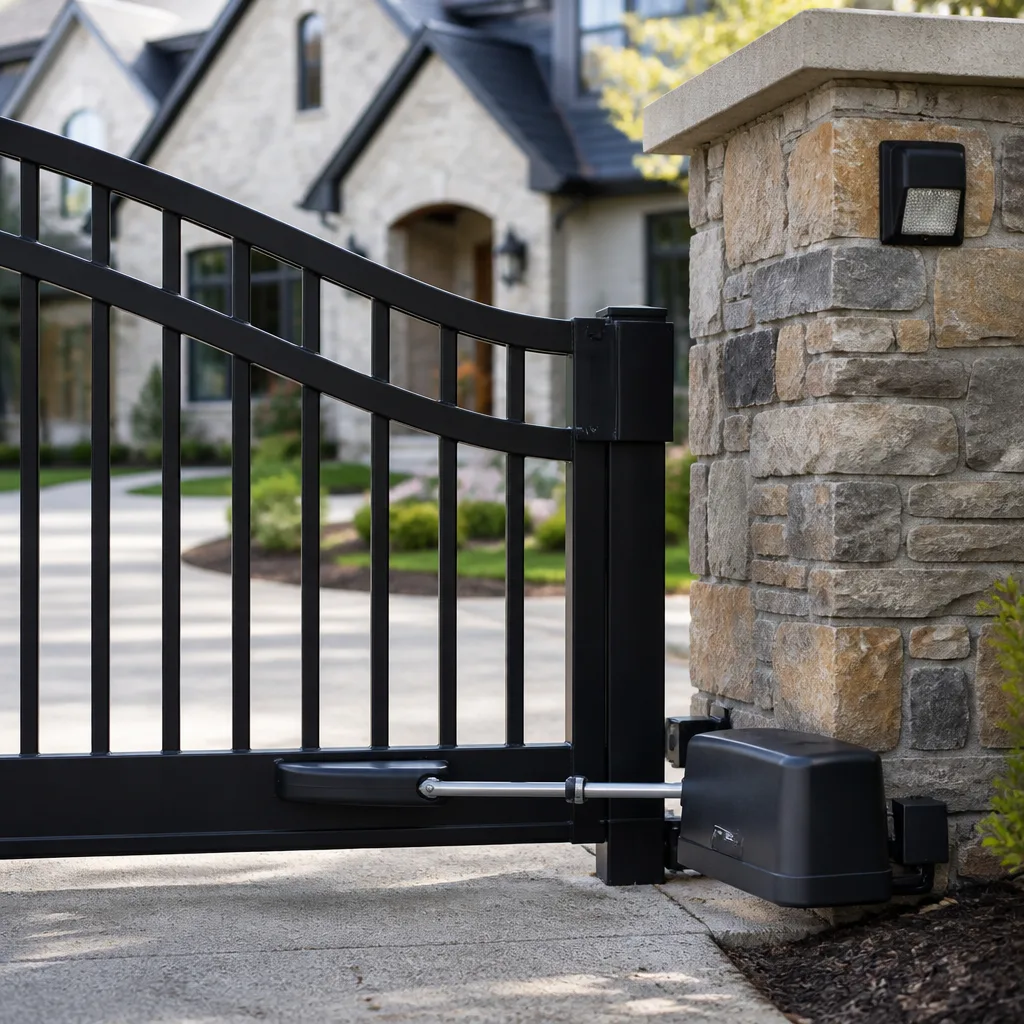
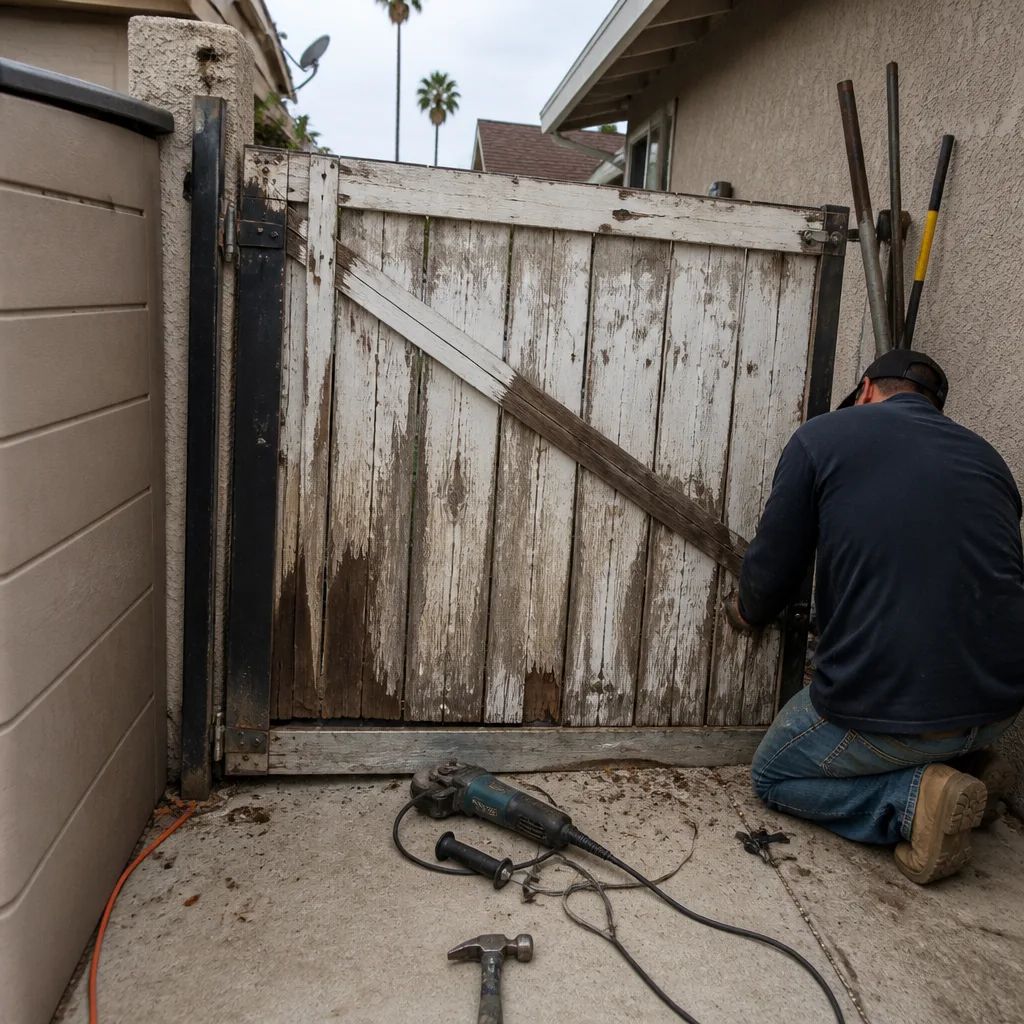 Before
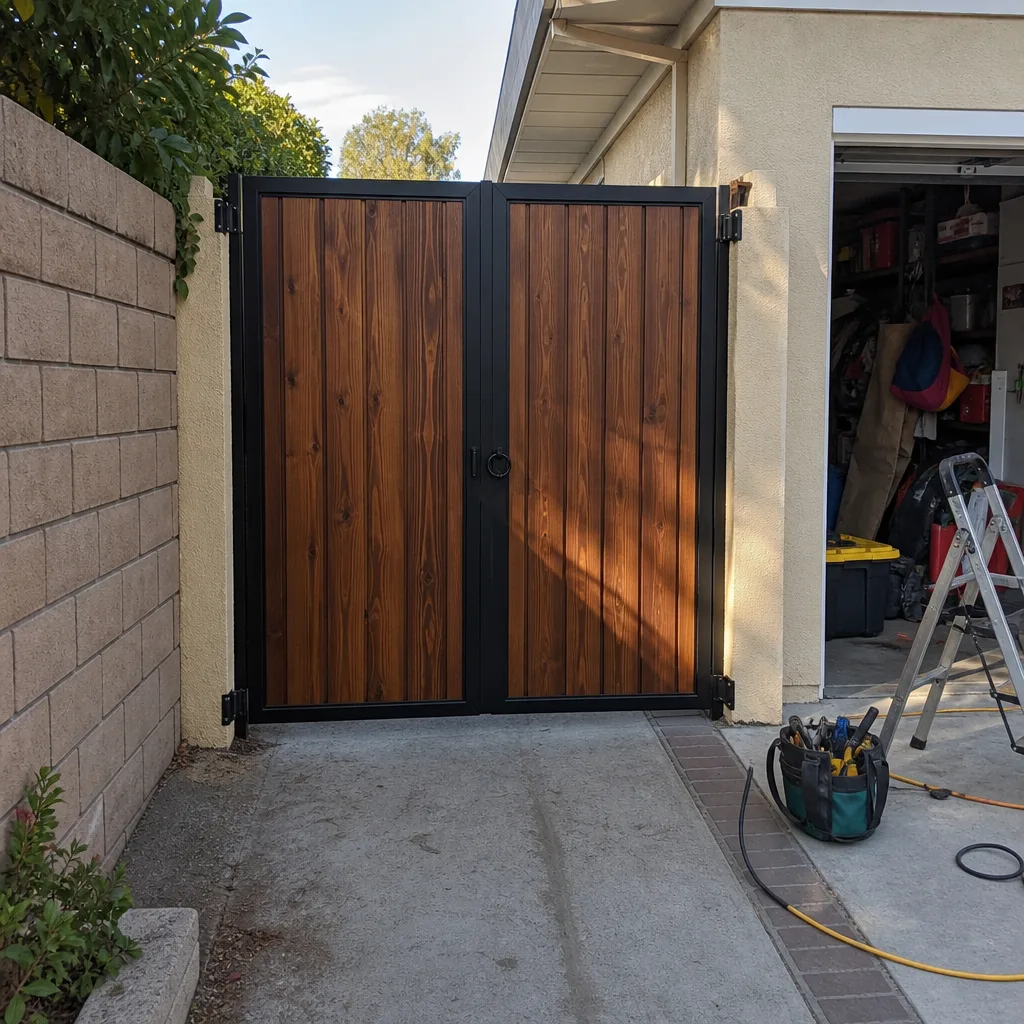 After
After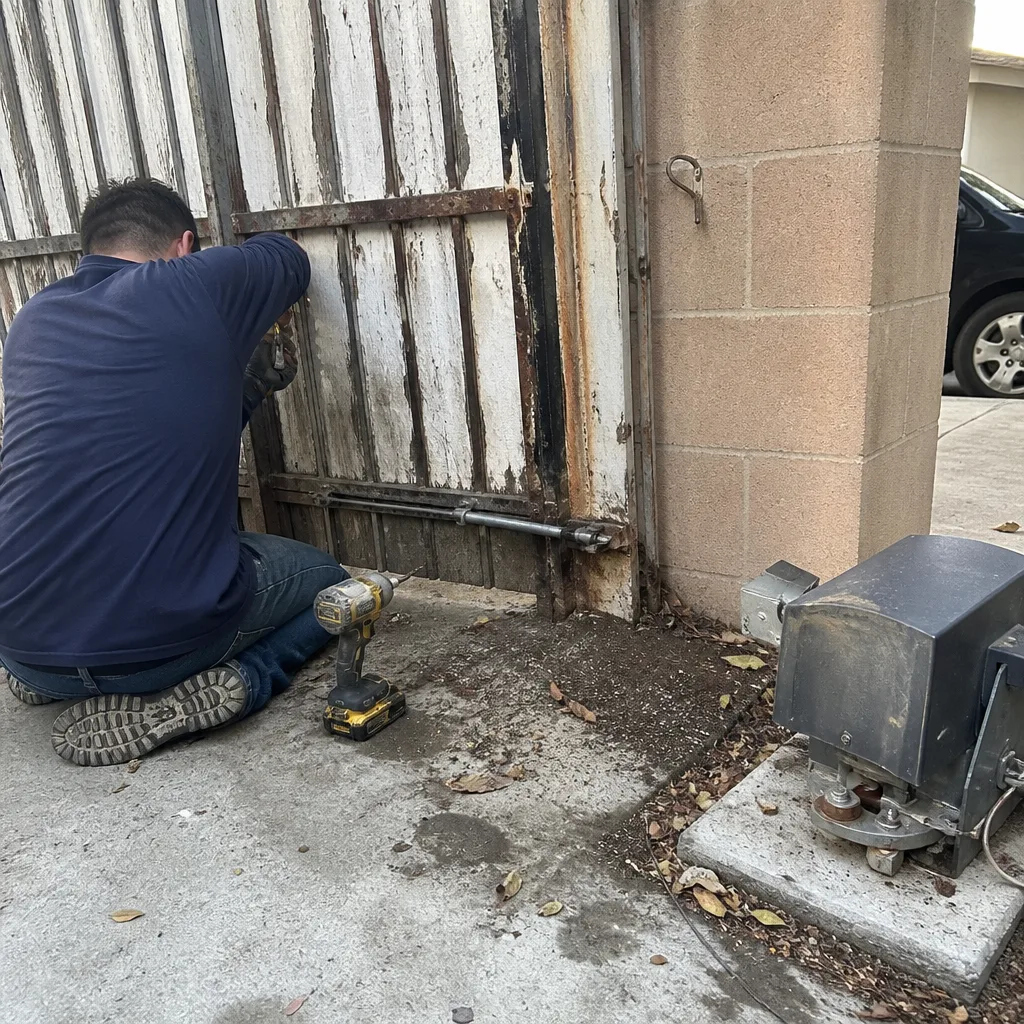 Before
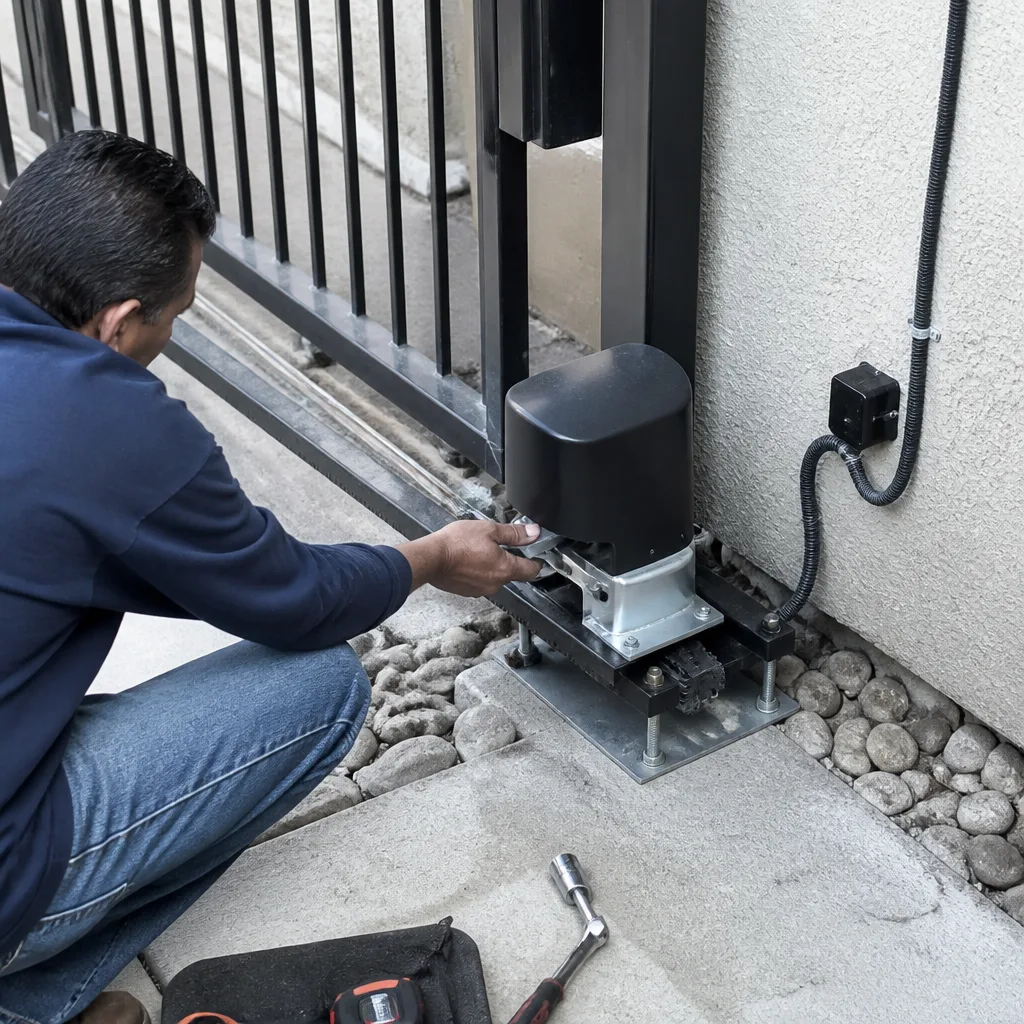 After
After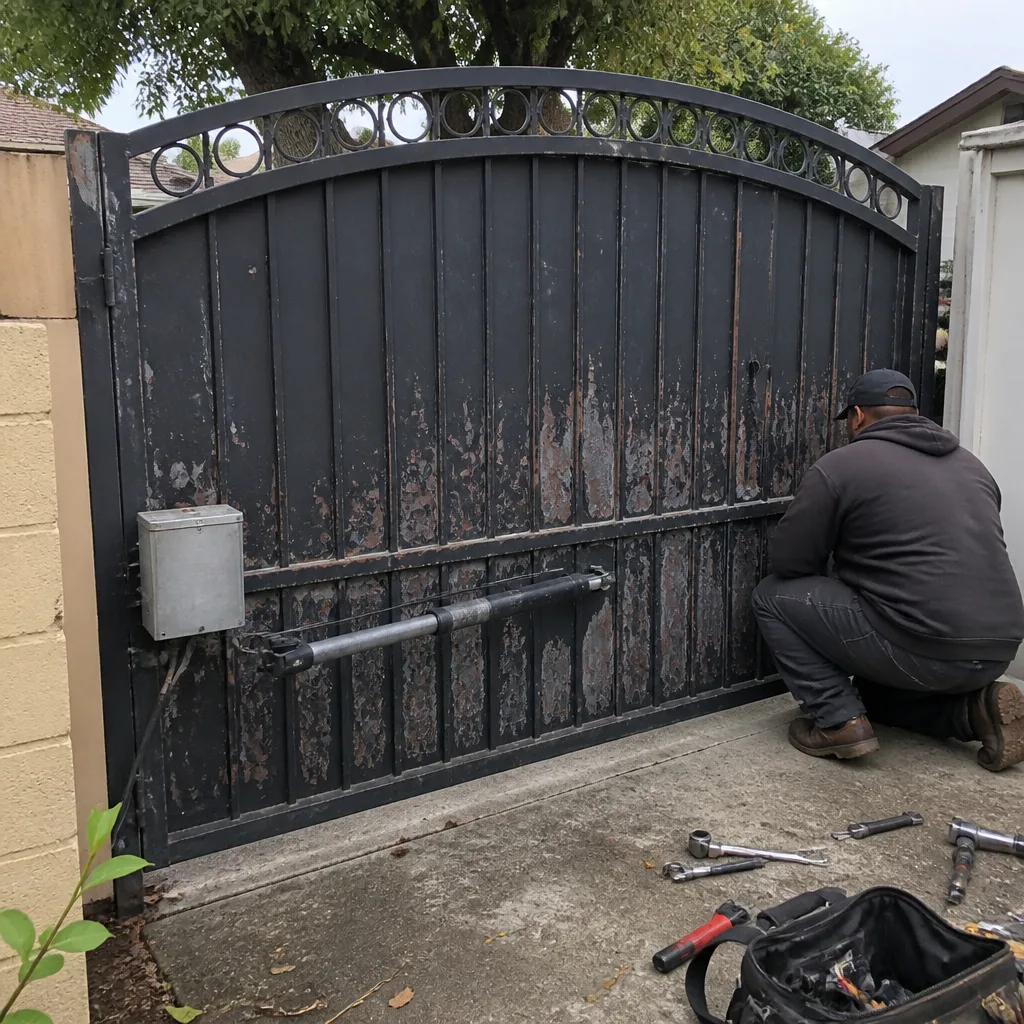 Before
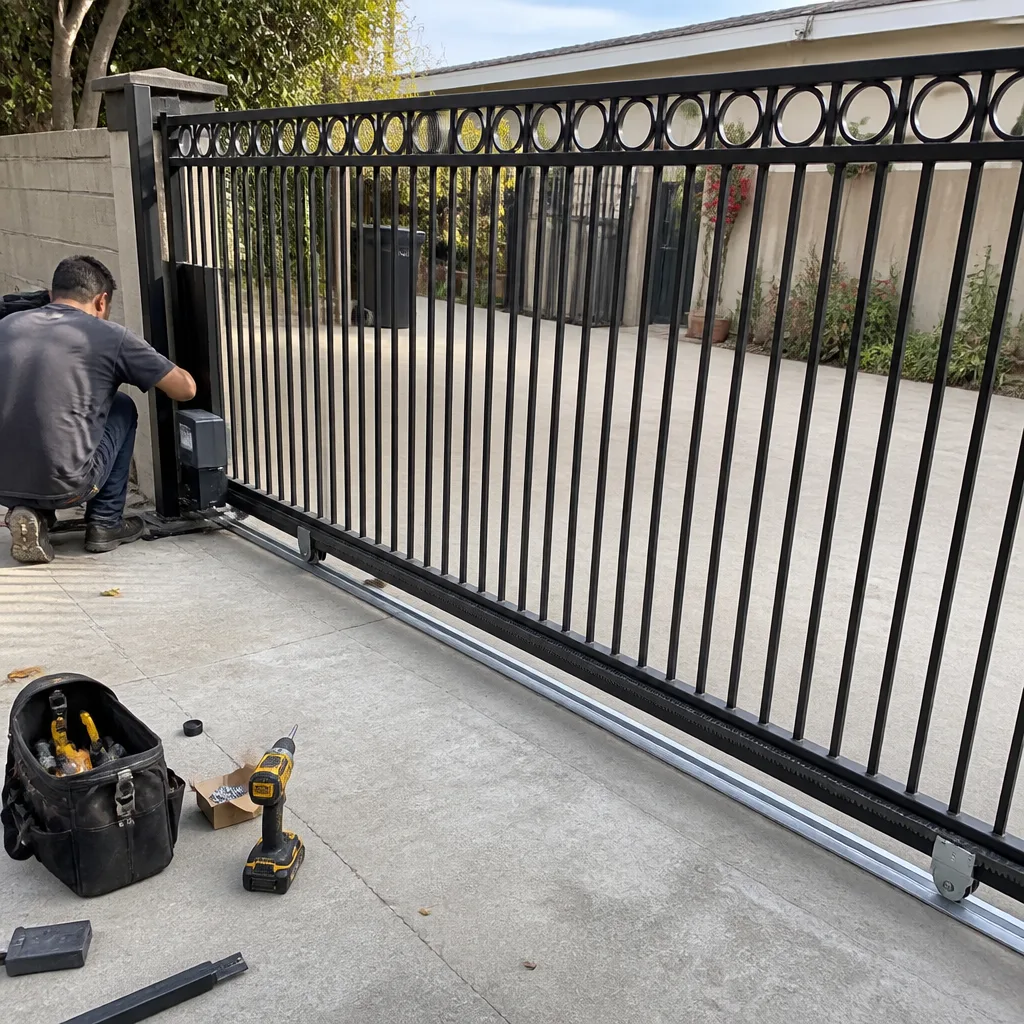 After
AfterGate Repair Warning Signs: A Fullerton Homeowner’s Reference Guide
Most gate failures in Fullerton don’t happen suddenly. They announce themselves weeks or even months ahead of time, in small ways that are easy to dismiss as normal wear. A gate that drags a little on the track. A motor that hums a half-second longer than it did last spring. A hinge that creaks when the Santa Ana winds shift the gate’s weight just so. This guide is written for the Fullerton homeowner who wants to catch those warnings early, before a six-hundred-pound gate decides to stop moving at eleven o’clock on a Sunday night. We’ll walk through the signs that matter, what they mean, what they cost to address, and when the right move is to put down the wrench and pick up the phone.
Quick Answer
The most common gate repair warning signs in Fullerton are a gate that moves slower than it used to, a motor that strains or hums without moving the gate, sagging or dragging on the hinges, rust at the weld points, and intermittent failure of the remote or keypad. Any one of these is worth addressing now, because gate problems compound: a dragging gate burns out a motor, and a burnt motor costs roughly three to five times what a hinge adjustment would have. In our experience serving Fullerton since 2013, most repairs that start small and get ignored end up costing between $800 and $1,500 more than they would have if caught early.
Table of Contents
- A Gate That Moves Slower Than It Used To
- A Motor That Strains, Hums, or Stops Mid-Cycle
- A Gate That Sags, Drags, or Won’t Latch
- Rust and Corrosion at the Welds and Hinges
- Photo Eyes and Safety Sensors That Trip for No Reason
- Remote, Keypad, and Intermittent Access Problems
- Noise: What’s Normal, What’s Not
- Common Mistakes to Avoid
- When to Call a Professional
- Frequently Asked Questions
- The Bottom Line
A Gate That Moves Slower Than It Used To
This is the warning sign we hear about most often, and it’s the one Fullerton homeowners tend to rationalize away. A sliding gate that once took eight seconds to open now takes twelve. A swing gate that used to glide now seems to hesitate. None of this is normal. Gates are designed to move at a consistent speed, and when that speed changes, something is working against the motor.
The most common culprits, in order of frequency in our experience:
- Track obstruction or debris: Fullerton’s dry summers and the leaf litter from mature eucalyptus and oak trees in neighborhoods like Sunny Hills and Raymond Hills mean tracks collect grit, leaves, and small stones. This grit increases friction, and the motor compensates by working harder.
- Worn rollers or bearings: Rollers on sliding gates wear flat over time. When they stop rolling and start skidding, the gate drags.
- Underground settling: Fullerton’s clay-heavy soil expands and contracts with moisture changes. A gate post set in clay can shift by a quarter inch over a few seasons. That quarter inch is enough to bind a gate.
- Low voltage or a failing capacitor: If the motor isn’t getting full power, it runs slow. This is often the first sign of a capacitor on its way out.
What to Check Yourself
- Watch the gate move through a full open and close cycle. Time it. If it’s noticeably slower than it was six months ago, that’s a data point, not your imagination.
- Walk the track (with the gate closed and the motor disengaged) and clear obvious debris. Don’t lubricate anything yet. Lubricant over a dirty track makes a grinding paste that accelerates wear.
- Check the rollers visually. If they’re not turning when the gate moves, they’re skidding.
If the track is clean and the rollers are turning and the gate is still slow, the issue is in the motor or the electrical supply. That’s the point to call us. A slow gate can limp along for months, but the motor is burning out faster every day.
A Motor That Strains, Hums, or Stops Mid-Cycle
A gate motor should be heard and not noticed. The moment it becomes the loudest thing in the driveway, something is wrong. A motor that hums without moving the gate is typically the capacitor struggling to start the motor, or the motor’s gears failing to engage. A motor that strains and labors is usually being overworked by a gate that binds.
In Fullerton’s climate, we see a seasonal pattern. During the dry months from May through October, dust coats the internal components of opener units, especially on homes near the equestrian trails and unpaved sections of Coyote Hills. That dust gets into limit switches and gear housings. During the brief wet season, the opposite problem occurs: moisture finds its way into housings that have been baked dry, and electrical connections corrode.
We service Ironworks Gate Co. home garage and gate operators across nine major brands, including LiftMaster, FAAC, and Mighty Mule, so we see the full range of failure modes. LiftMaster units often give a clear warning: the amber “learn” light blinks a diagnostic code. FAAC and Mighty Mule units are less communicative and need a trained ear.
What Motor Strain Usually Means
- Hum with no movement: Start capacitor failure, common on older LiftMaster and FAAC units after 8 to 12 years of Fullerton heat cycling.
- Strain with slow movement: The gate itself is binding. Fix the gate, and the motor often recovers.
- Starts and stops mid-cycle: Limit switch failure, or a safety sensor reading a false obstruction.
- Runs, but doesn’t open all the way: Gears worn in the opener head, or a belt that’s stretched.
A motor that is failing will eventually stop holding the gate closed, which matters more than most people realize. A closed gate protects the home. A gate that drifts open because the motor has given up is an invitation.
A Gate That Sags, Drags, or Won’t Latch
Sagging is the slow-motion failure. It happens over years, not days, and it’s the most common reason we’re called to older Fullerton homes in the downtown historic district and along Malvern Avenue, where gates were often hung decades ago and have been opening and closing through forty Fullerton summers.
A sagging gate is a geometry problem. The weight of the gate pulls downward and outward, the hinge welds fatigue, and the gate’s leading edge drops. On a swing gate, the latch stops aligning. On a sliding gate, the gate’s leading edge drops toward the track and drags.
The fix depends on when you catch it. We’ve walked up to gates in Fullerton where the only issue was a single hinge bolt that had loosened over the years, a ten-minute fix. We’ve also walked up to gates where the hinge post had pulled half an inch out of its concrete footing, and the right fix was to reset the post, re-weld the hinges, and re-hang the gate. The difference in cost is the difference between a small service call and a full re-hang, which can run from $600 to $1,200 depending on gate weight and post condition.
Signs of Sagging Worth Checking Today
- The gate scrapes the ground or track in a way it didn’t a year ago.
- The latch doesn’t catch cleanly, and you have to lift the gate slightly to close it.
- The gap between the gate and the post is wider at the bottom than at the top.
- You can hear the hinges when the gate moves, especially a gritty or grinding sound.
None of these is a good reason to learn to live with it. A sagging gate puts stress on the motor, on the welds, and on the post footings. Every cycle accelerates the wear.
Rust and Corrosion at the Welds and Hinges
Fullerton is not a coastal city, but it’s close enough to the marine layer that rust is a real concern, especially in the morning fog that sits over the city from June through August. Homes in the lower elevations, along Commonwealth Avenue and near the train tracks, get more of that damp air than homes up in the hills. Steel gates without proper maintenance rust at the welds first, because welds are where moisture collects and where the protective coating is thinnest.
Rust is rarely just cosmetic on a gate. A thin surface rust on a steel gate can be sanded, primed, and painted. That’s a weekend project. But rust at the hinge welds or at the point where the gate attaches to the post is structural. It means the metal is losing thickness, and every opening and closing cycle flexes that weakened joint.
We tell Fullerton homeowners this: if you can flake rust off with a screwdriver, the metal underneath has already lost integrity. That’s not a paint job. That’s a welding and repair job. Depending on the extent, we can often replace a hinge or reinforce a weld point same-day, but a gate that’s rusted through at multiple points may need to be removed, cleaned, re-welded, and re-hung, or replaced entirely.
Where Rust Shows Up First
- Bottom rail of sliding gates: Moisture, soil contact, and sprinkler overspray do damage here.
- Hinge plates and pivot points: Constant friction removes protective coating quickly.
- Weld joints anywhere on the gate frame: The heat-affected zone around a weld is more porous than the rest of the metal.
- Under decorative elements: Scrollwork and finials trap moisture and hide rust until it’s advanced.
Fullerton’s parks and older neighborhoods run irrigation systems that often overspray onto adjacent gates. Homes along the Fullerton Loop trail and in the Amerige Heights area see this routinely. Sprinkler overspray is one of the most preventable causes of gate rust we know. Adjusting a sprinkler head is cheaper than replacing a gate frame.
Photo Eyes and Safety Sensors That Trip for No Reason
A gate that stops halfway and reverses without any visible obstruction is not possessed. It’s the safety system doing its job, often in response to something the homeowner can’t see. Fullerton gets intense low-angle sun in the late afternoon, particularly in the fall and winter months when the sun sits low in the southwestern sky. That direct sunlight hitting a photo eye sensor can blind it, causing false trips.
Dust, spider webs, and leaves are the other common culprits. Photo eyes are small, recessed lenses, and they don’t need much to misread. A single strand of web across a lens can scatter the beam enough to trip the sensor.
But there’s a threshold where false trips become a real problem. If the gate reverses during the same portion of travel every time, or if the sensor trips even in the shade with clean lenses, the issue is usually wiring. Gate cables run through conduits that age in the Fullerton heat. Insulation cracks, moisture gets in, and the signal degrades. We’ve replaced photo eyes on Fullerton gates that were only a few years old because the original installation left the cable exposed to UV, and the jacket had turned brittle.
Quick Diagnostics, In Order
- Clean both photo eye lenses with a dry cloth. No chemicals.
- Check for anything that has shifted into the beam path, including plants that have grown over the season.
- Watch the gate at different times of day. If it only fails in the late afternoon, sun glare is likely.
- If the problem persists, have the wiring inspected. Intermittent sensor issues are often a wiring fault, not a sensor fault.
Safety sensors are not optional. A gate without working safety sensors is a liability, and Fullerton code requires them on any automated gate that serves a driveway. We never bypass them. We fix the underlying issue so the gate protects people and pets.
Remote, Keypad, and Intermittent Access Problems
Fullerton homeowners often assume an unresponsive remote means a dead battery. Sometimes it does. But intermittent access problems are more often the receiver, not the remote. The receiver is the component that listens for the remote’s signal, and on many gate systems it’s a separate board inside the opener housing. When a receiver ages, its range shrinks. The remote works when you’re ten feet away, but not from the street. And on a windy day, when the gate’s metal surface is moving slightly and the signal has to find a moving target, range drops further.
Keypads fail differently. They’re exposed to weather full-time. Fullerton’s summer sun cooks the keypad membrane until it cracks. Moisture gets in during the winter months and corrodes the contacts. We replace more keypads that have failed from UV damage than from electronic failure.
One note about BFT and FAAC systems we install and service: their receivers are often paired with multiple remotes and a keypad through a learning routine that can fall out of sync after a power surge. Southern California Edison’s rolling brownouts during hot spells in Fullerton can scramble programming on these units. Sometimes the fix is a simple re-learning procedure. Other times a surge has taken out the receiver board.
What Intermittent Access Usually Means
- Remote works close but not far: Receiver sensitivity fading or remote battery (it’s the battery often enough to check first).
- Keypad works sometimes: Cracked membrane, corroded contacts, or a code conflict.
- Everything works except the exit loop: Loop detector failure, or a wire cut in the driveway.
- Gate opens but won’t close from the remote: Photo eye trip or a limit switch problem.
Access problems are frustrating because they’re intermittent by nature. We’ve had Fullerton customers describe a keypad that only fails on hot afternoons. That’s a classic heat-expansion issue on an older circuit board. The only way to confirm it is to test on site, in the heat, when the failure is happening.
Noise: What’s Normal, What’s Not
Gates make noise. A well-maintained chain-drive opener will always have a metallic sound to it. A belt-drive opener is quieter. A swing gate’s hinges will produce some sound at the pivot points. The question is not whether the gate makes noise but whether the noise has changed.
We ask Fullerton homeowners to trust their ears. They’ve listened to the gate open hundreds of times. If it sounds different this week than it did last month, that change means something physical has changed. Sound is vibration, and vibration changes when parts wear, mountings loosen, or lubrication fails.
Specific Sounds and What They Mean
- A high-pitched squeal that comes and goes: Dry bearing or roller. A small amount of the right lubricant fixes this, but using the wrong lubricant makes it worse.
- A grinding or gravel-in-the-mechanism sound: Grit in the track or worn gear teeth. This is not a lubricant problem.
- A heavy clunk when the gate starts or stops: Loose mounting bolts, or a gate hitting the stops too hard because the limit switch needs adjustment.
- A rattling that gets worse with wind: Loose components on the gate itself, often decorative pickets or a latch that no longer seats.
- A rhythmic thumping during movement: A flat spot on a roller, or a bent track section.
Noise by itself is not an emergency, but it’s the earliest warning a gate gives. Gates don’t get quieter on their own. If the noise has changed, something is wearing.
Common Mistakes to Avoid
- Lubricating instead of cleaning. We see this weekly in Fullerton. A homeowner hears a squeak, sprays the track with whatever lubricant is in the garage, and turns the accumulated dust into an abrasive paste that grinds the rollers and track. Clean first. Then lubricate the right parts with the right product.
- Ignoring a slow gate because “it still works.” A gate that moves slowly is a motor that works harder. The workload that kills a motor is cumulative. A slow gate is a motor on a payment plan toward failure.
- Bypassing safety sensors. When a photo eye trips repeatedly, some homeowners disconnect it. That’s a code violation in Fullerton and a real safety hazard. We never do it, and no reputable company will.
- Painting over rust without addressing the metal. Paint doesn’t stop rust. It hides it while the metal underneath continues to lose thickness. By the time the paint bubbles, the repair is more extensive than it would have been.
- Replacing the battery in every remote when the receiver is the problem. A failing receiver drains confidence in the system. Homeowners replace remote batteries three times before discovering it was never the remote. Test the system, not just the parts.
- Delaying the repair because “it only happens sometimes.” Intermittent problems are problems that are getting worse slowly. The “sometimes” eventually becomes “every time,” usually at the most inconvenient moment.
- Hiring on price alone. Fullerton has no shortage of handymen who will “take a look” at a gate. A gate is a piece of engineering: structure, motor, sensors, and access control working together. The person who will charge the least often understands the least.
When to Call a Professional
Some gate maintenance is homeowner work: clearing a track, cleaning photo eye lenses, and visually inspecting rollers and hinges are all within reach. But the threshold for professional help should be low. If the gate has changed speed, if the motor is making a new sound, if the gate won’t latch, or if the safety sensors trip without reason, that’s the time to call. Gate components are heavy, the springs and cables on some swing systems are under tension, and the electrical work on operators involves line voltage. None of that is worth a trip to urgent care.
Ironworks Gate Co. offers free estimates in Fullerton - call (279) 201-0835. We’ll come out, look at the gate, explain what’s wrong in plain language, and give you a written price before any work begins. If you already have a written estimate from another company, bring it. Our free second opinion has saved Fullerton homeowners thousands by catching over-diagnosed repairs.
Frequently Asked Questions
Most gate repairs in Fullerton run between $180 and $850, with hinge adjustments and sensor cleanings at the low end and motor or receiver replacements at the high end. A full gate replacement with new automation typically ranges from $3,500 to $9,000 depending on gate size, material, and opener brand. We quote every job before we start, so the price on the estimate is the price you pay, no surprises. Call (279) 201-0835 for an exact quote.
In most cases, yes. Hinge adjustments, sensor realignments, track cleaning, and many opener repairs are done in a single visit and our technicians carry common parts for LiftMaster, FAAC, BFT, and Mighty Mule systems on the truck. More involved work, like a full re-weld or a replacement gate, is scheduled. We’ll tell you honestly which category your repair falls into, and we’ll be there when we say.
A full installation from Ironworks Gate Co. includes removal of the old gate, new gate fabrication or procurement to your specifications, hinge and post work, opener installation, safety sensor setup, access control wiring, testing, and a walkthrough. The price is fully itemized before work begins, and every installation is protected by our 90-Day Done Right Promise. We don’t leave until the gate opens and closes correctly, every time.
Yes. We handle the full electrical scope on every gate job: the power run from the panel to the opener, the low-voltage wiring for keypads and intercoms, the safety edge sensors, and the photo eyes. All work is done to Fullerton’s current code requirements. We never leave a homeowner to find an electrician to finish what we started.
Heat expansion is the most common cause of heat-related gate failures in Fullerton. Metal expands in the sun, and a gate that was cutting it close thermally will bind when the temperature climbs. Electronic components also behave differently in heat: aging capacitors lose tolerance, and circuit boards flex. If your gate only fails on hot afternoons, note the temperature and the time, and tell us when you call. It helps us diagnose faster.
Yes. A live person answers every call, at any hour, every day of the year. Not a voicemail system, not an answering service. We’ve taken calls at 2 a.m. from Fullerton homeowners whose gate wouldn’t close and whose cars were stuck in the driveway. That’s the job. Call (279) 201-0835 and a person will pick up.
The Bottom Line
Fullerton gates give clear warning before they fail. The gate that moves slower than it used to, the motor that hums a little longer, the hinge that creaks in a new way, the sensor that trips without cause: these are not quirks to live with. They are data. And the data points to a repair that will cost less today than it will in six months. A gate is a physical system under constant load, and Fullerton’s climate, from the summer sun to the marine layer to the clay soil, works against it year-round. The homeowners who get twenty more years out of a gate are the ones who pay attention to the warnings. We’ve been doing this in Fullerton since 2013, and we’ve never once had a customer tell us they regretted fixing a gate too early. It’s always the other way around.
Written by Victor Salinas, Owner at Ironworks Gate Co., serving Fullerton since 2013.