
Last updated August 25, 2026
Free on-site gate assessment - hinges, posts, and your LiftMaster or Nice gate operator checked before anything is quoted
The assessment is free and the quote is the invoice.

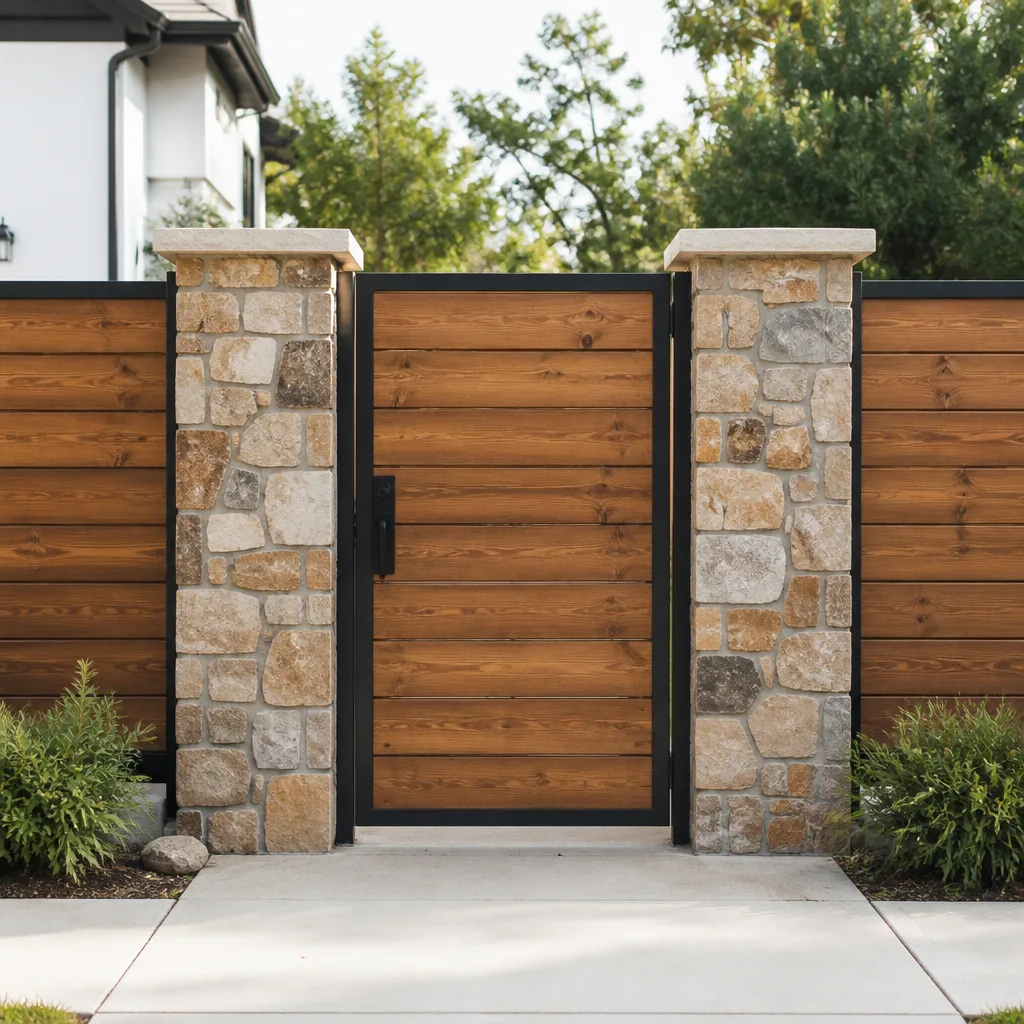

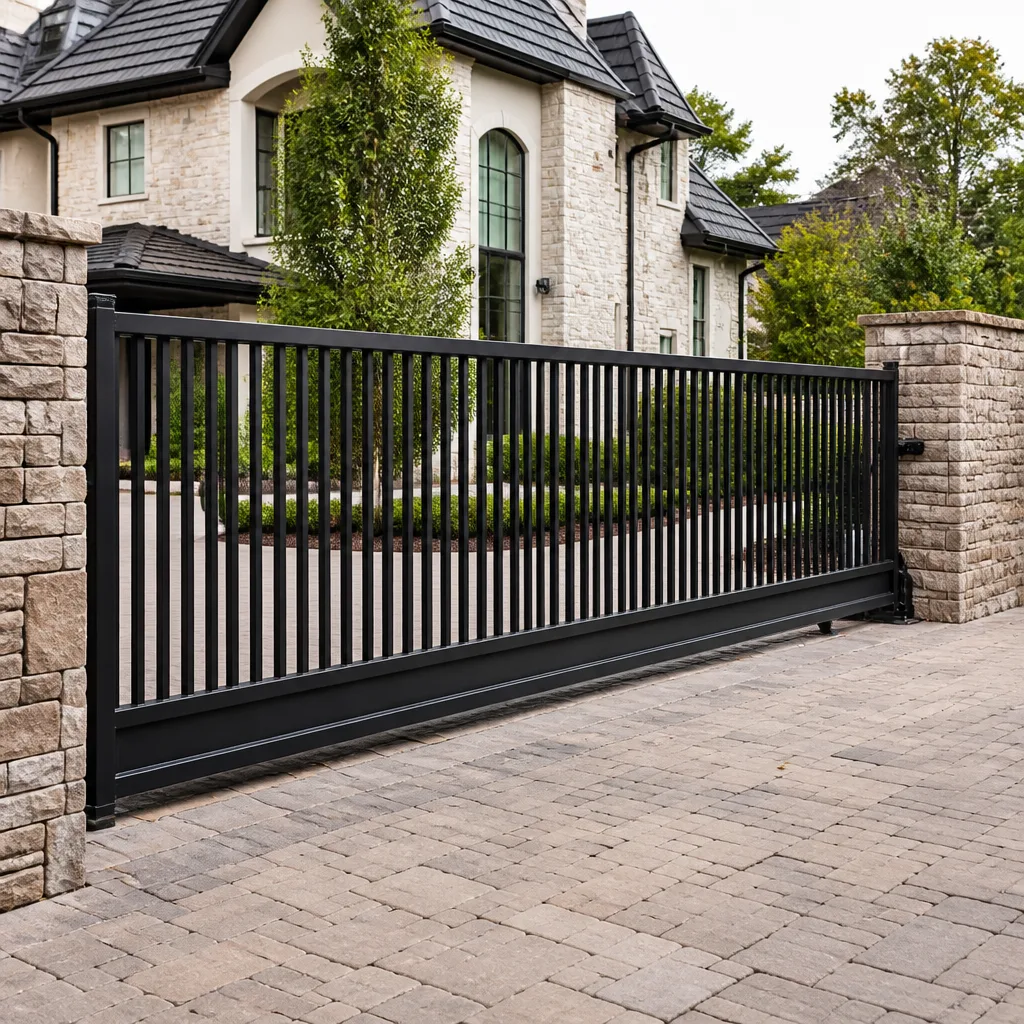
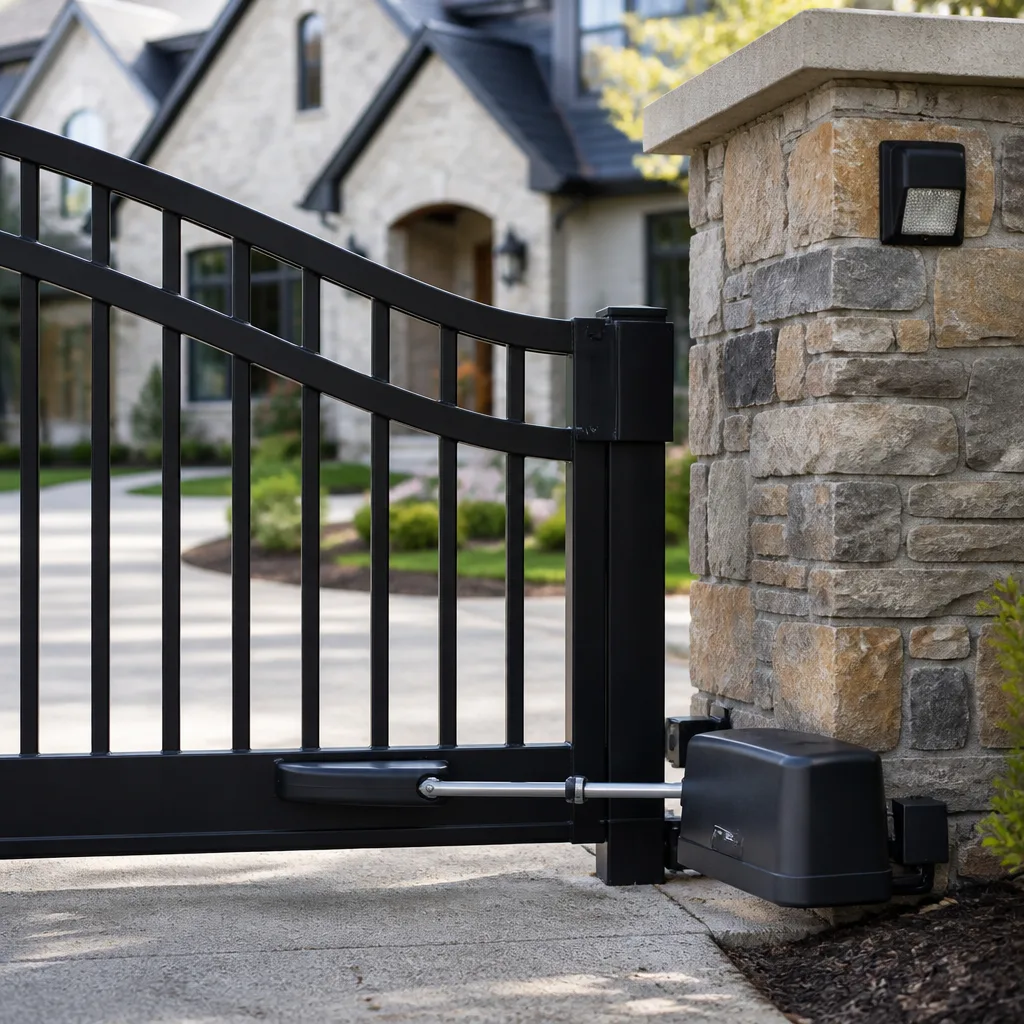
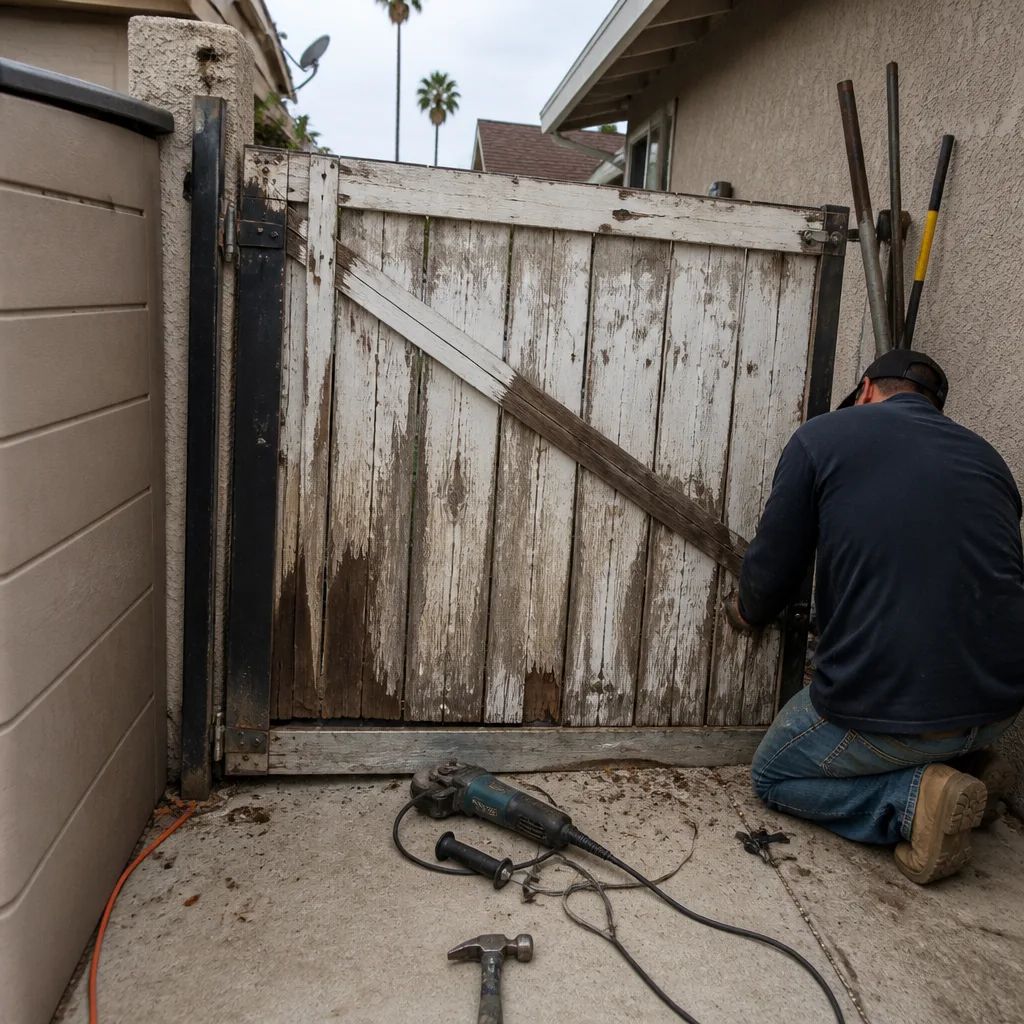 Before
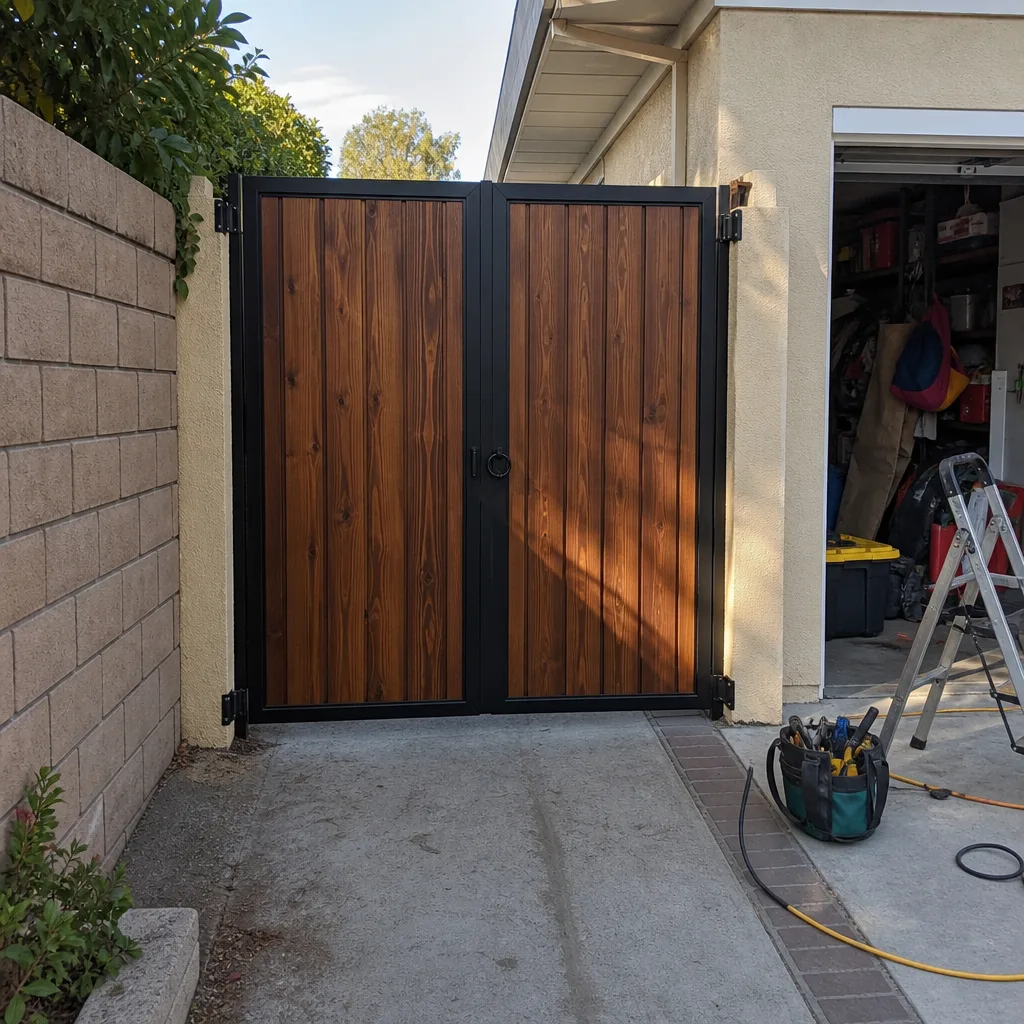 After
After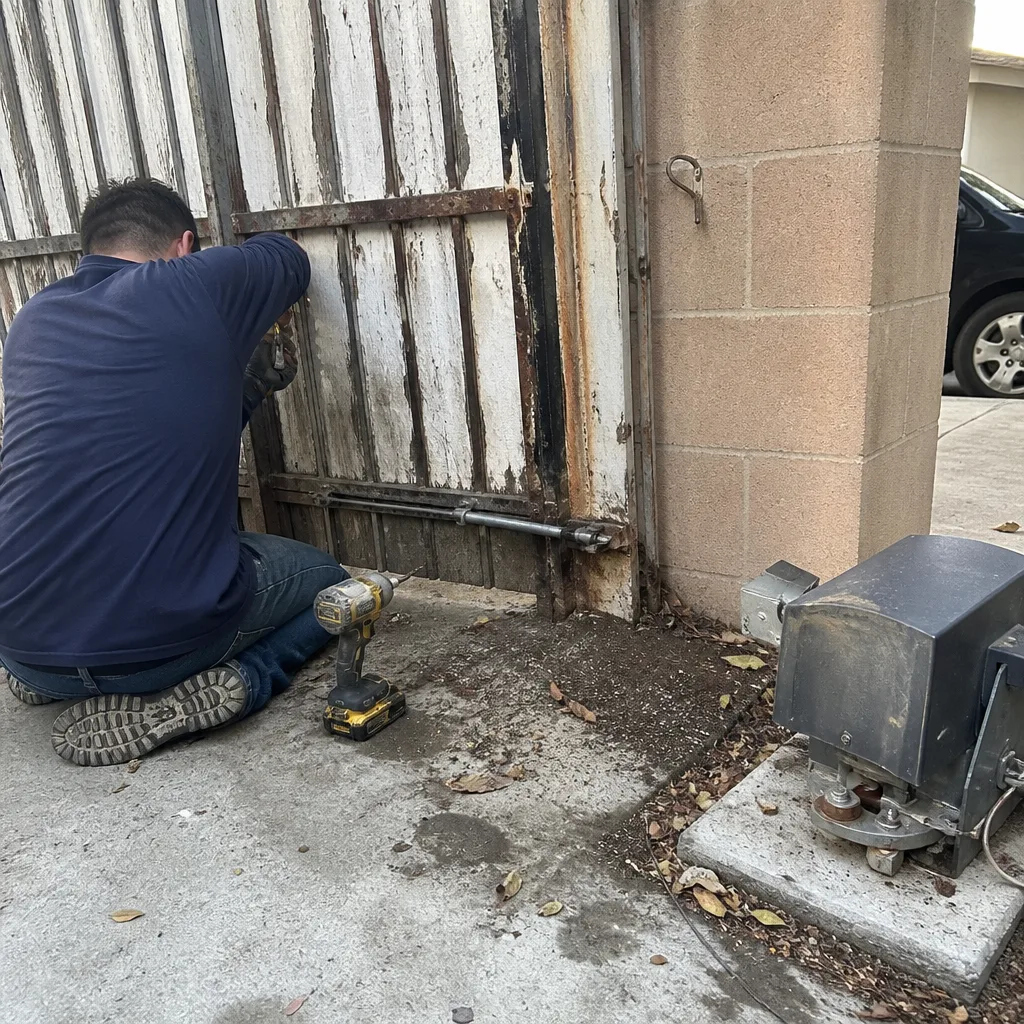 Before
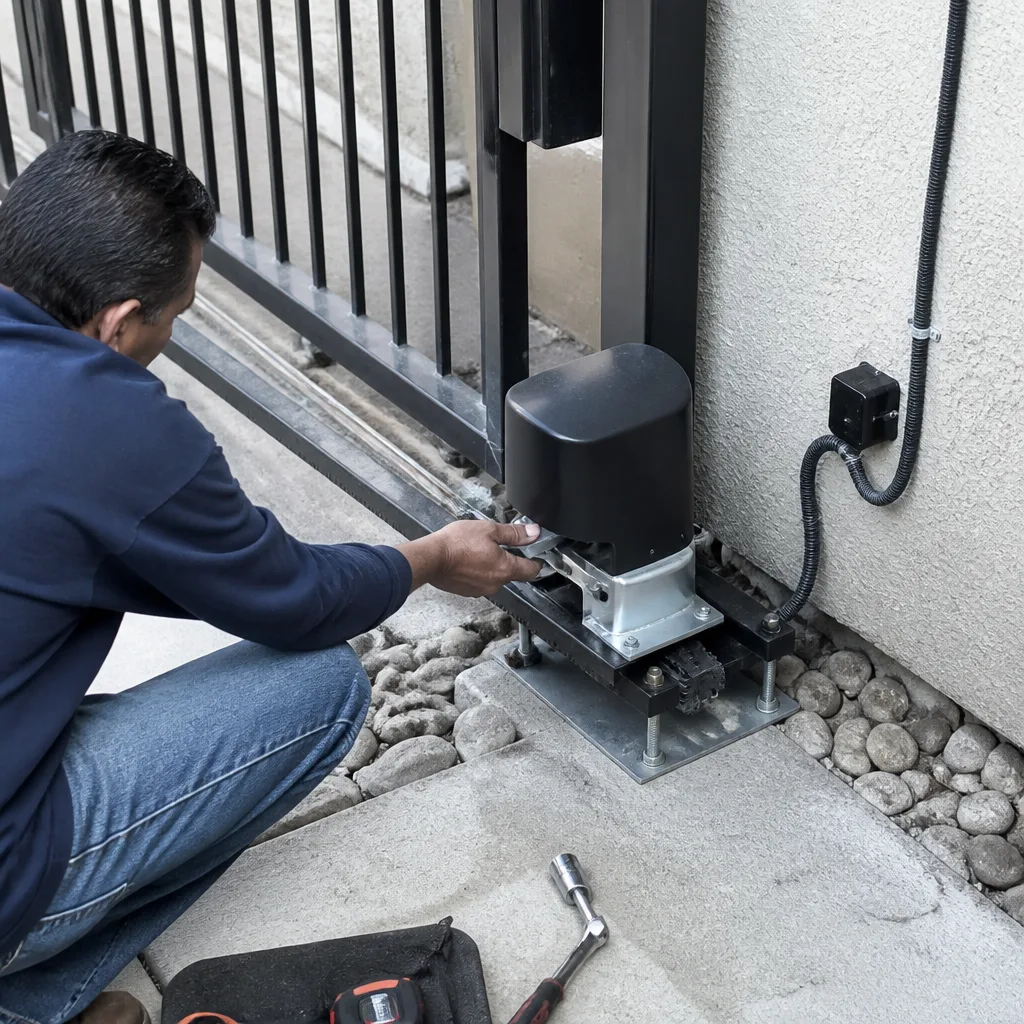 After
After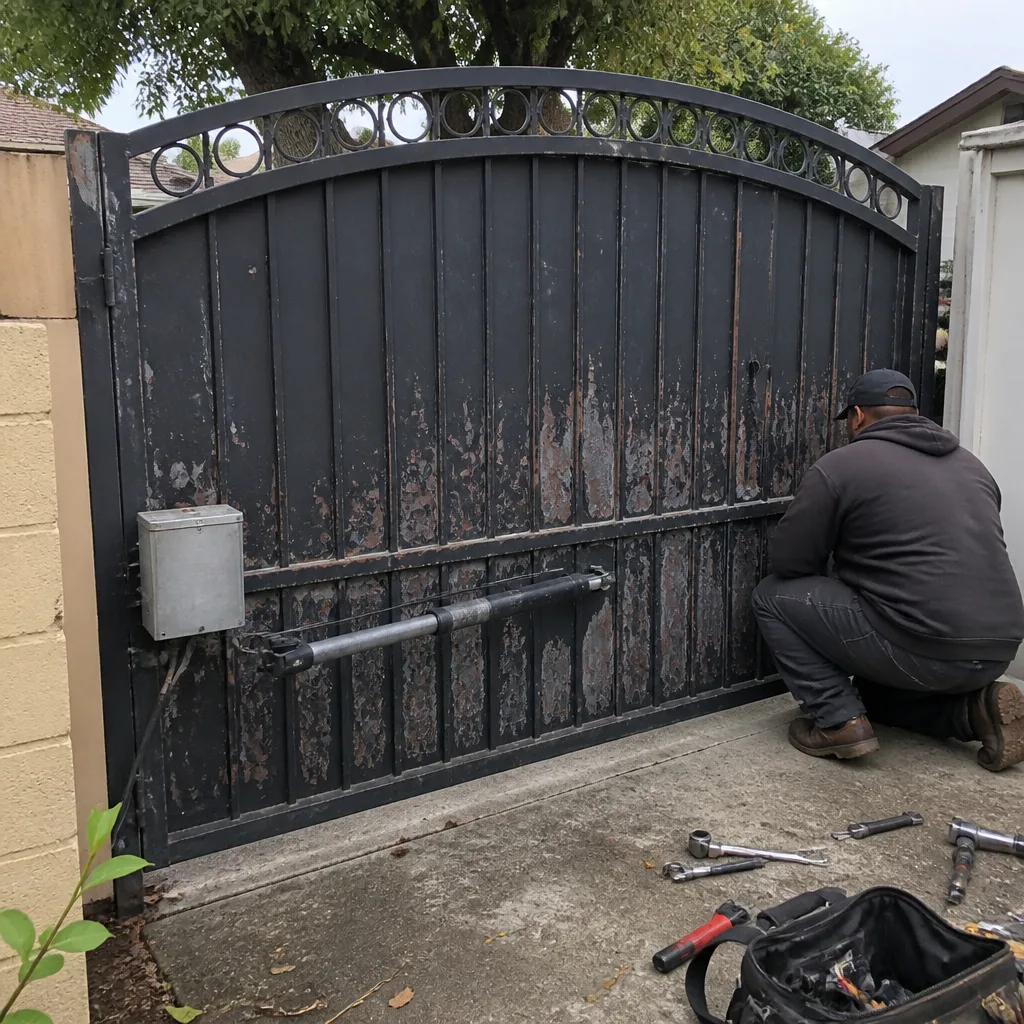 Before
 After
AfterGate Repair Maintenance Checklist for Fullerton Homeowners
Most Fullerton homeowners don’t think about their driveway gate until it stops moving. Then it’s 7:15 on a Tuesday morning, the car is trapped in the driveway, and the gate is half-open with a grinding noise coming from the motor. Here’s the counterintuitive part: roughly 80% of the gate repairs we perform in Fullerton could have been prevented with fifteen minutes of attention twice a year. This guide gives you a plain-language maintenance checklist built for Fullerton’s specific conditions – the heat, the Santa Ana winds, the soil movement – and tells you exactly what to check, when to check it, and when to leave it to someone who does this work every day.
Quick Answer
A Fullerton homeowner should inspect and maintain their driveway gate every six months, focusing on hinge lubrication, track cleanliness, opener force settings, and safety sensor alignment. Most routine maintenance takes under twenty minutes and prevents the majority of breakdowns we see. If your gate is grinding, sagging, or reversing unexpectedly, stop using it and call a gate specialist before small wear becomes a full replacement.
Table of Contents
- Why Fullerton Gates Fail Specifically
- The Twice-Yearly Inspection: A Step-by-Step Walkthrough
- Hinge and Hardware Maintenance
- Opener and Motor Care: What Homeowners Can Safely Do
- Safety Systems: Photo Eyes, Reverse Sensors, and Auto-Close
- Track, Wheel, and Roller Maintenance
- Seasonal Fullerton Considerations: Heat, Santa Anas, and Rain
- Common Mistakes to Avoid
- When to Call a Professional
- Frequently Asked Questions
- The Bottom Line
Why Fullerton Gates Fail Specifically
Fullerton sits in a climate band that is harder on gate hardware than most homeowners realize. The summer heat routinely pushes past 90 degrees, which expands steel rails and posts. Then the evening marine layer rolls in and drops the temperature twenty degrees, contracting that same metal. Over ten or fifteen years, that daily expansion and contraction works hinge bolts loose and shifts gate frames out of square. We’ve been called to homes near Coyote Hills where a gate that worked perfectly in May binds by August simply because the metal grew a quarter-inch in the heat.
Fullerton’s soil adds a second problem. The city sits on a mix of sandy loam and clay pockets, and clay swells when it rains. Even the light winter rains Fullerton gets are enough to move a gate post a few millimeters. That doesn’t sound like much, but a driveway gate is a long lever. A post that leans three degrees makes the gate’s latch side drop two inches. Homeowners in older Fullerton neighborhoods – the tract homes north of Chapman Avenue built in the 1960s and 70s – deal with this more than owners on newer concrete slabs in the Amerige Heights area.
A third factor is debris. Fullerton has mature tree coverage in many neighborhoods, and the Santa Ana winds that blow through from October through March carry fine dust and leaf litter directly into gate tracks and opener mechanisms. A slide gate track packed with acacia leaves and windblown grit will force the motor to work harder, which shortens its life and can trip the clutch or strip gears. A maintenance routine solves all three of these problems before they become a service call.
The good news is that none of this requires special tools or technical knowledge. A homeowner with a can of penetrating oil, a wrench, and twenty minutes can handle most of what this guide covers. At Ironworks Gate Co. home, we’d rather see Fullerton homeowners prevent problems than pay us for repairs we could have helped them avoid.
The Twice-Yearly Inspection: A Step-by-Step Walkthrough
Set a reminder for two dates: the first weekend of March and the first weekend of October. March catches the tail end of winter rain and the start of the dry season. October catches the beginning of Santa Ana season and gives you time to address issues before the holidays when gates get the most use. Here is the full walkthrough, in the order that matters.
Step 1: The Visual Sweep
- Stand back twenty feet and look at the gate from the driveway. Is it level? A gate that sags toward the latch side is a hinge or post problem starting.
- Walk the full length of the gate. Look for rust spots, cracked welds, or paint bubbling. In Fullerton’s dry climate, rust is slower than coastal cities, but it still appears at bolt heads and welded joints first.
- Check the gate’s rest position. When closed, the gate should sit flush against the stop without a visible gap at the top or bottom. A wedge-shaped gap means the frame is racking.
- Open and close the gate manually (disengage the opener first if it’s automated) and listen. Smooth, quiet travel is the goal. A squeak is a dry hinge. A rumble is a bearing or wheel issue. A scrape is misalignment.
Step 2: The Hardware Pass
With the gate stopped in the open position, grab the latch-side corner and try to lift it. Any movement upward – even an eighth of an inch – means hinge bushings or bolts are worn. Do the same on the hinge side. A gate should feel solid in the hand, with no play at all. Then check every visible bolt and nut. Fullerton’s temperature swings work fasteners loose over time. You will typically find two or three that need a quarter-turn.
Step 3: The Opener Check
Cycle the gate with the opener four times in a row. Watch the movement. It should be smooth and consistent, with no hesitation, no stutter, and no grinding. Listen for changes in pitch. An opener that sounds like it is working harder at a particular point in the travel is telling you about a track problem or a low battery in backup systems. Note anything unusual. This is the single most informative test you can do.
Step 4: Document What You Find
Keep a simple note on your phone or a paper in the garage. Date, what you checked, what looked off. Next March, you will have a baseline. If a hinge had a little play in March and has more in October, that’s a trend that tells you to replace the hinge before it fails completely.
Hinge and Hardware Maintenance
Hinges carry the full weight of the gate – for a steel driveway gate, that’s often 400 to 800 pounds. In Fullerton, where gates sit in direct sun for most of the day, hinge lubrication breaks down faster than in cooler climates. The oil thins and runs out, the lubricant dries, and then metal rides directly on metal.
For most residential Fullerton gates, the hinges are either sealed-bearing pivots or greased steel-on-steel. Sealed bearings need no maintenance until they start to fail, and then they are replaced, not lubricated. Steel-on-steel hinges need lubrication twice a year. Use a penetrating oil with a straw applicator – something like PB Blaster or Liquid Wrench – and apply it at the top of the hinge pin where the gate panel attaches to the post. Two or three drops per hinge is enough. Work the gate back and forth a few times after applying to spread the lubricant.
While you are at the hinges, check the hinge welds. Look at the top and bottom of each hinge where it meets the gate frame and the post. Cracks in powder coat or paint at a weld are an early warning sign. The metal may not have failed yet, but the finish cracking means the joint is flexing. This is common on Fullerton gates installed in the 1990s and early 2000s, before manufacturers thickened hinge plates. If you see this, take a photo and keep an eye on it. If the crack grows, the hinge needs professional welding before the gate drops.
Also inspect the latch and the stop. The latch takes the second-most abuse after the hinges, particularly on windy days when the gate slams against the stop. A latch that has worn its strike plate will let the gate rattle in the wind, and that rattle accelerates wear on every other component. A worn stop does the same. Both are inexpensive to replace and should be done before the gate frame itself starts taking the impact.
Opener and Motor Care: What Homeowners Can Safely Do
Gate openers are where maintenance becomes a question of what is safe versus what is compelling. The opener translates line voltage into mechanical force, and it contains capacitors that can hold a charge even after power is disconnected. The rule we live by: if it means removing the cover and touching anything electrical, that’s a professional’s job. What a Fullerton homeowner can safely do is inspect, test, and adjust from the outside.
Start with the power source. If your opener is plugged into a nearby GFCI outlet, test that outlet monthly by pressing the test button. Fullerton homes built before 2000 often have outdoor outlets without reliable weather protection, and a tripped GFCI is the single most common “dead gate” call we get. The gate does not need repair – the outlet needs reset. Worth checking before any service call.
Next, check the opener’s force settings. Every modern opener – the LiftMaster models are especially common in Fullerton’s newer neighborhoods, while older homes often have linear-arm openers – has an adjustable force dial or digital setting. Set a wood block on the track or in the gate’s path and cycle the gate. The opener should stop and reverse within two seconds of meeting the obstruction. If it keeps pushing, the force setting is too high, and that’s not just a safety issue: an opener pushing too hard will bend the gate frame or strip the gearbox. Pull the power and call a professional to recalibrate.
Listen to the opener. A healthy opener makes a low, mechanical hum. A labored moan means it’s working against resistance – a dirty track, a worn wheel, or a battery in decline. A click followed by nothing means a relay or capacitor issue, and that’s a no-power, no-touch situation. Fullerton’s heat also kills opener batteries faster than the manufacturer’s lifespan suggests. A backup battery rated for three years may last two in a driveway that hits 100 degrees in a Santa Ana. If your opener has a battery backup, test it: pull the main power and cycle the gate. If it won’t move or moves slowly, the battery needs replacement.
Brand matters here, though less than homeowners think. We service Mighty Mule, LiftMaster, FAAC, and BFT openers across Fullerton, and the maintenance basics are the same regardless of what’s on the post. The differences show up in how quickly a failing opener can be diagnosed and the availability of parts. A homeowner with a FAAC hydraulic operator on an estate gate in the hills above Fullerton needs different service than a homeowner with a Mighty Mule on a tube gate in a tract neighborhood. Know what brand you have, keep the manual, and if you can’t identify the model, a photo of the opener sent to a professional is often enough to identify it.
Safety Systems: Photo Eyes, Reverse Sensors, and Auto-Close
Since 2001, every automated gate in the United States must include a means of detecting an obstruction and reversing. Most residential gates use photo eyes – those two small black cylinders mounted on posts on either side of the gate opening, connected by an invisible infrared beam. If a child, a car, or a trash can breaks the beam, the gate stops and reverses. This system is the difference between a gate and a hazard, and we treat it with the seriousness it deserves.
Test the photo eyes monthly. With the gate closed, press the remote to open it. While the gate is moving, walk across the opening and break the beam. The gate should stop immediately and reverse. If it does not, clean the photo eye lenses first – Fullerton dust and spider webs are the most common culprits – and test again. If it still does not reverse, stop using the gate in automatic mode and operate it manually until it can be checked. A gate that does not reverse on obstruction is dangerous, full stop, and no maintenance checklist should encourage a homeowner to “adjust the sensor” without the proper tools and knowledge.
Also check the auto-close timer, if your gate has one. Fullerton homeowners commonly set auto-close to 15 or 30 seconds. Over time, the timer can drift, closing earlier than intended. This matters more than you might think: a gate that closes on a car pulling through is a nuisance, but a gate that closes on a person can cause real injury. Time it with your phone twice a year. If the gate closes in 10 seconds when you set it for 30, the timer circuit needs attention.
The same obstruction test applies to contact edges and loop detectors. Some Fullerton gates use an induction loop in the driveway instead of or in addition to photo eyes. Test that system by driving over the loop area and confirming the gate opens. If the loop is failing, the gate may not open when a car approaches from inside the property, and that becomes a trapped-vehicle situation. These systems are complex enough that a professional check every two to three years is a sound investment, particularly for a gate that sees daily multi-car use.
Track, Wheel, and Roller Maintenance
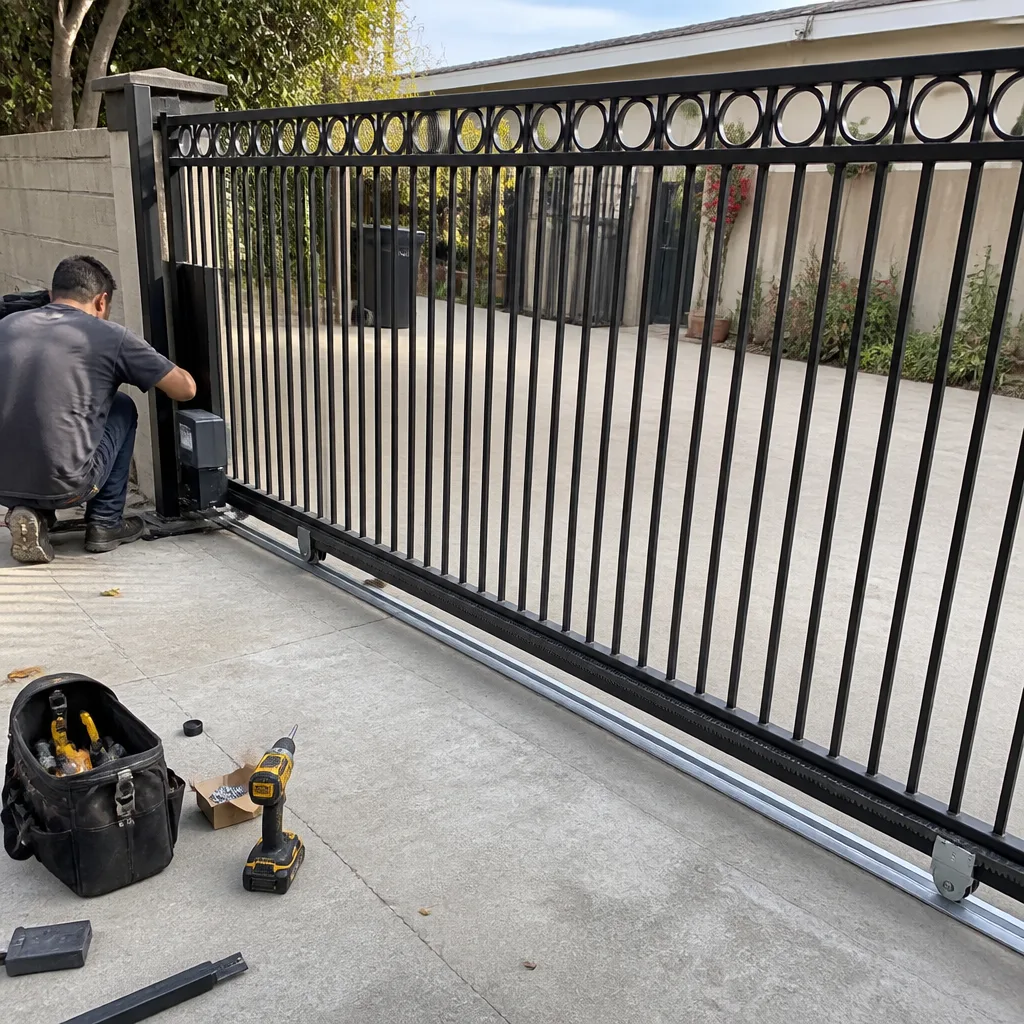
Slide gates – the kind that roll horizontally across the driveway – are heavily represented in Fullerton because they suit narrower setbacks. A slide gate rides on a steel track set in the driveway or on a cantilevered rail and a set of wheels or rollers. The track collects everything: leaves from the mature trees in Fullerton’s older neighborhoods, dust from the Santa Anas, mud from winter rain, and the occasional acorn or driveway gravel. A track that is not cleaned is the leading cause of premature slide gate opener failure in this city.
Clean the track every three months, more often during Santa Ana season. Use a flat shovel or a narrow trowel to scrape out packed debris, then a stiff brush, then rinse with a garden hose. If the track is recessed into a concrete channel, pay attention to the ends where debris collects in corners. A track that is even half-filled with grit makes the opener pull against resistance the entire travel length, and that resistance translates directly into heat and motor wear.
Inspect the wheels. Crouch down and look at the wheel that carries the gate at the track level. The wheel should roll smoothly, not slide. If the wheel is worn flat on one side or the bearing is dry, the gate will rumble as it moves and the motor will strain. Wheel replacement is inexpensive, but it requires lifting the gate safely, which is not a one-person job on a heavy steel gate. This is a professional job, and Fullerton homeowners should expect it to be quoted as a parts-and-labor line item, not a mystery charge.
Check the track anchors. The bolts that hold the track to the concrete are under constant shear load from the gate’s weight and movement. In Fullerton soil, the concrete itself can shift slightly, and the track bolts take up that movement. Run a wrench over any exposed track bolts twice a year. If a bolt is loose, tighten it. If it is stripped or the concrete around it is cracked, flag it. A track that comes loose mid-operation will derail the gate, and that is when the damage gets expensive.
Seasonal Fullerton Considerations: Heat, Santa Anas, and Rain
Fullerton has three seasons that matter for gate maintenance, and each pushes a different set of components.
Santa Ana Season (October through March)
The Santa Anas are the hardest on gates. The combination of sustained 30 to 50 mph gusts and single-digit humidity means two things: wind load and fine dust. A gate that is open is a sail. The wind catches the flat panel and applies hundreds of pounds of lateral force to the hinges and the opener’s gear train. Every year, we see Fullerton gates where the Santa Anas have bent a partially-open panel past its stop, stripping the opener gears or shearing a hinge pin. During Santa Ana season, keep the gate closed when possible, and if you know a wind event is coming, consider switching the opener to manual so the wind has less mechanical resistance to fight.
Dust intrusion is the second Santa Ana issue. The same wind that drives the fires in the canyons blows a fine, powdery dust into every hinge, track, and opener housing. After a strong Santa Ana event, take ten minutes to blow out the track, brush the hinges, and wipe the opener housing. It is the cheapest insurance a Fullerton homeowner can buy.
Summer Heat (June through September)
Fullerton regularly sees 10 to 15 days a year above 95 degrees, occasionally touching 105. Metal expands. A gate that runs freely at 8 a.m. may bind at 3 p.m. because the steel has grown in the heat. This is especially true for gates with tight clearances – the kind where the gate panel sits within half an inch of the post. If your gate binds in the afternoon heat and runs fine in the morning, the clearance is too tight, and the fix is a professional adjustment, not lubrication. The heat also shortens the life of opener electronics. Circuit boards, transformers, and batteries all degrade faster in sustained high heat, and a Fullerton opener on a west-facing wall is running 20 to 30 degrees hotter than the air temperature. If your opener is in direct afternoon sun, consider a simple shade shield. It costs little, and it adds years to the opener’s life.
Winter Rain (December through February)
Fullerton’s annual rainfall is modest – most years under 15 inches – but the timing and intensity matter. The light, intermittent rains of a normal winter are mostly a rust concern, not a flooding concern. Wipe down exposed steel with a dry cloth after a rain week, and touch up any chipped paint before rust takes hold. The bigger issue is the rare heavy storm, when Fullerton gets two or three inches in a day. Clay soil swells, posts shift, and the gate frame gets torqued. After a heavy rain event, re-check the gate’s level and strap clearances. Early detection of post movement is the difference between a simple shim job and re-setting a post in concrete.
Common Mistakes to Avoid
- Lubricating the track. Never grease a slide gate track. Grease holds dust and grit, creating a grinding paste that wears wheels and the track surface faster. A clean, dry track is what you want. Lubrication goes on hinges and pivot points only.
- Using WD-40 on hinges. WD-40 is a water displacer, not a long-term lubricant. It cleans and temporarily loosens, but it dries out and leaves hinges drier than they were. Use a proper penetrating oil or a lithium grease for metal-on-metal hinge pins.
- Ignoring a slow gate. A gate that used to open in eight seconds and now takes fifteen is telling you something. The opener is working harder, the battery may be fading, or the track is dirty. A slow gate is a gate that is failing, and ignoring it only makes the eventual repair larger.
- Acting on a force adjustment without understanding it. When a gate reverses unexpectedly, the temptation is to turn up the force dial so it pushes through the obstruction. That turns a safety system off. If the gate is reversing on its own, the correct response is to find the obstruction or the failing component, not to overpower it.
- Skipping the safety sensor test. The photo eyes and reverse sensor are the only things standing between the gate and a serious injury. Testing takes one minute and needs to happen every month. Many Fullerton homeowners have never tested their photo eyes. That’s an avoidable risk.
- Failing to keep a record. Without notes, every inspection starts from zero. A one-line note that says “October – right hinge has slight play” is the most valuable maintenance tool a homeowner can have. It turns a vague feeling that something is changing into a measurable trend.
- Waiting for a full failure to call. Most gate repairs are cheaper and faster when caught early. A hinge with play costs a few hundred dollars to replace. A gate that falls off its post is a multi-thousand-dollar emergency. Fullerton homeowners who call at the first sign of trouble are the ones who spend the least over the long run.
When to Call a Professional
Some maintenance tasks are simply not homeowner work. If the gate has dropped enough that it scrapes the ground, the post is moving, the hinges are cracked at the welds, or the opener makes a grinding noise that isn’t a track issue, stop using the gate and make the call. The same applies to any electrical work inside the opener housing. High-tension springs, if present on a cantilevered gate, are under extreme load and should never be adjusted or removed by anyone without the right training and tools. A gate spring under tension can release with enough force to cause severe injury or death. That bears repeating in plain terms: do not touch gate springs.
For Fullerton homeowners who want a second opinion on a written estimate, Ironworks Gate Co. offers free second opinions on any written estimate. We also provide free estimates on repairs, and a live person answers at (279) 201-0835, 24 hours a day. If the gate is down and you cannot get out of the driveway, that is what the phone number is for.
Frequently Asked Questions
Twice a year is the right rhythm for Fullerton’s climate: once in March after winter rain, and once in October before Santa Ana season. The full inspection takes about twenty minutes, and the track cleaning takes another ten every quarter.
In our experience, most Fullerton gate repairs fall between $150 and $600, with hinge replacement, track cleaning, and opener tuning at the lower end, and opener replacement or welding work at the higher end. Every price is quoted and agreed before any work starts, so there are no surprises on the bill. Call (279) 201-0835 for a free estimate.
We answer the phone 24 hours a day and dispatch for emergency gate failures in Fullerton as quickly as the schedule allows. A gate stuck closed with a car in the driveway is a priority call, and we will be there when we say.
A full installation typically includes site measurement, post setting in concrete, gate panel fabrication or assembly, opener installation and programming, safety sensor setup, and a full system test. The price is written and agreed before work starts, and the job is covered by the 90-Day Done Right Promise.
Yes. We run the electrical from the panel to the gate, install the photo eyes and safety edges, and program the opener so everything works as one system. The work is done by background-checked, uniformed technicians, and it is all covered in writing.
We are trained and equipped on nine gate-automation brands, including LiftMaster, FAAC, BFT, and Mighty Mule, so the correct fix is made on the first visit, whatever is on the driveway. If your opener is older or out of production, we can often source parts or recommend a direct replacement. Call (279) 201-0835 and we’ll talk through what you have.
The Bottom Line
A Fullerton gate that receives twice-yearly hinge lubrication, quarterly track cleaning, monthly safety sensor tests, and prompt attention to the first sign of wear will serve for decades. The climate here is hard on metal and hard on motors, but a homeowner who follows this checklist will catch problems when they are $150 hinge replacements instead of $2,500 opener and frame failures. When the work goes beyond what you can safely do yourself, call a professional who will quote the price before the work starts and stand behind the finished job in writing. That’s how a gate stays out of the breakdown column and in the background, where it belongs.
Written by Victor Salinas, Owner at Ironworks Gate Co., serving Fullerton since 2013.