
Last updated August 25, 2026
Free on-site gate assessment - hinges, posts, and your LiftMaster or Nice gate operator checked before anything is quoted
The assessment is free and the quote is the invoice.
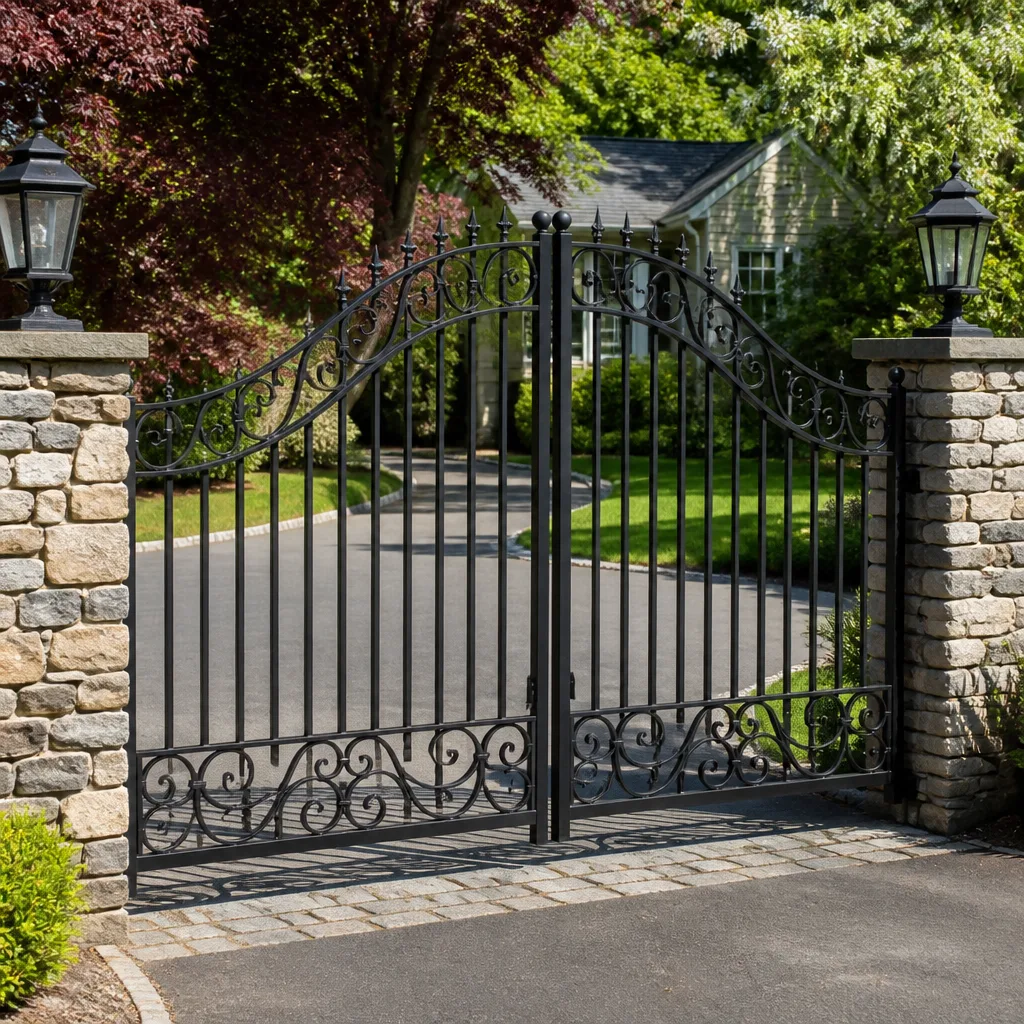
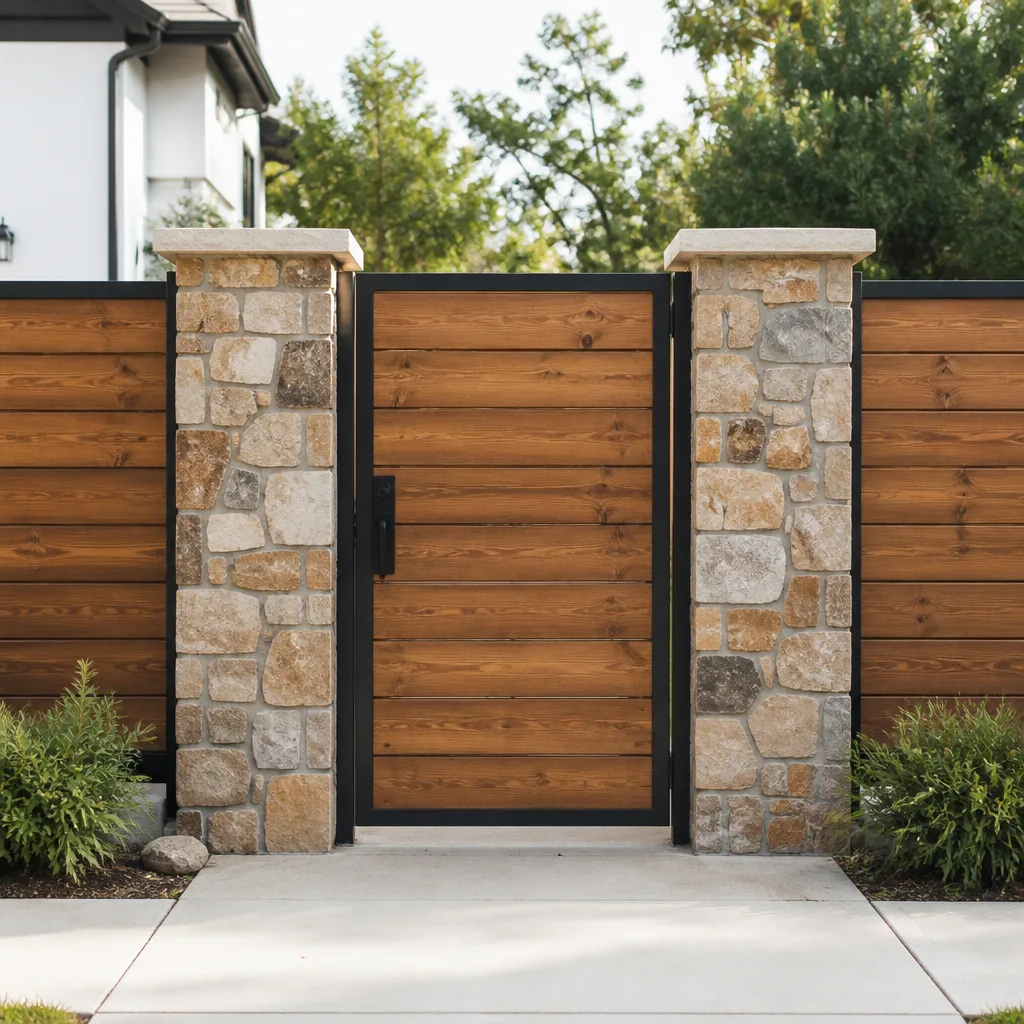
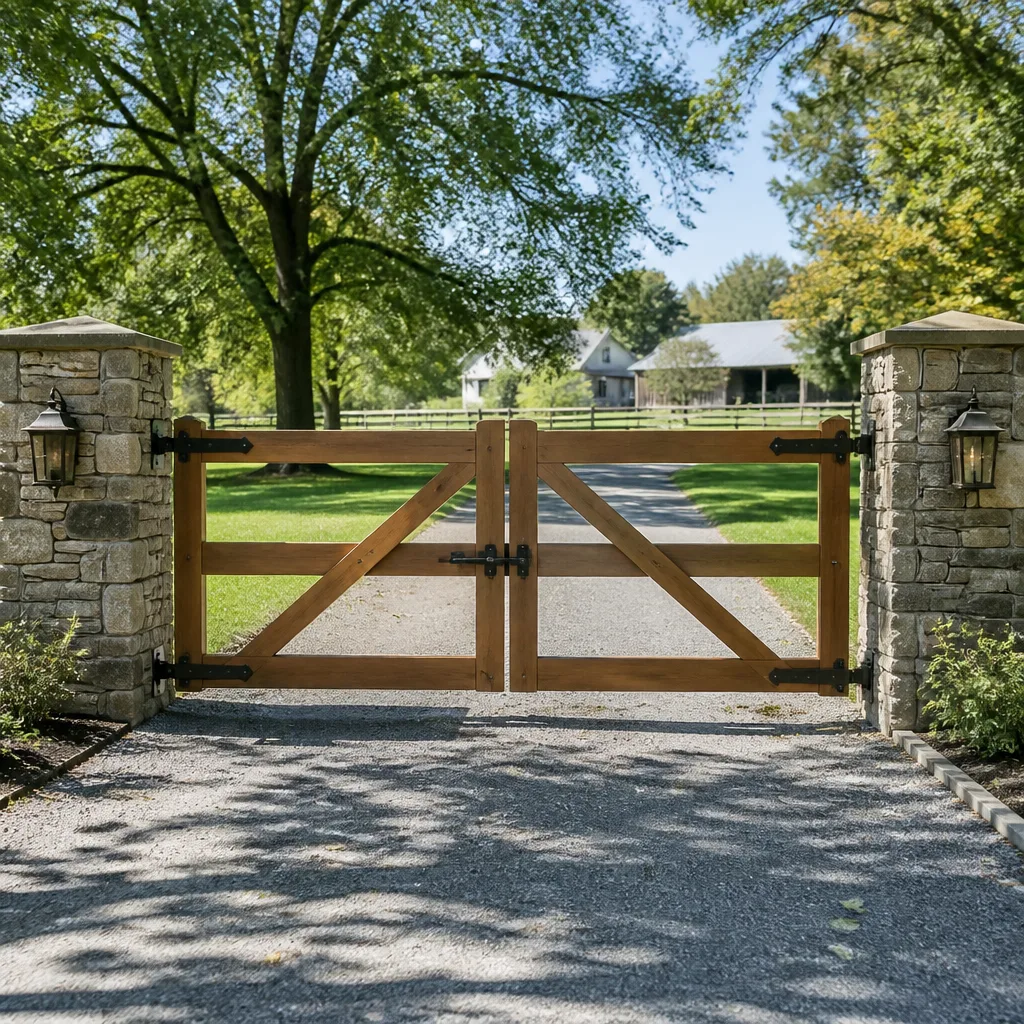
 Before
 After
After Before
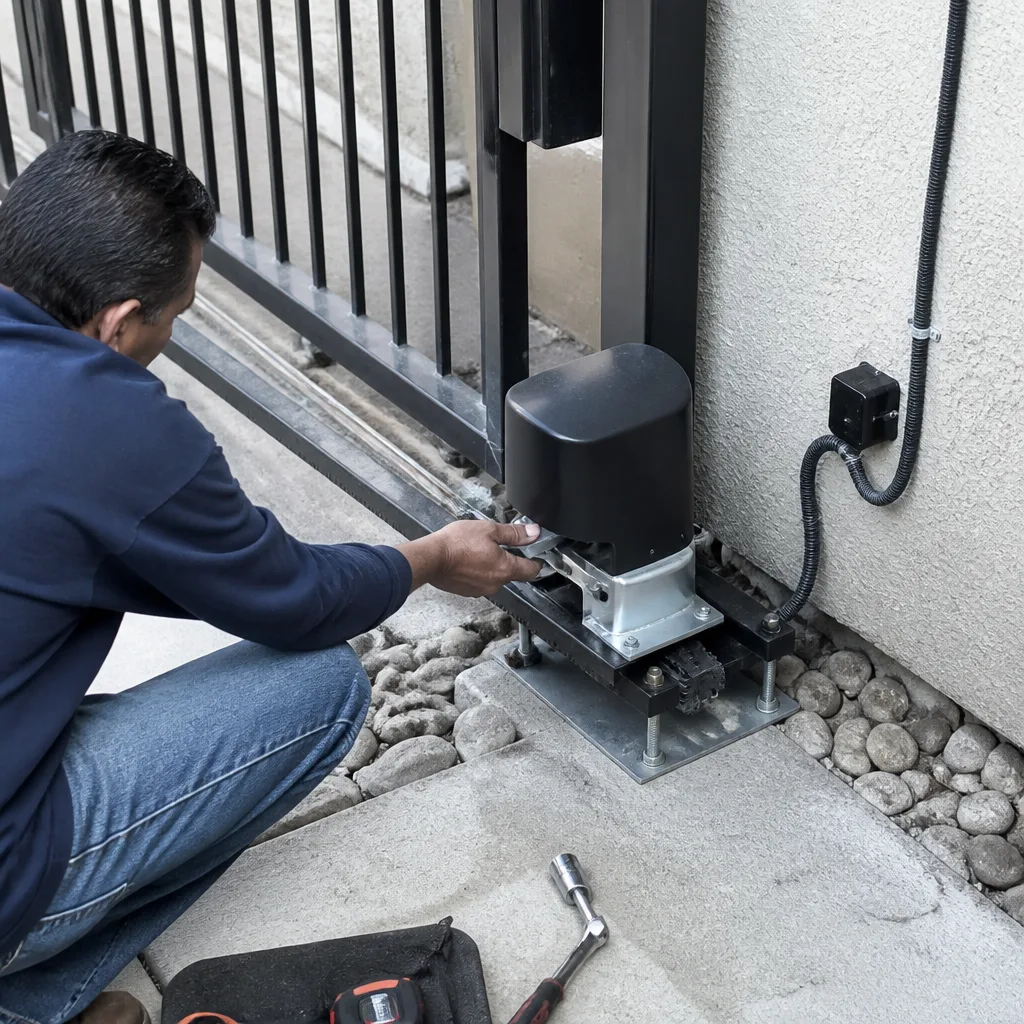 After
After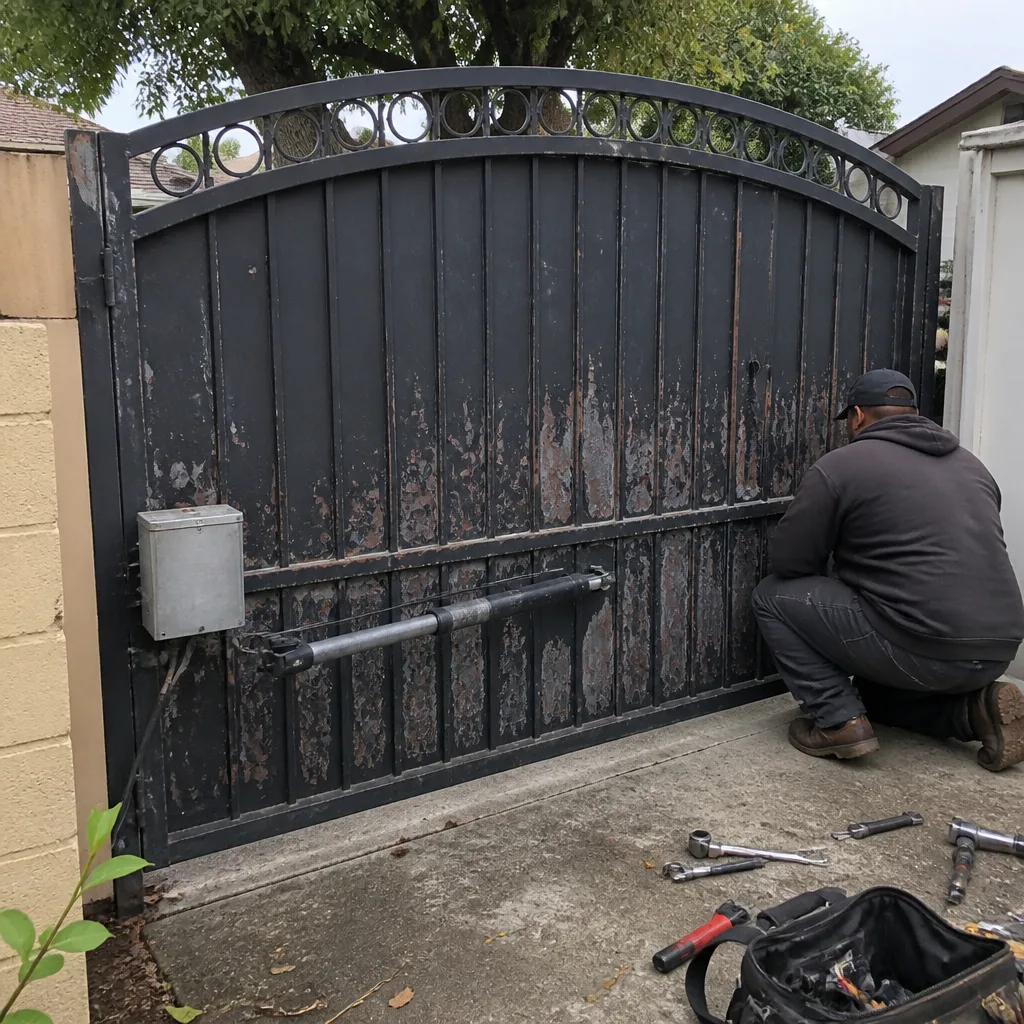 Before
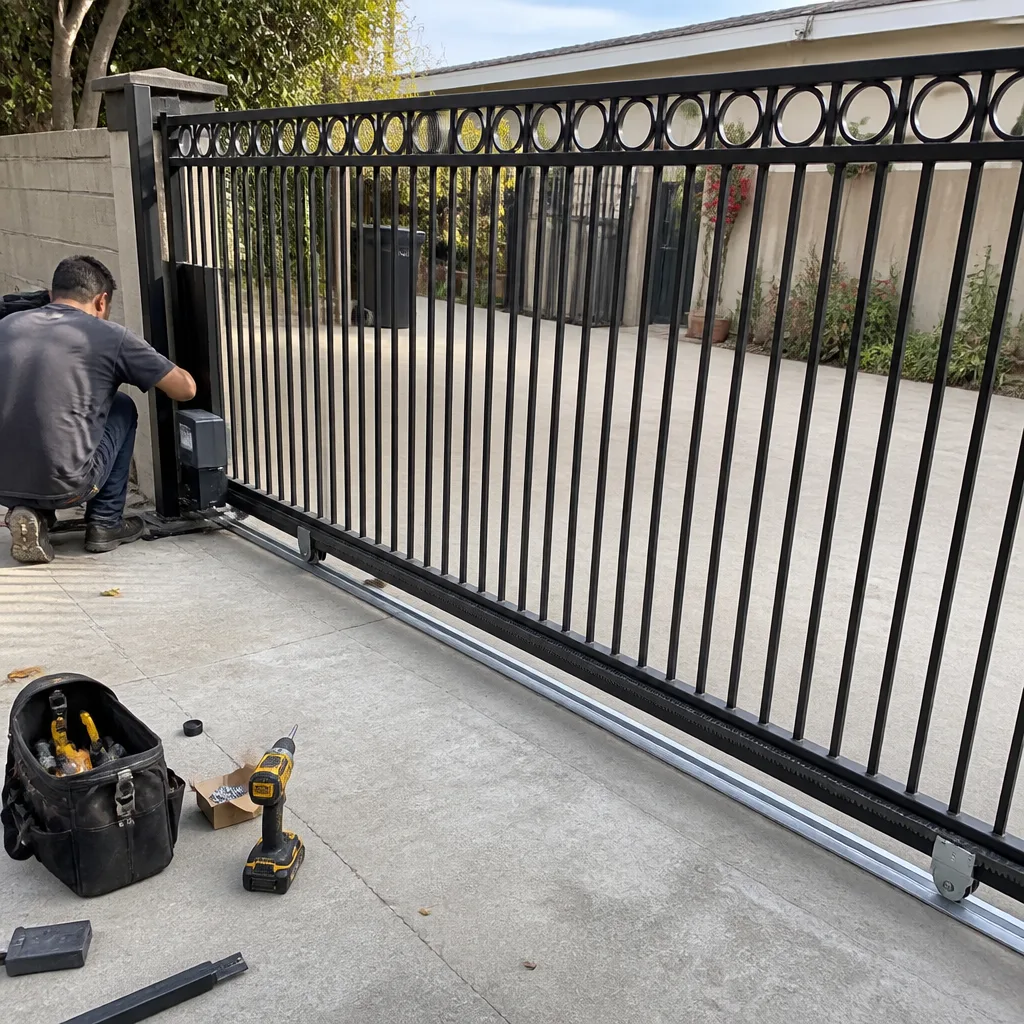 After
AfterThe Complete Guide to Gate Repair in Fullerton
A gate that won’t close is not just an inconvenience. It is a hole in your property line that stays open all night. In Fullerton, where many homes sit on generous lots with driveway gates that swing dozens of times a day, a failing gate is one of the most common service calls we get. This guide covers what actually goes wrong with gates in this climate, what repairs cost in the Fullerton market, how to spot a problem before it strands you outside your own driveway, and when to stop adjusting and start calling. If you own a gate in Fullerton, you will use this information eventually.
Quick Answer
Gate repair in Fullerton typically costs between $180 and $1,400 depending on whether the problem is mechanical (hinges, wheels, track), electrical (motor, capacitor, control board), or structural (weld failure, sagging frame). Most mechanical repairs are completed in one visit. If the gate will not open at all and a car is trapped inside, that is a same-day priority call.
Key Takeaways
- Fullerton’s clay soil shifts seasonally, which throws gate frames out of square more often than most homeowners expect.
- Half the “motor failures” we diagnose are actually hinge, wheel, or track problems that make the motor work too hard.
- A gate that reverses on its own usually means a safety sensor or force-setting issue, not a bad motor.
- Repair prices vary by gate type: slide gates cost less to fix than swing gates in most cases, and steel costs less than wrought iron.
- The 90-Day Done Right Promise means if a repair fails within 90 days, it is fixed again at no charge. No forms, no argument.
Table of Contents
- How Gates Fail in Fullerton: The Three Real Culprits
- Early Warning Signs a Gate Repair Is Coming
- What Gate Repair Costs in Fullerton
- What You Can Check Yourself vs. What Needs a Technician
- Repair Differences by Gate Type: Slide, Swing, and Estate
- Gate Opener and Motor Problems: What Breaks and What It Costs
- Preventive Maintenance That Keeps a 40-Year-Old Gate Working
- How to Choose a Gate Repair Company in Fullerton
How Gates Fail in Fullerton: The Three Real Culprits
After 42 years of working on gates across north Orange County, we can tell you that almost every gate failure falls into one of three categories. The first is mechanical wear: hinges, wheels, rollers, and track. Gravity never stops pulling on a 400-pound gate, and every time it swings or slides, something rubs against something else. The second is electrical: motors, capacitors, limit switches, control boards, and the low-voltage wiring that connects them. The third is structural: welds that crack, posts that lean, frames that sag.
Fullerton has a specific problem that homeowners in other cities do not always deal with. The soil here is a mix of clay and sand, and it expands and contracts with the winter rains and summer dry spells. That movement shifts gate posts. A post that moves one inch at the base puts the entire gate out of square. The gate drags, the motor strains, and within a few months you have what looks like a motor failure that is actually a footing problem. In neighborhoods like Sunny Hills and Raymond Hills, where lots are sloped, we see this more often than on flat streets near downtown.
Understanding which of the three categories you are dealing with determines the repair approach. A mechanical repair is usually straightforward and local to one component. An electrical repair may require diagnosis across several parts. A structural repair, if caught early, might be a weld and a re-level; if caught late, it might mean re-setting a post in new concrete.
Early Warning Signs a Gate Repair Is Coming
Gates rarely fail without warning. They telegraph trouble for weeks or months before the day they refuse to move. Learning to read those signals saves money, because a $150 hinge replacement today prevents a $900 motor replacement next spring. Here are the signs we tell Fullerton homeowners to watch for, in the order they typically appear.
- The gate slows down. A gate that used to open in eight seconds and now takes twelve is working harder than it should. Something is binding, and the motor is paying for it.
- You hear a new sound. A grind, a squeal, a rattle that was not there before. Gates make a specific set of sounds when healthy. New sounds mean new friction.
- The gate hesitates or reverses. If it starts, stops, then starts again, or if it reverses without anything touching it, the safety sensors or force settings are reacting to resistance they should not feel.
- The gate sags visibly. Stand at the end of the driveway and look straight at the closed gate. The top rail should be level. If it is not, the hinges or the post are failing.
- The gate hits the ground or the stop. A swing gate that scrapes the driveway in one spot, or a slide gate that thuds into the end stop, has shifted out of position.
- The remote works only at short range. If you have to be ten feet from the gate for the remote to work, the receiver antenna or the opener board may be failing.
Any one of these signs is worth a phone call. A good gate technician in Fullerton can diagnose the cause in under an hour, and many of these problems are fixed the same day at a fraction of the cost of replacing a burned-out motor.
What Gate Repair Costs in Fullerton
We quote every job before work begins. The price you are quoted is the price you pay, unless we find something unexpected and get your approval in writing before touching it. That said, homeowners like to have a range in mind before they call. Here is what we see across Fullerton, from the modest single-swing gates in the older neighborhoods east of Harbor Boulevard to the large estate gates in the hills.
Typical Repair Price Ranges
| Repair Type | Typical Range | What It Includes |
|---|---|---|
| Hinge replacement (single gate) | $180-$420 | New heavy-duty hinges, realignment, lubrication |
| Hinge replacement (double gate) | $320-$650 | Four hinges, alignment, adjustment of both leaves |
| Slide gate wheel/roller replacement | $220-$480 | New wheels or rollers, track cleaning, alignment |
| Track repair or replacement | $300-$850 | Straightening or replacing bent track, re-anchoring to concrete |
| Gate opener motor replacement | $450-$1,200 | Depends on brand and horsepower; includes installation |
| Control board replacement | $250-$700 | Brand-specific; includes programming and testing |
| Safety sensor replacement | $120-$300 | Photo eyes or edge sensors, wiring check, alignment |
| Post re-setting (concrete) | $600-$1,400 | Remove old post, new footing, reattach gate, realign |
| Weld repair (crack or break) | $150-$450 | Grind, weld, reinforce, repaint affected area |
These ranges reflect the Fullerton market. A gate opener from a specialty brand like FAAC or BFT costs more than a basic Mighty Mule opener, and that shows up in the repair bill when the control board or motor needs replacing. Slide gates are generally cheaper to repair than swing gates because the mechanical parts are simpler to access. Wrought iron costs more than steel because the metal is harder and welding it requires more skill.
For an exact quote, call (279) 201-0835. Estimates are free, and there is no obligation. We also offer a Free Second Opinion on Any Written Estimate: if another company has quoted you a repair and you want a second set of eyes on it, we will review it without charge.
What You Can Check Yourself vs. What Needs a Technician
Some gate problems are safe to inspect and even fix on your own. Others are not. Knowing the difference protects both your wallet and your safety. A gate that weighs several hundred pounds carries enough force to break a hand or worse if it moves unexpectedly, and gate motors run on electricity that deserves respect.
Safe to Check Yourself
- Visible hardware: look for loose bolts, worn hinge pins, cracked wheels. If a bolt is loose, tightening it is simple.
- Track obstructions: slide gates run on a track at ground level. Pebbles, leaves, and small branches can jam the wheels. Clear them and test the gate.
- Sensor alignment: if your gate has photo eyes, make sure they are pointing at each other and not blocked by dirt or plant growth.
- Remote batteries: a “dead opener” is often a dead battery in the remote. Replace it before calling anyone.
- Lubrication points: a dry hinge or wheel squeaks. A light machine oil on hinge pins is fine. Spray lubricant on exposed moving parts is a monthly job in Fullerton’s dusty summers.
Do Not Attempt Yourself
- Counterweight or heavy spring work: some swing gates use torsion springs to offset weight. These are under high tension and can cause serious injury if mishandled.
- Any electrical diagnosis: capacitors hold charge even with the power off. Control boards are sensitive to static. A wrong wire connection can burn out a $500 board.
- Welding: a cracked weld is a structural problem. A bad weld is worse than no weld. This is skilled work that requires proper equipment and the eye of someone who has done it hundreds of times.
- Post or footing work: re-setting a post is a concrete job. Get it wrong and the gate will sag again within months.
Our technicians have seen the results of well-intentioned DIY repairs. The most expensive repair is usually the one that follows a failed DIY repair. If you are not sure, call (279) 201-0835 and describe the problem. A live person will answer, and we will tell you over the phone whether it needs a service call.
Repair Differences by Gate Type: Slide, Swing, and Estate
Fullerton has three common gate configurations, each with its own failure patterns and repair economics. Knowing which one you have helps you understand what a technician is looking at when they arrive.
Slide Gates
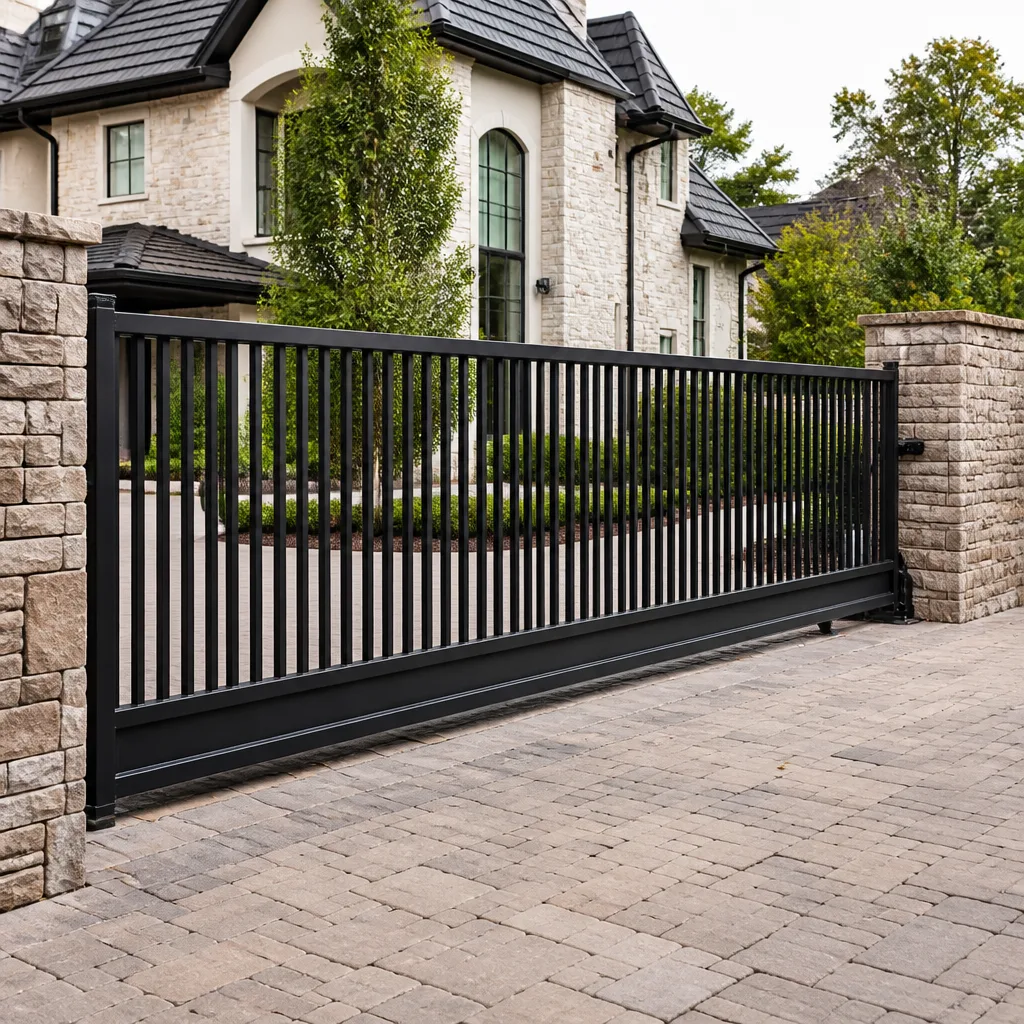
Slide gates move horizontally along a track, supported by wheels or rollers. They are popular in Fullerton on properties where the driveway slopes toward the street, because a swing gate would scrape. Slide gate failures are usually mechanical: worn wheels, bent track, or a gate that has drifted off its support rail. The motor and chain or belt drive sit at one end and are easy to access. Repairs are typically faster, which means lower labor costs. A slide gate that jumps its track is often fixable the same day.
Swing Gates
Swing gates pivot on hinges attached to posts. They are the traditional choice for Fullerton homes with flat driveways and the classic look that suits Spanish and ranch-style architecture. Swing gates fail at the hinges first, because the entire weight of the gate hangs on two or four points of metal. When the hinges wear, the gate sags. When the gate sags, the motor must work harder to move it, and the motor eventually gives out. Double swing gates add a complication: the two leaves must meet perfectly in the center, and the actuators must be synchronized. A double gate that is out of sync will open unevenly, strain both motors, and eventually fail one side at a time.
Estate Gates
Estate gates are the wide, often ornamental gates that guard larger Fullerton properties in the hills and along the city’s northern edge. They are frequently custom-built, made of steel or wrought iron, and may weigh over 600 pounds. They nearly always run on automation, with heavy-duty openers from brands like LiftMaster or FAAC. Estate gate repairs cost more because everything is bigger and the parts are commercial-grade. But estate gate owners also benefit most from preventive maintenance, because a planned tune-up is far cheaper than an emergency repair on a custom gate.
Gate Opener and Motor Problems: What Breaks and What It Costs
The opener is the heart of an automated gate, and it is the component Fullerton homeowners most often think is broken when the real problem is the gate itself. Here is what actually fails inside the opener box, and what it costs when it does.
Capacitor
The capacitor gives the motor its starting jolt. When it dies, the motor hums but does not turn. This is one of the most common opener failures in Fullerton, particularly after hot summers when capacitors run hot. A replacement capacitor costs $40 to $80 for the part, and the repair is typically under $200 with labor. This is also one of the most satisfying repairs, because it takes ten minutes and the gate works like new.
Control Board
The control board is the brain. It interprets signals from the remote, the keypad, the loop detector, and the safety sensors. When it fails, the gate may not respond to any command, or it may open but not close, or it may cycle erratically. Control board failures are more common after power surges, which are not unusual in Fullerton during Santa Ana wind season when lines whip around. Replacement boards range from $250 to $700 depending on the brand. LiftMaster boards are generally the most affordable. FAAC and BFT boards sit at the higher end.
Limit Switches
Limit switches tell the opener where to stop. When they fail or drift out of adjustment, the gate stops in the wrong place, or keeps running until it slams against the stop. On most openers, limit switches are adjustable, and the fix is a service call rather than a part replacement. Expect to pay $120 to $250 for realignment.
Gear and Drive Train
Inside the opener housing, a gear train transfers motor power to the drive. Plastic gears, found in some residential openers including certain Mighty Mule models, wear out after years of use. When stripped, the motor runs but the gate does not move. Gear replacement typically costs $180 to $400 depending on the unit.
Safety Sensors and Edge Systems
Modern codes require gates to reverse when they encounter a person or vehicle. Photo eyes and edge sensors are the two safety systems that enforce this. In Fullerton, where sprinkler overspray and garden growth are common, sensors get knocked out of alignment or damaged regularly. A misaligned sensor is adjusted in minutes. A damaged edge sensor, the strip along the gate’s leading edge, must be replaced. Expect $120 to $300 depending on the length and type.
Preventive Maintenance That Keeps a 40-Year-Old Gate Working
We have repaired gates that were installed in the 1960s, and we have replaced motors on gates that were installed five years ago. The difference is nearly always maintenance. A gate that is checked and adjusted once or twice a year lasts decades. A gate that is ignored until it breaks costs twice as much over its lifetime. Here is what a maintenance routine looks like, and what we do during an $89 Seasonal Tune-Up.
- Lubricate every moving point. Hinges, wheels, rollers, and chains need lubrication. In Fullerton’s dry climate, dust mixes with old grease and forms a grinding paste. Clean and re-lubricate twice a year.
- Check tightening torque. Bolts and nuts vibrate loose over time, especially on a gate that cycles dozens of times a day. A torque check on hinges, brackets, and opener mounts takes ten minutes.
- Test safety functions. The auto-reverse feature should be tested monthly. A gate that does not reverse on contact is a hazard.
- Inspect for corrosion. Fullerton’s proximity to the coast is not as harsh as Huntington Beach, but morning marine layer still reaches inland on some days. Surface rust should be treated before it becomes structural.
- Check the post stability. A gate is only as square as its posts. A level check catches post movement early, before the gate is visibly sagging.
- Calibrate force settings. Openers are set to exert a maximum force. Over time, as the gate wears, the required force creeps up. Recalibrating prevents the motor from working harder than necessary.
We recommend the $89 Seasonal Tune-Up twice a year for automated gates, and once a year for manual gates. It is the cheapest insurance a Fullerton homeowner can buy for a gate.
How to Choose a Gate Repair Company in Fullerton
Not every company that will work on a gate should. Fullerton has generalist handymen, fencing companies, and garage door companies, all of whom may claim to fix gates. A gate is not a garage door, and a fence is not a gate. Here is what to ask before you let anyone touch your property.
Question 1: Is this the only thing you do?
A dedicated gate company works on gates every day. It has seen every failure mode, carries parts for multiple brands on the truck, and knows the local code requirements for Fullerton. A handyman who fixes a gate occasionally learns on your gate.
Question 2: Which automation brands have you been trained on?
The opener is the most specialized part of the system. We are trained and equipped on nine major brands: LiftMaster, FAAC, BFT, Linear, Viking, Ghost Controls, DoorKing, Elite, and Mighty Mule. Whatever is on your driveway, we have worked on it before. A company that hesitates when you name your opener brand is a risk.
Question 3: Do you guarantee your work in writing?
Our 90-Day Done Right Promise is written into every job. If the repair is not right within 90 days, we come back and make it right. No paperwork, no arguing. That is the Keystone Standard we have applied to every job since 1984. If a company will not put a guarantee in writing, keep looking.
Question 4: What is the price before you start?
A square deal means a price is quoted and agreed before a single bolt is turned. If a company starts a repair without a firm quote, you have no protection. That has never been how we work, and it never will be.
Question 5: Who is answering the phone?
When your gate fails at 6:00 a.m. and your car is stuck in the driveway, you need a live voice on the other end of the phone. A live person answers our calls 24 hours a day, 7 days a week. Not a voicemail, not a callback queue. That matters, especially to the Fullerton homeowners who have lived here for twenty or thirty years and want a company that behaves like a neighbor.
Common Mistakes to Avoid
- Replacing the opener when the gate is the problem. More than half the opener replacements we are asked to do are unnecessary. The gate is dragging, the motor overheats, and the real fix is a hinge or a wheel. A proper diagnosis saves you the cost of a new motor.
- Ignoring a slow gate. A gate that slows down over weeks is asking for help. Ignore it and you will be replacing the opener, not adjusting a hinge.
- Lubricating with the wrong product. WD-40 is a solvent that displaces moisture, not a lubricant. It washes away the good grease already there. Use a proper lithium grease or light machine oil, or let us do it during a tune-up.
- Adjusting the force settings higher to “fix” a dragging gate. This is the single most common DIY mistake we see in Fullerton. It makes the motor work harder, overheats the windings, and shortens the opener’s life. The force setting should match the gate, not compensate for it.
- Waiting on a post problem. A leaning post never straightens itself. The longer you wait, the worse it gets, and the more likely the whole gate needs removal and re-setting.
- Hiring on price alone. The cheapest quote usually means the cheapest parts and the least experienced labor. A gate repair is not the place to save fifty dollars and lose five years of life on the opener.
- Deferring safety sensor repairs. A gate that does not auto-reverse is a liability. If a child or a pet is in the path, the results are serious. This is the one repair we tell Fullerton homeowners never to put off.
When to Call a Professional
Call a professional when the gate will not open or close reliably, when the opener makes noise but the gate does not move, when the gate sags or scrapes, when the safety sensors stop working, or when any weld has cracked. A gate weighs hundreds of pounds and a motor runs on line voltage; both will hurt you if you get between them and a fault. If you are not certain what the problem is, do not guess. Ironworks Gate Co. offers free estimates in Fullerton. Call (279) 201-0835, describe the symptom, and we will tell you over the phone what you are likely dealing with. If it can wait until tomorrow, we will say so. If it cannot, we will be there.
Frequently Asked Questions
Gate repair in Fullerton ranges from about $180 for a simple hinge replacement to $1,400 for a full post re-setting in concrete. Opener repairs, which include motor, control board, and sensor work, typically run between $250 and $1,200 depending on the brand and the part. Call (279) 201-0835 for a free estimate specific to your gate.
Most mechanical repairs, including hinge replacements, wheel replacements, and capacitor swaps, are completed in a single visit. The truck is stocked for the common failures on LiftMaster, FAAC, BFT, Mighty Mule, and the other brands we service. If a rare part must be ordered, we will tell you before we start, not after the gate is apart.
We do. We are trained and equipped on nine automation brands, including Mighty Mule, LiftMaster, FAAC, and BFT. Whatever opener is on your gate, we have worked on it before, and in most cases the part we need is already on the truck.
The Seasonal Tune-Up includes lubrication of all moving points, a bolt and torque check, safety sensor testing, force calibration, post level inspection, and a corrosion check. For an automated gate, we recommend it twice a year. It is the most cost-effective way to keep a Fullerton gate running quietly for years.
Not always. A sagging gate can mean worn hinges, a shifting post, a failing weld, or a frame that has twisted over time. The only way to know is a proper diagnosis, which starts with a level check on the top rail and the posts. Call (279) 201-0835 and we will look at it without charge.
Yes. We offer a permanent 5% discount for seniors and veterans on every job, every time. No verification hoops, no annual signup. Mention it when you call (279) 201-0835 and it is applied to your estimate.
The Bottom Line
A gate in Fullerton is a machine that works outdoors, carries hundreds of pounds, and cycles thousands of times a year. It will need repair eventually. When it does, the wise move is to act on the early warning signs, to call a company that works exclusively on gates, and to get a written price before work begins. A hinge fixed for $200 saves an opener replaced for $800. A post caught early saves a full re-set. Ironworks Gate Co. has been doing this work since 1984, and every job is backed by the 90-Day Done Right Promise. If your gate needs attention, call (279) 201-0835 for a free estimate. A live person will answer.
Written by Victor Salinas, Owner at Ironworks Gate Co., serving Fullerton since 2013.